
From Droid Life: Turn Any Regular TV Into a Smart TV With This Kickstarter Project Called “Pocket TV”

Another handy looking Kickstarter project has caught our attention, this time taking the form of a thumb-drive equipped with an HDMI male piece called Pocket TV. Once you plug the drive into your TV, you’ll be greeted by the stock Ice Cream Sandwich interface, allowing you to download Play Store apps, and have the Android OS right on your TV. Controlling is made easy with a custom remote and there will also be an app for Android and iPhone devices that will allow control of the TV that way too.

With its 512Mb of RAM, single core 1GHz processor, and 4GB of storage, this little machine packs quite the little punch. The project is at a healthy $70,000 already out of $100,000. And with only 34 days left to fulfill the needed amount, it’ looking like this piece of tech is soon to become a nice reality.

Click here to view the embedded video.

Via: Kickstarter

Cheers Victor!

from Droid Life

From Engadget: Copper-nickel nanowires from Duke University could make ubiquitous printable circuits

Nanowires

Nanowires, although they’re building steam, still have to overcome the not-so-small problem of cost — they often have to use indium tin oxide that’s not just expensive, but fragile. Duke University has developed copper-nanowire films that could remedy this in style. The choice of material is both a hundred times less expensive to make than indium and is much more durable. It’s flexible, too: if layered on as a coating, the nanowires would make for considerably more viable wearable electronics that won’t snap under heavy stress. The catch, as you might suspect, stems from the copper itself, which doesn’t conduct as much electricity as indium. The nickel will keep your copper electronics from oxidizing faster than the Statue of Liberty, however. Any practical use could be years away, but further successes from Duke could quickly see printable electronics hit the mainstream power and power our dreams of flexible displays.

from Engadget

From Technology Review RSS Feeds: For $74, a Mini-Android Computer

The menu of low-cost mini-computer options expands.

Ars Technica and others report on a cool miniature Android computer that can plug directly into your TV. The whole thing is housed in a 3.5-inch plastic case, weighs in at 200 grams, and measures roughly the size of a USB thumb drive (a tiny bit bigger, actually.) It’s being sold by Chinese retailers, and you can get yourself one online for the low price of $74 (or 5% off, if you order 5 or more).


from Technology Review RSS Feeds

From MAKE: $49 Android PC from Via

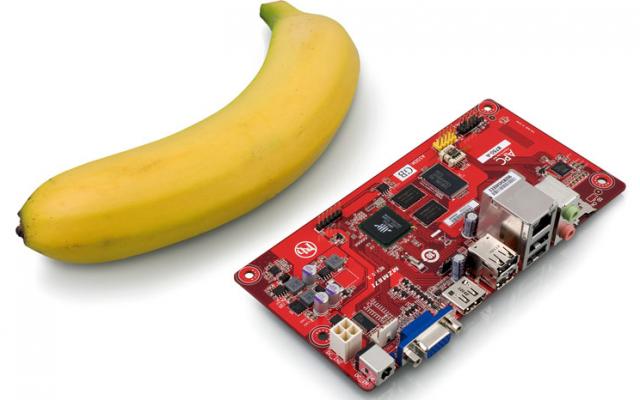
For the price of a cheap date you could pick up Via’s new APC all-in-one computer. It’s about the size of a smartphone and about as powerful. It comes with Android 2.3 pre-installed, so it could make a decent media streamer or Android development platform. It comes without a case, but conforms to the mini-ITX and MicroATX formats. They’re taking pre-orders and expect to ship in July. [via geek.com]


from MAKE

From Engadget: Google pumps cash into UK classrooms, will buy Arduino, Raspberry Pi sets for kids

Image

Eric Schmidt has said that Google will make cash available through its investment into Teach First to buy Raspberry Pi and Arduino units for British schoolchildren. He was at the UK’s Science Museum to talk about Mountain View’s partnership with the charity, which puts top university graduates into schools to teach disadvantaged kids. The Android-maker wrote a cheque to fund over 100 places on the scheme, aiming to get bright computer scientists to reintroduce engineering principles to pupils. Mr. Schmidt hoped that with the right support, kits like the Raspberry Pi would do for this generation what the BBC Micro did three decades ago.


from Engadget

From Ars Technica: Another tiny computer: VIA’s $49 APC offers Android, HDMI video out

Is that an Android computer in your pocket, or are you just happy to see me?

Taiwanese hardware manufacturer VIA has announced a new product called the Android PC System (APC), a seven-inch ARM board that ships with a custom version of the Android mobile operating system. The device will be available in July for $49.

The APC includes a VIA ARM11 SoC, 512MB of RAM, 2GB of flash storage, VGA and HDMI video outputs, speaker and microphone jacks, a microSD slot, an ethernet port, and four USB ports. It also reportedly supports hardware-accelerated video decoding. According to VIA, the board consumes only 4 watts when idle and 13.5 watts under maximum load.

The Raspberry Pi foundation’s $35 computer, which launched earlier this year, attracted considerable interest from Linux hobbyists and embedded computing enthusiasts. The foundation partnered with two manufacturers, but has struggled to meet demand for the product. VIA could help fill the unmet demand for a low-cost ARM system that is suitable for the hobbyist market.

from Ars Technica

From Engadget: NVIDIA CEO Jen-Hsun Huang announces cloud-based, virtualized Kepler GPU technology

NVIDIA CEO Jen-Hsun Huang announces cloud-based, virtualized Kepler GPU technology

We’re here at NVIDIA’s GPU technology conference here in San Jose, California and CEO Jen-Hsun Huang just let loose that his company plans to put Kepler in the cloud. To make it happen, the company has created a virtualized Kepler GPU tech, called VGX, so that no physical connections are needed to render and stream graphics to remote locations. So, as Citrix brought CPU virtualization to put your work desktop on the device of your choosing, NVIDIA has put the power of Kepler into everything from iPads to netbooks and mobile phones.


from Engadget