From Engadget: VIA Technologies’ $49 Android barebones PC available for pre-order, ships in July

VIA Technologies' $49 APC Android barebones now available for preorder, ships in July

VIA Technologies‘ small — but not bitesized — Neo-ITX-based barebones Android PC is now up for pre-order. Folks willing to plunk down $49 now will be among the first to play with the APC’s version of Gingerbread that’s been modified for use with a mouse and keyboard. When can you expect the return on investment? Well, it’s slated to ship in early July, meaning you’ll get your hands on its 800MHz processor, 512MB of RAM and 2GB of storage before the end of summer.


from Engadget

From Engadget: Noctua’s noise-canceling PC fan gets tested, drops twenty decibels

 Noctua's noisecanceling PC fan gets tested, drops twenty decibels

Having trouble tuning out the hum of your PC fans? Maybe it’s time you took another look at Noctua’s NF-F12 integrated noise cancellation fan. According to the firm, the Computex prototype kept things about 20dB quieter by utilizing a patented RotoSub ANC technology to emit anti-noise directly from the fan’s own blades. Noctura hopes to dampen the cooler’s 2,500 RPM hum to the overall noise level of a slower 1,500 RPM fan. Builders looking to piece together a quieter machine can look for the noise reducing cooler an the latter half of 2013. Your old fan? Well, you could always use as a makeshift turntable. Hit the break for a peek at a more silent tomorrow.


from Engadget

From Engadget: Open-mesh PC case keeps heat, dust bunnies at bay

open-mesh-pc-case-keeps-heat-dust-bunnies-at-bay

If you haven’t done it in a while, opening your PC case can be like a slasher flick — you know you’ll see something disgusting, but you’re never sure what. Taiwan’s YoungYear Electronics claims to stop the horror with its Green Mesh case, which has neither fans to suck dust, nor filters, and keeps your components cool with a “chimney effect” instead. It’s this same action that repels dust out the top, so that only one quarter the usual amount of filth is drawn in — according to the company. The only downside is that with poor heat dissipation, the maximum power supply unit size is 300 watts — which probably scratches it off the list for most modders or power-users. For the rest, if you don’t mind your computer’s innards blowing in the breeze, at least you’d have no nasty case-opening frights.


from Engadget

From AnandTech: ASUS Demonstrates Displays with Integrated Touch and WiDi

Years ago ASUS made the transition from being just a motherboard company to a notebook manufacturer. These days I’m getting the distinct impression ASUS would like to be much more than just a notebook company. It has been building everything from displays to routers for quite a while now, but ASUS is definitely ramping up its focus on all things peripheral to motherboards and systems.

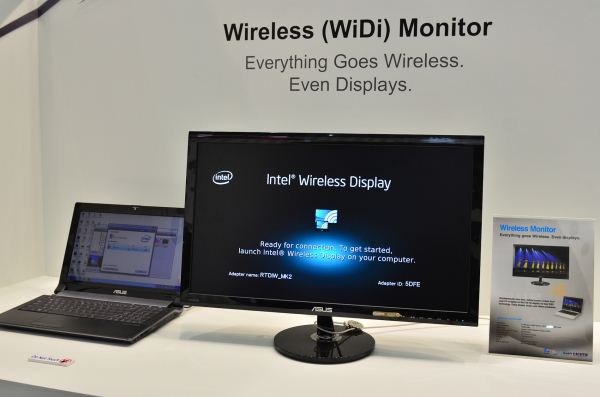
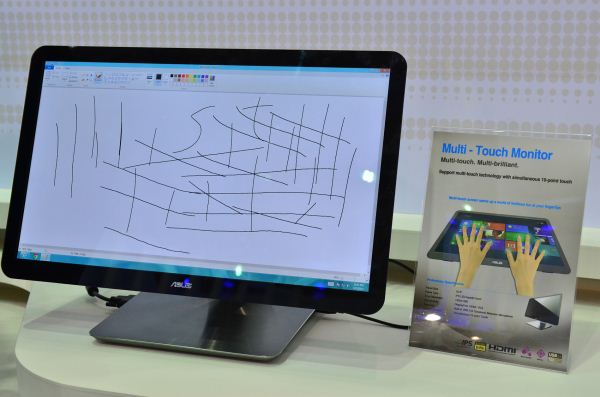
At Computex we got a glimpse of two ASUS displays, one that brings integrated Intel Wireless Display (WiDi) technology (pictured above) and one that integrates touch. Although I wouldn’t rely on WiDi as a primary interface for my display due to latency, it does make it easier to temporarily “connect” another machine to your display.

The touch enabled model is obviously aimed at Windows 8 and I expect to see more touch enabled desktop monitors as Windows 8 officially launches. I don’t know that touch alone is a compelling feature for Windows 8, but it seems like it’s going to quickly become a requirement as it really is a more convenient way to interact with the Metro UI.

from AnandTech

From Engadget: ICE Computer’s modular xPC returns to Computex in working-prototype form, we go hands-on

ICE Computer modular xPC returns to Computex in workingprototype form, we go handson video

From one year to the next, we see many of the same characters make an appearance at the same trade shows — this week, it’s Taipei’s Computex, and today, we’re back to visit ICE Computer. What last year was known as “Trinity” and hadn’t progressed beyond the mock-up stage has returned for 2012 as xPC — a working prototype of the company’s modular computer concept. Internet Communication Entertainment, abbreviated as ICE, envisions xPC being the only computer you’ll need. The device itself is barely larger than a smartphone, and would contain either an Intel, AMD or Tegra chipset, 2 gigs of RAM, 802.11 b/g/n WiFi, a 1.3- or 2-megapixel webcam and a 32 or 64GB SSD — all in a package that weighs in at approximately 50 grams. The sample we saw today was so light that we first mistook it for a plastic shell, yet it powered a typical desktop setup, complete with a monitor (HDTV), keyboard and mouse.

The current prototype doesn’t include a cooling infrastructure, so it was limited to a low-power 1.5GHz Intel Atom CPU for the time being. All of the company’s various enclosures will feature built-in fans, however, opening the concept up to a variety of configurations. The xPC doesn’t function on its own — instead, you dock it within a variety of accessories, such as the xDock, which would sit permanently on a desk or in a home theater cabinet and includes HDMI input and output, speakers, a pair of USB 2.0 ports, one USB 3.0 port, Ethernet, SATA and several other connectors. The xTop is the portable variant, offering many of the same connectivity options, but on a smaller scale. Finally, there’s the xPad, which brings 9.7- or 10.1-inch touchscreen control to the xPC in a tablet form-factor, yet still includes a bevy of connectivity, along with a webcam and battery.

There’s also an xPhone (think PadFone) concept, that packs all of the xPC’s functionality into a device that doubles as a smartphone — the California-based company didn’t have any mock-ups to speak of there, however. ICE expects to ship the xPC and xDock by the end of this year, with the computer module itself ranging in price from $100 to $250 depending on how you opt to configure it. The xPad could ship late this year or sometime in early 2013, with pricing to be announced. For now, the xPhone remains a concept, without any functional prototypes or even a mock-up to speak of. ICE representatives suggested that the company may partner with a smartphone manufacturer to develop that last component, so we have no idea if or when that may come to market. All in all, it’s a solid (and, thanks to PadFone, proven) concept — you can get a closer look in our hands-on after the break.


from Engadget

From AnandTech: Computex 2012: MSI GPU Technologies

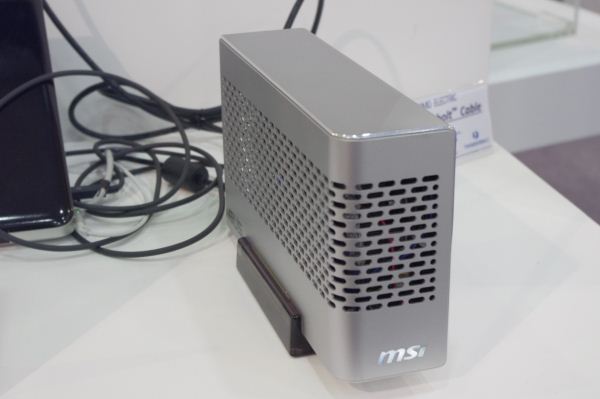
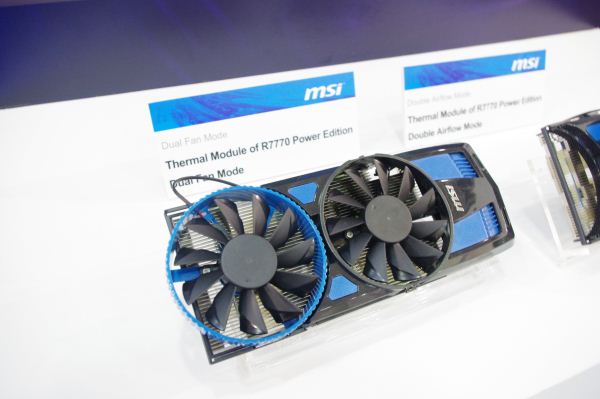
Visiting the MSI booth today at Computex was rather exciting – they were showing off two rather interesting GPU fan technologies, alongside their portable Thunderbolt GPU device, GUS.

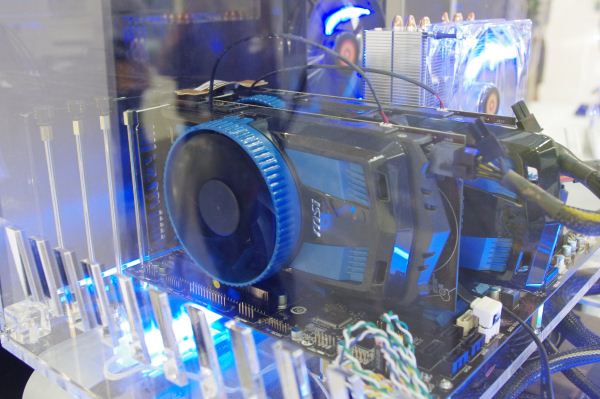
The first is a new GPU fan design, for users who want either increased GPU cooling, or increased VRM cooling.  Initially being a small sized GPU, a user can add a second fan on top of the first, to increase the airflow blowing directly onto the main part of the cooler above the GPU:

This cooler can expand if a user has a long enough case, and the second fan can be moved to the edge of the cooler, providing more cooling along that side of the GPU.

This extra fan is limited to 40% RPM due to the controller being used.  MSI tell us that there are plans to make this fan fully adjustable.

Also of interest to us is the introduction of the ‘dust-free’ methods MSI are bring to their main user line of enthusiast SKUs.  At startup, the fans on the GPU will spin in the reverse direction for 30 seconds in an attempt to draw dust out of the GPU (but dump it into the case).  After 30 seconds, the fans will spin back the other way to produce the desired cooling effect.  MSI say this has come about due to the Asian market, where pollution can cause dust buildup in cases and coolers.

GUS is what part of the world has been waiting for – an external GPU housing.  Data transfer comes through a Thunderbolt cable to provide 10 Gbps bandwidth, and MSI state they should be selling this housing with a GPU up to 150W, so 7870, 7850 and 6850 models to begin with in Q3/Q4 if demand is high enough and Thunderbolt takes a hold in the market.

More photos in the gallery below.

from AnandTech

From Droid Life: Asus Announces Partnership With BlueStacks to Bring Android Apps to Windows PCs

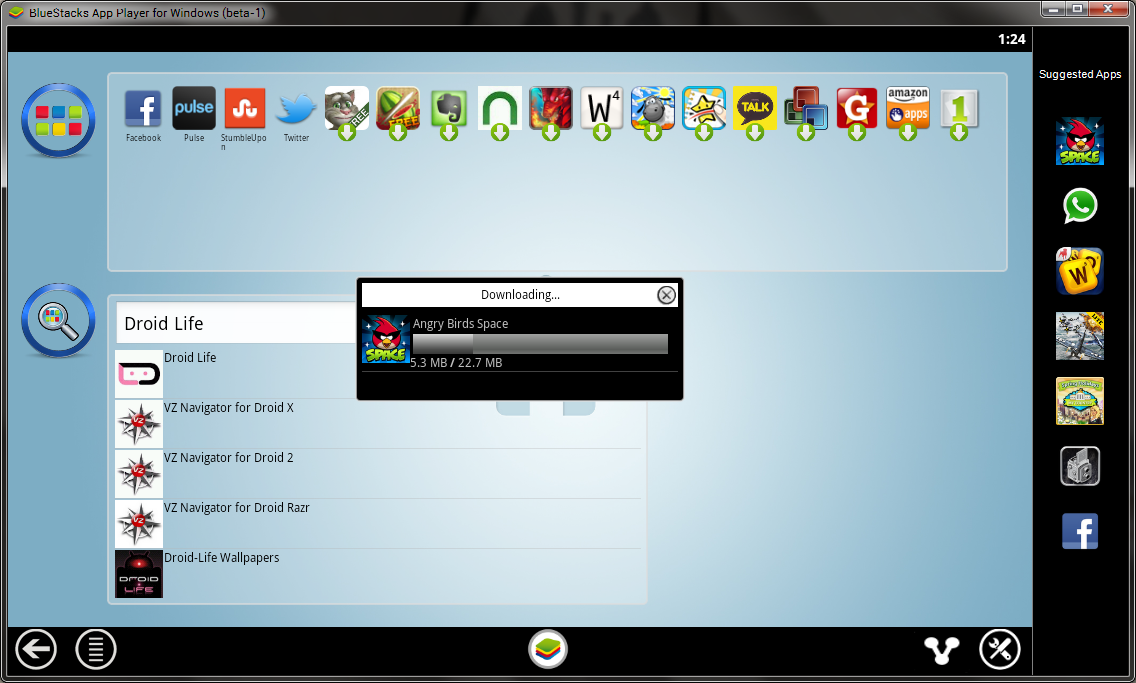
Asus is partnering up with start-up BlueStacks, to allow for the running of Android applications straight onto Asus PC computers. The software will come paired with all Zenbooks, Notebooks, Eee PCs, and other Asus desktop computers to allow the use of Android games, utilities, readers, etc right on your PC. To launch the service, Asus will include six months of free apps, but after that, users will be charged an unknown amount for unlimited access.

It’s a pretty awesome application if you cant live without your Angry Birds or Talking Tom Cat. Want to give BlueStacks a test run on your computer? Download it here.

ASUS Partners with BlueStacks to Bring Android Apps to Millions of PCs Worldwide

Adds Premium Android Apps to asus@vibe Entertainment Platform on ZenBooks, Notebooks, Eee PCs, Desktop PCs and All-in-one PCs

Taipei, Taiwan (PRWEB) June 03, 2012

ASUS, one of the world’s top three consumer notebook vendors and a leading innovator in personal computing products, has partnered with BlueStacks to bring popular Android apps to 30 million Asus PCs worldwide.

BlueStacks, makers of “App Player for PC” software, will enable a rich selection of Android apps on asus@vibe, a one-stop entertainment platform that is preinstalled on all ASUS products. Powered by BlueStacks technology, users of asus@vibe can access exciting and engaging Android apps across all categories including games, social, news, shopping, music, business and education.

BlueStacks recently partnered with top app developers to bring popular Android apps like Fruit Ninja, Evernote, Pulse, Drag Racing, Defender, Tap Fish, Moviefone, Nook, Guns N Glory, Talking Tom and Kids ABC to the one billion strong PC market. BlueStacks’ patent pending LayerCake technology enables Android apps on touch and non-touch Windows PCs. As part of this special arrangement with BlueStacks, users of asus@vibe will enjoy Android apps for free for 6 months, with the option to upgrade to unlimited apps and sync apps from phone to PC. The apps are integrated into and presented seamlessly within the @vibe platform across the entire range of ASUS products, including the ZenBooks, notebooks, Eee PCs, desktop PCs and All-in-one PCs.

“ASUS is delighted to bring a vibrant selection of apps that were previously inaccessible on Windows PCs. Our partnership with BlueStacks is a valuable addition to the @vibe family,” noted Vira Chang, the Head of eBusiness Services at ASUS. “The integration of BlueStacks and @Vibe is central to ASUS’s consumer cloud strategy. Additionally, we are encouraged by the increased revenue potential that BlueStacks represents.”

“ASUS has created a phenomenal software experience on PCs. Launching with ASUS at Computex 2012 solidifies BlueStacks’ leadership position as the sole provider of apps for consumer electronics and PC manufacturers worldwide,” said Rosen Sharma, President and CEO of BlueStacks. “Our strong portfolio of apps from top developers, combined with our unique monetization engine makes this a revenue-generating opportunity for PC OEMs. This is a winning proposition for the entire PC ecosystem. App developers who have already built for Android can now just run their apps on Windows PCs through BlueStacks. We’ve done the heavy lifting for the benefit of all.”

About ASUS
ASUS, one of the world’s top three consumer notebook vendors and the maker of the world’s best-selling and most award winning motherboards, is a leading enterprise in the new digital era. ASUS designs and manufactures products that perfectly meet the needs of today’s digital home, office and person, with a broad portfolio that includes notebooks, netbooks, tablet devices, servers, multimedia and wireless solutions, networking devices, mobile phones, motherboards, graphics cards, optical drives, displays, desktops, Eee Box and all-in-one PCs. Driven by innovation and committed to quality, ASUS won 3,886 awards in 2011, and is widely credited with revolutionizing the PC industry with the Eee PC™. With a global staff of more than 11,000 and a world-class R&D team of 3,100 engineers, the company’s revenue for 2011 was around US$11.9 billion.
ASUS website : http://www.asus.com
asus@vibe: vibe.asus.com

About BlueStacks
BlueStacks is a software company that enables Android apps to run on Ultrabooks, Notebooks, Desktops, All-in-One PCs and Tablets. It was founded in 2009 by Rosen Sharma. BlueStacks is privately held and headquartered in Silicon Valley with global offices in India, Taiwan and Japan. For more information visit BlueStacks.com, or join their over 1,000,000 Facebook fans.

from Droid Life