From Ars Technica: Write speeds for phase-change memory reach record limits

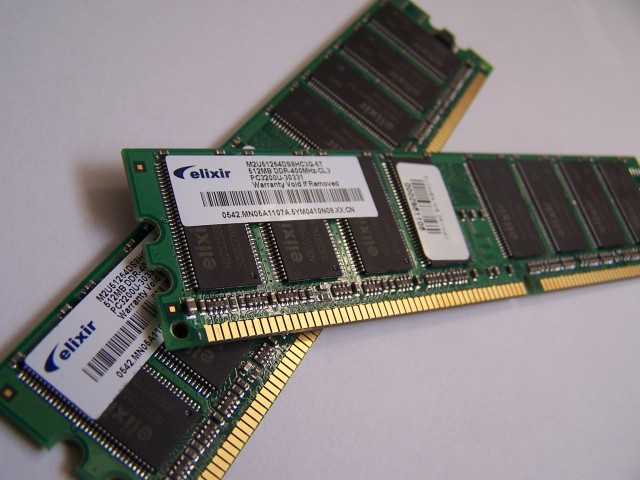
DRAM in computers is erased when a computer is turned off.

By pre-organizing atoms in a bit of phase-change memory, information can be written in less than one nanosecond, the fastest for such memory. With write speeds comparable to the memory that powers our computers, phase change memory could one day help computers boot up instantly.

Phase-change memory stores information based on the organization of atoms in a material, often a mixture of germanium, antimony, and tellurium (Ge2Sb2Te5 or GST). A voltage pulse heats the metal and disordered atoms in the crystal rearrange into an ordered crystal. Restoring the disordered arrangement by melting the metal erases the information. A computer reads each bit by detecting the lower electrical resistance of the ordered crystal.

Micron sells small phase-change memory (PRAM) chips. Companies like IBM and Samsung are working on PRAM chips too.


from Ars Technica

From MAKE: Introducing the Gooseberry Board

Seems like there are a number of low power ARM SoC boards hitting the market recently. If the BeagleBone, Raspberry Pi, and Via APC piqued your interest, you might want to also take a look at the recently announced Gooseberry. It’s an Allwinner A10 ARM SoC with 512MB RAM, 4GB onboard flash (up to 16GB with MicroSD), b/g/n Wifi, and goes for £40 (about $63USD).

Details on availability are forthcoming, but they’re soliciting feedback to gauge interest. Supposedly the whole thing came about because of the current availability of some existing boards. Lacking a reference design, the project lead noticed that the SoC was being used in a production tablet, so instead of stuffing them into an off brand device, they’re being made available as a bare board. [via GeekyGadgets]

from MAKE

From Engadget: Calxeda benchmarks claim that its server chips are 15 times more power efficient than Intel’s

Image

Calxeda may have been given the bum’s rush by HP’s Project Moonshot, but the company isn’t taking it lying down. It’s released benchmarks for its ARM-based server technology that claims it’s 15 times more power-efficient than the comparable Intel Xeon. Rigging up a 1.1GHz Energycore ECX-1000 with 4GB RAM against a 3.3GHz Xeon E3-1240, the former consumed only 5.26 W compared to the 102 W of Intel’s high-spec chip. While it certainly wasn’t faster, power efficiency is a key concern for data centers looking to keep costs down, and if the trend continues, Santa Clara will come to regret AMD’s recently announced love-in.


from Engadget

From Engadget: An ARM core in an AMD device? It just happened, but not the way you think

An ARM core in an AMD device? It just happened, but not the way you think

Yes, you heard right. AMD just added to ARM’s burgeoning heap of gold coins, having licensed the British company’s Cortex-A5 design for use in its own hardware. While this might sound like a dramatic capitulation on the part of the struggling giant, particularly after yesterday’s news, it probably isn’t. AMD says it’ll use the ARM component solely for adding better security features to its next generation of business-focused laptops and tablets. A spokesperson told us the company’s “commitment to x86 hasn’t changed,” referring to the fact that it’ll continue to use its regular in-house chip architecture for the primary task of running applications.

The Cortex-A5 will be one tiny core squeezed in amongst everything else on the future 28nm silicon. It’ll be dedicated to running ARM’s proprietary TrustZone technology, which protects sensitive apps from tampering — stuff like mobile payments, DRM, and nudge, nudge corporate documents. Rather than invent its own system for doing the same thing, AMD reckoned it’d be easier to work with ARM’s, and who can blame it? If we remember rightly, even Intel made a similar call five years ago.

[Tentacles via Shutterstock]


from Engadget