From Engadget: ARM forms UK group to foster an Internet of Things, put 50 billion devices online by 2020

ARM forms UK group to foster an Internet of Things, put 50 billion devices online by 2020

ARM isn’t content with dominating the mobile space. It’s been by the far the most vocal about an Internet of Things where everything is connected — and to make that happen, it just established an industry forum in the UK that it hopes will establish common ground for all those internet-linked light bulbs, refridgerators and thermostats. Home energy firm Alertme, cloud-aware sensing outfit AquaMW, lighting maker EnLight and white space wireless guru Neul will start meeting with ARM from August 24th onwards to hash out our automated, eco-friendly future. There’s a certain urgency in this for the chip designer: it expects 50 billion devices on the grid by 2020. With IDC estimating a billion new connected devices just in 2011, the clock on that connected device transition is ticking very loudly.


from Engadget
From Droid Life: Qualcomm’s Quad-Core Snapdragon S4 Pro Benchmarks are Beyond Impressive

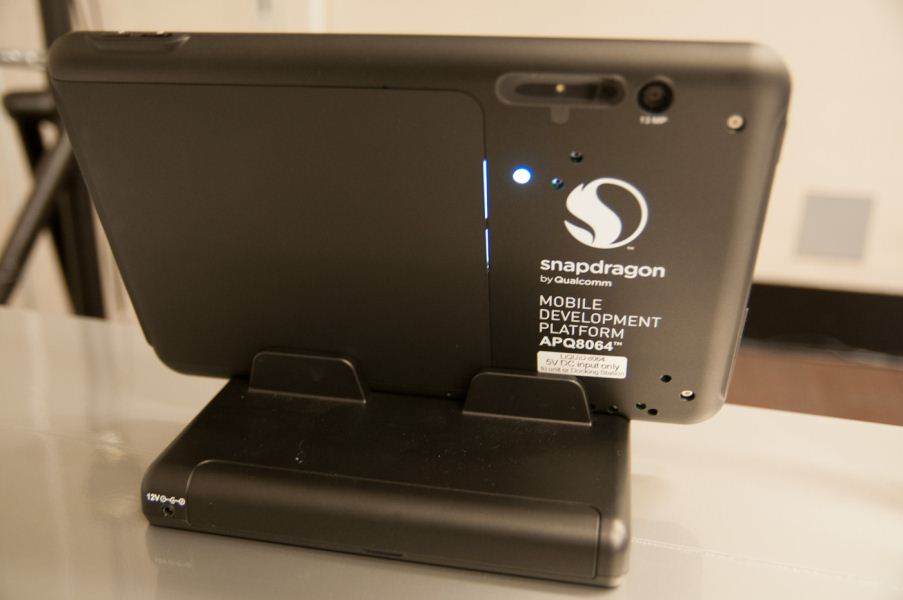
Yesterday, we jokingly shared that you could purchase Qualcomm’s newest developer tablet that features the new Snapdragon S4 Pro chip and Adreno 320 GPU for a whopping $1300. Well, the chip is most definitely coming to tablets sooner or later (and maybe some high-end smartphones), but it still has some tweaks to work out. Here are some of the initial tests by AnandTech of its quad-core power that are beginning to surface on the web.

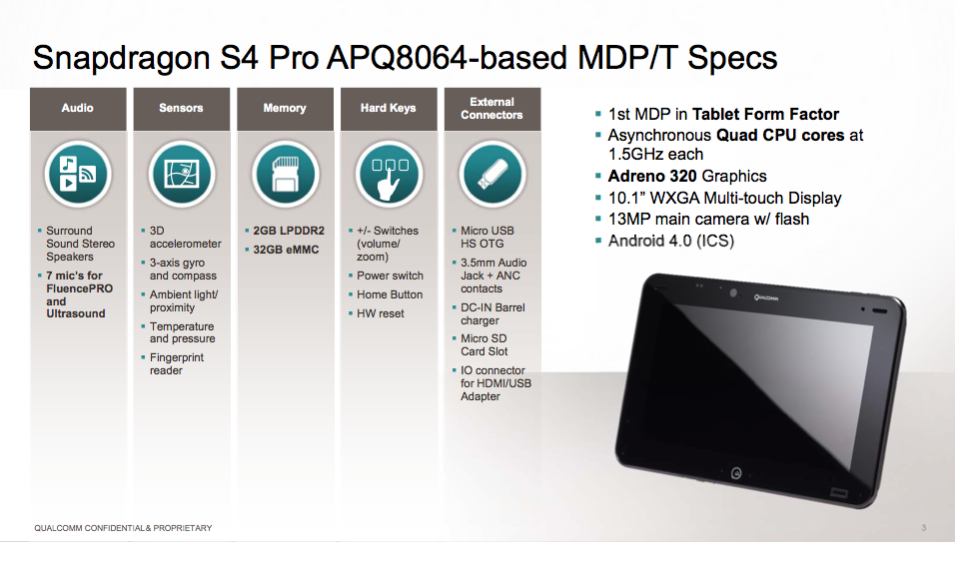
For a good comparison, keep an eye on the MSM8960 S4 and Adreno 225 that is found in the HTC One X throughout these tests. For reference, here is the spec sheet of device running the benchmarks:


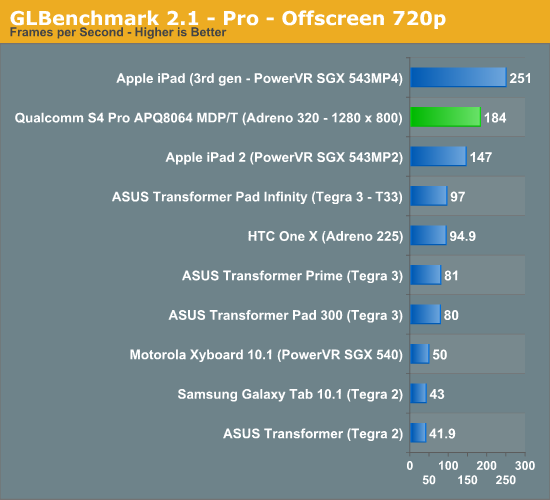
GLBenchmark – Pro – Offscreen 720p:

GLBenchmark Egypt Offscreen 720p:

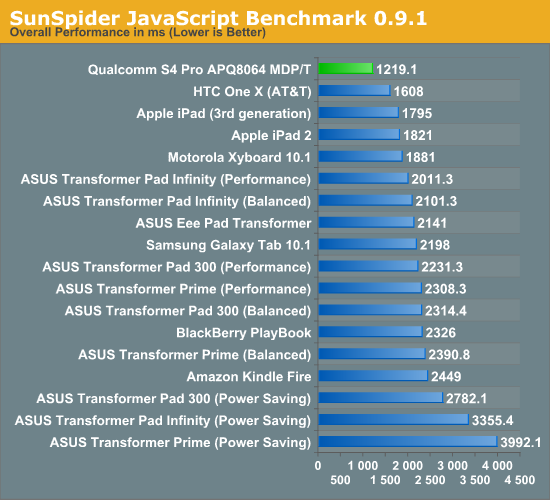
SunSpider JavaScript Benchmark:

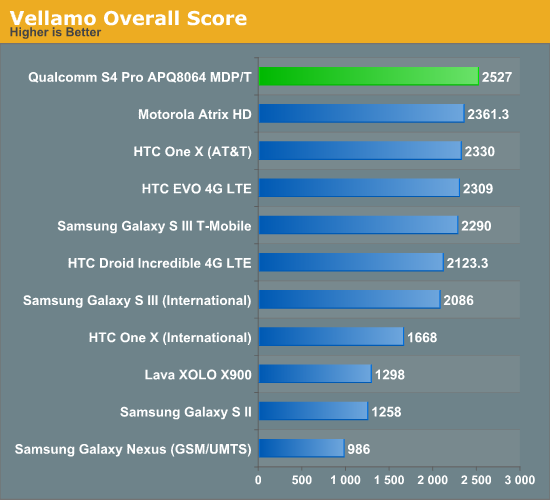
Vellamo – Qualcomm’s In-House Web Performance Benchmark:

To summarize, this is one of the faster Android devices ever created and I wish I had one. This is not the final production model and things could differ from what we see hit the market, but still, it’s a monster. According to the folks at AnandTech, who do happen to have one in their hands, we can expect the same great performance from the S4 Pro that we have with the current dual-core Snapdragon chip, but with the added cores and greater multi-tasking capabilities.

The main seller in our eyes would have to be this new Adreno 320 GPU. With stats nearing that of Apple’s iPad, we know that this is the direction that SoC manufacturers should be heading in order for Android users to experience the highest quality games and apps our devices can deliver.

Via: AnandTech

from Droid Life

From Wired Top Stories: Amazon Flash Drives Put Cloud Into Overdrive

You’ll find it inside the top-secret data centers that run Google. It provides extra speed at Apple, Facebook, Dropbox, and countless other operations across the web. And now, Amazon is offering it up to the rest of the world via its massively popular cloud service, letting you slip it under your own online applications — without actually installing it in your own data center. What is it? It’s flash — the super-fast storage hardware that’s gradually replacing traditional hard disks across the web and beyond.

from Wired Top Stories

From Ars Technica: Your very own ARM-based Ubuntu servers in the cloud… for free

Not content with dominating the world of smartphones and tablets, makers of low-power ARM chips are setting their sights on the server market. While x86 servers are still the norm, there have been hints for some time that ARM might become a presence in the data center. Another small, early step toward an ARM future was taken this week as the makers of an infrastructure-as-a-service testbed added ARM servers as a free option for developers.

The free cloud service is called TryStack. It works a lot like Amazon’s Elastic Compute Cloud, except that it runs on the open source OpenStack software, and is intended as a sandbox, not to run production code. Although OpenStack supports ARM, TryStack was initially set up to run just x86 servers, and is powered by 156 cores, 1,040GB memory, and 59.1TB of disk storage. What’s being added now is free access to HP’s Calxeda-based Redstone servers running Ubuntu Linux, ARM chipmaking startup Calxeda announced today.

In addition to HP and Calxeda, the hardware, software, and hosting is being provided by OpenStack, Canonical, Core NAP, and Rackspace. The servers use Linux containers, or LXC, a form of virtualization that improves server efficiency but allows only one operating system instance per processor core (akin to Solaris containers and FreeBSD “jails”). The shared, virtualized nature of the resources makes TryStack unsuitable for benchmarking and power measurements, but dedicated hardware access is planned for the end of this year.


from Ars Technica

From Engadget: NVIDIA scores $12.4 million contract from the DOE to help FastForward exascale computing

Image

Sick and tired of waiting around for some exascale computing? So’s the Department of Energy. The agency has offered up a $12.4 million contract to NVIDIA as part of its FastForward program, an attempt help speed up exascale development. The chipmaker will be using the two-year contract to help develop architecture for an exascale computer that operates at a “reasonable power level,” in order to “advance the frontiers of science.” Possible implications for exascale computing include the study of climate change, development of efficient engines, the search for disease cures, according to NVIDIA — not to mention “reasons of national security and economic competitiveness.”


from Engadget

From Ars Technica: Korean company’s tiny quad-core ARM Linux computer packs a punch at $129

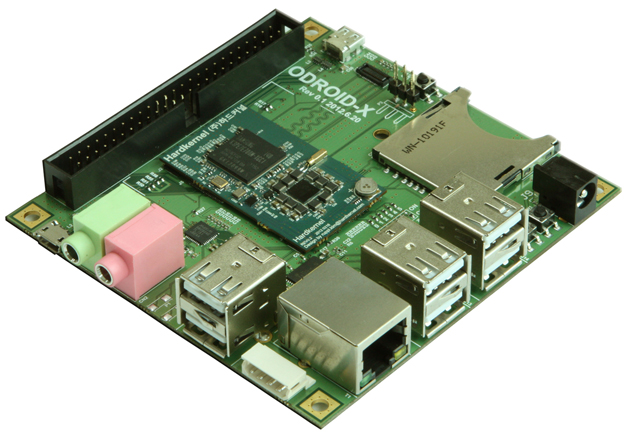
Hardkernel’s little Linux computer, with a quad-core Samsung Exynos CPU

Little Linux computers have attracted a lot of interest from hobbyists this year. The $35 Raspberry Pi ARM board, which met with huge demand when it launched in February, is a compelling solution for affordable embedded projects. But what if you need more power than the 700MHz ARM11 board can offer?

A Korean hardware manufacturer called Hardkernel is launching a high-end alternative. The company’s new ODROID-X board comes with a Samsung Exynos 4 processor, a quad-core CPU clocked at 1.4GHz. The board also has a quad-core Mali 400 GPU, 1GB of RAM, six USB host ports, an ethernet adapter, headphone and microphone jacks, and an SDHC card slot for storage.

With four times as much RAM as the Raspberry Pi and a much more powerful processor, the Hardkernel board seems like a nice option for more computationally-intensive usage scenarios. The system is still highly compact, measuring at about 3.5 x 3.7 inches.


from Ars Technica