A nerdy father of two, a husband of a beautiful and understanding wife, an engineer who loves anime and tinkering with PCs and games, but most of all, loves God.
The future of space travel depends on our ability to reach celestial pit stops faster and more efficiently. As such, NASA is working with a technology development company on a new propulsion system that could drop off humans on Mars in a relatively speedy two months’ time rather than the current nine month journey required to reach the Red Planet.
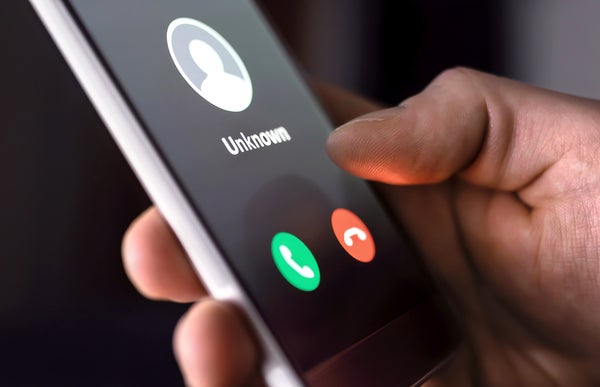
Cop-Proof Your Phones Right Now
NASA’s Innovative Advanced Concepts (NIAC) program recently selected six promising projects for additional funding and development, allowing them to graduate to the second stage of development. The new “science fiction-like concepts,” as described by John Nelson, NIAC program executive at NASA, include a lunar railway system and fluid-based telescopes, as well as a pulsed plasma rocket.
The potentially groundbreaking propulsion system is being developed by Arizona-based Howe Industries. To reach high velocities within a shorter period of time, the pulsed plasma rocket would use nuclear fission—the release of energy from atoms splitting apart—to generate packets of plasma for thrust.
It would essentially produce a controlled jet of plasma to help propel the rocket through space. Using the new propulsion system, and in terms of thrust, the rocket could potentially generate up to 22,481 pounds of force (100,000 Newtons) with a specific impulse (Isp) of 5,000 seconds, for remarkably high fuel efficiency.
PPR Final Render w music
It’s not an entirely new concept. NASA began developing its own version back in 2018 under the name Pulsed Fission-Fusion (PuFF). PuFF relied on a device commonly used to compress laboratory plasmas to high pressures for very short timescales, called z-Pinch, to produce thrust. The pulsed plasma rocket, however, is smaller, simpler, and more affordable, according to NASA.
The space agency claims that the propulsion system’s high efficiency could allow for crewed missions to Mars to be completed within two months. As it stands today with commonly used propulsion systems, a trip to Mars takes around nine months. The less time humans can spend traveling through space, the better. Shorter periods of exposure to space radiation and microgravity could help mitigate its effects on the human body.
The pulsed plasma rocket would also be capable of carrying much heavier spacecraft, which can be then equipped with shielding against galactic cosmic rays for the crew on board.
Phase 2 of NIAC is focused on assessing the neutronics of the system (how the motion of the spacecraft interacts with the plasma), designing the spacecraft, power system, and necessary subsystems, analyzing the magnetic nozzle capabilities, and determining trajectories and benefits of the pulsed plasma rocket, according to NASA.
The new propulsion system has the potential to revolutionize crewed spaceflight, helping humans make it to Mars without the toil of the trip itself.
For more spaceflight in your life, follow us on X and bookmark Gizmodo’s dedicated Spaceflight page.
The most common fraud in the U.S. over the past year was the impostor scam. More than 856,000 instances, collectively draining $2.7 billion nationwide, were reported to the Federal Trade Commission in 2023. First, swindlers fake familiarity or authority—maybe by stealing the identity of a friend or relative or claiming to be a bank representative or a federal agent. Then, in that guise, they call, text or e-mail you and attempt to take your money.
And now artificial intelligence has larded these scams with an additional layer of duplicity: inexpensive voice-cloning services that an impersonator can easily abuse to make deceptive—and astonishingly convincing—phone calls in another person’s voice. These AI tools digest speech samples (perhaps snatched from videos posted online or from a supposedly “wrong number” phone call) and generate audio replicas of the stolen voice that can be manipulated to say basically anything.
If there were a golden rule to thwart AI-infused phone scams, it might be something like this: Online or on the phone, treat your family members and friends as though they were an e-mail log-in page. Make up a passcode—a safe word or private phrase—and share it with them in person. Memorize it. If they call you in alarm or under unusual pressure, especially if those concerns are connected to requests for money, ask for the code to verify who is on the other end of the line.
On supporting science journalism
If you’re enjoying this article, consider supporting our award-winning journalism by subscribing. By purchasing a subscription you are helping to ensure the future of impactful stories about the discoveries and ideas shaping our world today.
Adopting a computerlike countermeasure for a problem enabled by computer algorithms is admittedly an unnatural practice. It is a human impulse to trust a family member’s voice, said Jennifer DeStefano, a target of an attempted scam, to a Senate judiciary subcommittee last June. Perpetrators had called her phone, claimed her then 15-year-old daughter was kidnapped and demanded a ransom. The plot fell apart when DeStefano learned her child was safe on a ski trip—but only after DeStefano had at first been thoroughly deceived by an AI mimic of her daughter’s voice. “How many times has a loved one reached out to you in despair and you stopped them to validate their identity?” she wrote in her testimony. “The answer is, more than likely, never.”
Using a verbal password or code phrase may simply be the most straightforward way to combat AI voice scams. “I like the code word idea because it is simple and, assuming the callers have the clarity of mind to remember to ask, nontrivial to subvert,” says Hany Farid, a professor at the University of California, Berkeley, who has studied audio deepfakes. “Right now there is no other obvious way to know that the person you are talking to is who they say they are.” Farid and his wife have a code word. His pro tip: “Ask each other what the code is every once in a while—because unlike a [computer] password, we don’t use the code word very often, so it is easy to forget.”
With scam fears and dangers becoming such a prominent part of technology news, many of the staff at Scientific American have established safe words, too. Here’s what some of our editors had to say about choosing a memorable and efficient code:
My family has had an all-purpose code word since I was a kid. It was originally developed to keep me from being kidnapped in the car line in elementary school, though I don’t think we ever had to use it. The idea was that if someone showed up to pick me up claiming that they were sent by my parents, I should ask them for the code word. Nowadays the code word mostly exists to make sure my parents don’t get scammed by someone pretending to be me. —Allison Parshall, associate news editor
Establishing a code word with my parents was fairly easy—we had one from middle and high school that was easy to reuse. It was harder to coordinate one with my partner. For each suggestion, he provided an imaginary situation in which hostage-takers could use the word without even knowing its secret meaning. We’re still working to find one that’s foolproof. In the meantime, I’m reminding friends and family that, when in doubt, driving in person to the bank or the police department is more reliable than trusting a voice over the phone claiming to work for either place! —Arminda Downey-Mavromatis, associate engagement editor
My wife and I settled on a pet name that one of us has for the other that was historically reserved for when we’re being twee and annoying (and now, I guess, vigilant). With my brother—because I do not have a cutesy nickname for him—our defense is rooted in the fact we’re never far from our phone. I generated a QR code that we both linked to a one-time password authenticator app. One of us begins the challenge by asking, “Hey, buddy, what’s your number?” The correct answer is the first three digits of the six-digit code displayed in the authenticator app. Then the original challenger reads out the last three numbers. A match is a strong indicator that all parties involved are who they say. —Ben Guarino, associate editor, technology
After reading a scary article about these scams, I contacted my parents and my sister, and we all agreed on a code word based on a funny family lore story about my dad’s childhood. Hopefully we’ll be able to remember it if someone ever tries to ensnare us in one of these! —Clara Moskowitz, senior editor, space and physics
For a while now, I’ve been worried about scammers using generative AI to mimic my or a family member’s voice to scam us out of our money. So when news stories started to confirm that this was actually happening, I told my family that we should make a code word or phrase that we could use to know it was really us. I suggested a question-and-answer pair based on something only our family would know, and one of my family members immediately blurted out the answer in a group text, necessitating a new one. That kicked off a thread where we proceeded to list different family memories and in-jokes, some of which even we didn’t know the answer to! It was a fun trip down memory lane. —Tanya Lewis, senior editor, health and medicine
In addition to being a pretty great device all on its own, the Steam Deck makes an ideal stream machine, playing either your own local games from a dedicated gaming PC or cloud games via a service like GeForce Now or Stadia (RIP, Stadia). But actually getting to the service using the Steam Deck’s console-style controls is a bit of a headache. Nvidia is fixing that with the latest update.
The beta method is specifically for the Steam Deck, which can’t easily run the GeForce Now Windows application like the ROG Ally, MSI Claw, et cetera. The Steam Deck needs to use the browser version of GeForce Now, streaming games more or less like an embedded YouTube video. But booting up the browser and navigating to a web page isn’t what the Steam Deck’s library-focused interface is best at.
It’ll download an “applet that will install a shortcut to GeForce Now right in your Steam library, making it as easy to launch as any other game. Not bad, not bad at all.
I’ve spent a day with the Rabbit R1, and to say that I was underwhelmed would be an understatement. In fact, I was surprised at how little it offers at the moment, and even from what it offers, what a poor job it does at that. According to the CEO Jesse Lyu, the R1 is “the worst this technology will ever be,” which is kind of the nature of technology but not a great selling point—especially when you’re charging 200 bucks for it. If I were to streamline my thoughts on this device, these are the 10 things that left me considerably unimpressed.
Johnny Knoxville Loved Collectibles | First Fandoms
1. It’s half-baked at best
This has been the most common complaint about the R1 so far: it is an unfinished, half-baked device. You get a bunch of painfully basic, AI chatbot-like features, and all the exciting stuff is promised for later this year. This includes teaching the R1 actions that it will be able to generalize for various applications and a teach mode that will allow users to create personalized agents to handle specific tasks.
The company has been transparent about this and the CEO admits that the device “is in a very early stage”. Considering we’re required to pay full price for an incomplete product, this is less than ideal.
At the moment, the R1 isn’t even close to providing value that’s worth the price. Paying this amount for a gadget that is only able to tell you about the weather and play a song is ridiculous. It’s apparent that we’re simply the Rabbit’s guinea pigs here beta testing their debut product for them.
2. A very strange app menu
There are four apps you can use on the R1 out of the box: Spotify, Uber, DoorDash, and Midjourney. The app selection didn’t excite me because I use Lyft and Uber Eats for my rides and food deliveries. My coworker, Kyle, uses Seamless to order food and he wasn’t too happy about the app menu, either. I also find the inclusion of Midjourney pointless and a very random attempt at making the device as AI-heavy as possible.
3. Too many mess-ups
I may have forgiven the R1 for its limited app menu (considering more options are allegedly on the way) if the apps at least worked. Uber got both my pickup and drop-off location completely wrong the first time but worked on the second attempt. For something like calling a ride, I wouldn’t want to trust a product with a 50% success rate. And if I have to double-check the R1 to see if it got everything right, I might as well use my phone for the job.
This gadget’s overarching aim is to “save you time” and minimize the taps on your phone by “eliminating the need to navigate multiple apps.” But with the current number of glitches and the things it hallucinates out of nowhere, it’s actually wasting my time.
Spotify was a complete mess. It would sometimes acknowledge my command to play a specific song but still not play anything, and would also often completely ignore my repeated requests to pause playback. It constantly got song and artists’ names wrong and played Josh Levine when I asked for Avril Lavigne.
The biggest disappointment was that it completely failed to recognize my personal Spotify account even though I was logged in via the Rabbithole. I asked it to play a song from my playlist titled ‘paki’ and it started playing a random Nusrat Fateh Ali Khan song with the word ‘Pakistan’ in it.
4. Woefully average Vision feature
The Rabbit Eye-enabled Vision feature is pretty bare-bones as is. You point the camera at something and the R1 can tell you what it is. It’s a feature we’ve had for years on Google Lens. Except, it was average at best at that, too. It got some queries completely wrong and other answers were very vague.
Screenshot: Dua Rashid / Gizmodo
It confidently labeled my colleague’s black shirt ‘red’. The response to another question wasn’t incorrect but vague to the point of being useless; he was expecting an exact name for a brand of shoe.
5. Mediocre translation feature
English to Urdu translation.Photo: Dua Rashid / Gizmodo
The R1 allows bidirectional translation between an impressive number of languages but I wouldn’t trust its translation capabilities in a situation when I’d actually need them. They’re unreliable and often inaccurate. It did a passable job with Urdu and Arabic but stuttered a lot with Hindi. Again, Google Translate exists and is free, so the middling translation abilities of the R1 didn’t impress me.
6. Poor location services
I should have guessed this device has no idea where I am when I asked for a weather update and it gave me the weather report for Anaheim, California (I’m in Manhattan). It did eventually get it right but I could have spent half that time checking the weather app on my phone.
Though the R1 boasts GPS services, it got my zip code completely wrong upon asking. I corrected it and it apologized for the error, but still recommended a Starbucks in Indiana when I asked for the closest one.
7. Connection drops with RabbitOS
I was often asked to wait after making a request because of an unexplained connection drop with RabbitOS. The R1 would take a while, tell me it’s working on reestablishing the connection, and then get back to my request. This could be fixed with the next software update, but it’s pretty bothersome.
8. Incredibly short battery life
The 1,000 mAh battery on this device lasts around five to six hours and takes an hour to recharge. Even with the recent software update that slightly improved idle battery performance, I don’t see this gadget as something that could be my all-day pocket companion. It went down by 6% when it was just on standby for two and a half hours.
9. Your sim service is the subscription fee
The folks at Rabbit made sure to reiterate multiple times that, unlike the AI Pin, there’s no monthly subscription fee on the R1. But you still need cellular service (along with Wi-Fi) to operate it. So you’re still technically paying a monthly fee to be able to use this device. The monthly expense on the AI Pin is $24, and getting another phone line for the R1 is going to cost you roughly the same.
10. Not as context-intelligent as advertised
The demo video showed Rabbit’s CEO asking the R1 to play a song, and then asking it to play “another song from the same album.” The device’s memory and the ability to understand context were the main capabilities being marketed here. I tried the exact same prompts countless times. It couldn’t get it right even on one attempt. Half of the time, it played a completely random song, and on other occasions, it asked me what album I was talking about.
LONDON — SpaceX’s Starship will be a game changer for space-based solar power generation and will make orbiting power plants not only affordable, but cheaper than many other methods of generating electricity on Earth, according to Michigan-based start-up Virtus Solis.
Virtus Solis, founded by former SpaceX rocket engineer John Bucknell, introduced their solar power beaming concept at the International Conference on Energy from Space held in London on Wednesday, April 17.
"For space-based solar power to work, you need to have heavy-lift launch, you need to have wireless power transfer and you need to have the economics," Bucknell said at the conference. "Once you have low-cost access to space, that’s one less miracle that you need to have solved."
An illustration of a SpaceX Starship deploying several orbital manufacturing satellites in space. (Image credit: Victus Solis)
The cost of launching satellites to space has plummeted in recent years thanks to the advent of reusable rockets pioneered by SpaceX. The company currently charges under $3,000 per kilogram of payload, but that’s still too much for space-based solar power generation, which will require enormous orbiting arrays larger than the world’s largest currently orbiting object, the International Space Station.
SpaceX promises that once Starship is fully up and running, it will cost as little as $10 per kilogram to loft satellites to space. Although that estimate might be a little too optimistic, Bucknell says that once the cost of launch into low Earth orbit falls below $200 per kilogram, space-based solar power will become cheaper than Earth-based nuclear plants or gas and coal-fired power stations.
"Once Starship is fully reusable, that will drive down the cost," said Bucknell. "SpaceX has recently flown a Falcon 9 booster for the 20th time and they are recertifying for 40 launches. Conceivably, Starship could do hundreds of launches. But we are basing our assumptions on a 15-times use."
Breaking space news, the latest updates on rocket launches, skywatching events and more!
Currently, Earth-based photovoltaic panels provide the cheapest source of electricity at less than $30 per megawatt-hour. But the sun doesn’t shine at night, and energy experts struggle to make up for that daily drop with other renewable sources. So far, nuclear, gas and coal-fired plants need to be on standby to cover the demand after dark or in bad weather. But gas and coal need to be phased out for the world to meet its emission reduction goals.
And nuclear power, Bucknell said, is much more expensive. "The cost of nuclear power is between $150 and $200 per megawatt hour," said Bucknell. "We think that our system could get down to around $30 per megawatt hour once at scale."
Virtus Solis wants to build giant photovoltaic arrays up to 0.6 miles (1 kilometer) across that would be assembled in orbit by robots from 5.3-foot (1.6 meters) wide modules. Hundreds of such modules would be delivered by a single Starship into the Molniya orbit, a highly elliptical orbit with the closest point about 500 miles (800 km) above Earth and the farthest at 22,000 miles (35,000 km).
An illustration of the Molniya orbit. (Image credit: NASA Earth observatory)
A satellite in this orbit takes 12 hours to complete one lap around the planet, but the nature of this orbit is such that the spacecraft stays for more than 11 hours in the most distant region from where it can view nearly an entire hemisphere.
A constellation of two or more such arrays would therefore provide constant "baseload power" to a region, said Bucknell. A system of 16 arrays would cover the entire world, beaming energy in the form of microwaves to giant receiving antennas on the ground.
A still from a Victus Solis promotional video showing an in-space manufacturing spacecraft maneuvering a solar power element into place in a large array. (Image credit: Victus Solis)
Bucknell said the company is now working on improving the efficiency of wireless power transmission, which is another major stumbling block for space-based solar power. Current systems have efficiencies of around 5 percent but for practical use, efficiencies of around 20 percent will be needed.
In February, Virtus Solis announced plans to launch a demonstration power-beaming satellite in 2027 that would test in-space assembly of solar panels and transmit more than one kilowatt of power to Earth, according to Space News. The firm hopes to build a commercial megawatt-class solar installation by 2030.
The Young Sheldon channel on TikTok just dropped a delightful behind-the-scenes video that’s got everyone buzzing! In a surprise twist, young Sheldon, portrayed by the talented Iain Armitage, meets his older self, played by none other than Jim Parsons, in a playful crossover tease between the two shows.
Yeah, we’re finally on TikTok bc we heard about these great filters…
BAZINGA!
This sneak peek is more than just a fun moment—it’s also a glimpse into the upcoming series finale of Young Sheldon, where Jim Parsons will reprise his role as adult Sheldon, bringing closure to his character’s journey. But that’s not all! Mayim Bialik is also set to make an appearance, sparking speculation about a potential mini-reunion from The Big Bang Theory universe.
I really like how the transition between the two versions of the character is staged as if young Sheldon used a Tiktok filter to see how he would look when he got older! It even changed his voice, which he does not appreciate at all.
Yesterday, for #InternationalDanceDay, Boston Dynamics unveiled a delightful surprise! Meet Sparkles, the adorable and fuzzy robotic dog designed to steal your heart with its moves. Sparkles isn’t your average robotic companion; it’s a custom costume crafted exclusively for Spot, blurring the lines between robotics, art, and entertainment. As Spot and Sparkles groove together, they showcase a creative side of technology, proving that innovation can be as delightful as it is cutting-edge. Watch below!