This Is How Long Your Walks Should Be to Keep You Healthiest, Study Finds

https://gizmodo.com/this-is-how-long-your-walks-should-be-to-keep-you-healthiest-study-finds-2000677946

Here’s a new life hack to help keep the grim reaper at bay. Research out today seems to have pinned down the best length for a life-extending walk.

Scientists at the University of Sydney and others examined the walking habits of more than 30,000 people. Sedentary people who got most of their daily steps through 10- to 15-minute-long walks, they found, were the least likely to develop cardiovascular disease or to die early. The findings suggest an easy way for less active people to improve their heart health, the researchers say.

“These results can inform physical activity recommendations for individuals—particularly those who are otherwise sedentary or low-active—to incorporate longer, purposeful walking sessions into their daily routines to optimize health outcomes,” they wrote in their paper, published Tuesday in the Annals of Internal Medicine.

10,000 steps not needed

Contrary to popular belief, walking 10,000 steps a day isn’t the be-all, end-all of optimal health.

For starters, this number was originally coined from a marketing campaign in the 1960s by a Japanese company looking to sell their pedometers. Secondly, actual studies have found that walking as little as 2,300 to 4,000 steps a day can still keep you healthy and lower your risk of dying early (at the same time, there doesn’t seem to be an upper limit to the health benefits of walking even more).

Though any amount of physical exercise and steps taken is better than none, the researchers of this current study were interested in figuring out whether the duration of a walk is important, too. They analyzed data from the UK Biobank, a long-running project following the long-term health of residents. As part of the project, some participants were asked to wear a pedometer to tally their daily steps for a week.

The researchers specifically looked at 33,560 people between the ages of 40 and 79 years (the average age was 62) who were sedentary but had no existing history of heart disease or cancer when they wore the pedometers.

Over an average follow-up period of nearly eight years, 735 people died, while over 3,000 people developed cardiovascular disease. After accounting for various factors, the researchers found that people who took longer walks had the lowest risk of heart disease and early death compared to everyone else, while the greatest risk was seen in people who mostly took short walks lasting five minutes or less.

What should this mean for you?

This study is observational, meaning it can’t definitively prove a causative link between longer walks and better health.

The researchers also note that they tried to account for many variables in their analysis, such as the number of steps taken (people who walk longer tend to take more steps). But it remains possible they missed some important differences between long- and short-walkers that would better explain why the former live longer, outside of their average walking length.

While more research to confirm these findings would be valuable, it’s already clear that taking regular walks (or any form of physical activity) is great for you. And for those looking to make the most of their walks, it certainly seems reasonable that stretching them out a few minutes longer can be even better.

via Gizmodo https://gizmodo.com/

October 28, 2025 at 11:32AM

Microsoft reportedly ordered its Xbox division to boost profits to an unrealistic level

https://www.engadget.com/gaming/xbox/microsoft-reportedly-ordered-its-xbox-division-to-boost-profits-to-an-unrealistic-level-150210398.html?src=rss

The last 12 months have been pretty depressing for anyone invested in the long-term future of Xbox and the general health of the games industry. Back in May, Microsoft laid off 3 percent of its global workforce, with the company’s gaming division being one of the big casualties, and a number of upcoming titles were subsequently canceled. It painted a picture of a brand in crisis, but according to a new report, Microsoft has been setting its gaming division unrealistic profit targets for several years.

Sources told Bloomberg that in 2023, Microsoft implemented an "across-the-board goal" of 30 percent profit margins, which the report says Microsoft calls "accountability margins" internally. As Bloomberg’s Jason Schreier reports, this target, which was set by Microsoft’s Chief Financial Officer Amy Hood in fall 2023, is well above the recent industry average of 17-22 percent quoted by S&P Global Market Intelligence. Schreier adds that Xbox’s own average in the last six years is between 10 and 20 percent.

S&P Global analyst Neil Barbour told Bloomberg that Microsoft’s 30 percent target is the kind of margin "usually reserved for a publisher that is really nailing it." This is despite its gaming division only landing at 12 percent in the first nine months of 2022, as quoted in the report.

A Microsoft spokesperson told Bloomberg that it views individual games and projects differently with regards to what constitutes success, adding that it sometimes has to making tough decisions, including ending development on games, so it can shift its resources toward the projects that are "more aligned with our direction and priorities."

The new profit targets were introduced in the same year that Microsoft finally completed its $68.7 billion acquisition of Activision Blizzard, landing it hugely popular franchises such as Call of Duty and Diablo. Back in 2020 it acquired ZeniMax, the parent company of Bethesda, which means that long-running series like The Elder Scrolls and Fallout also now sit under the umbrella of Xbox’s gaming division.

Since 2018, Microsoft has been putting all of its first-party releases on Game Pass from day one, but this model has contributed to games failing to hit their 30 percent profit margin targets, according to Bloomberg’s sources. Xbox does offer developers a credit it calls "member-weighted value," which takes into consideration factors such as the collective number of hours Game Pass subscribers have spent in a game, although this formula tends to benefit multiplayer titles the most. Going forward, Bloomberg’s sources said Microsoft is likely to favor funding games with cheap development costs and proven revenue-generators over riskier projects.

Xbox has been successful in bringing some of its first-party games to other platforms, including its primary rival in Sony’s PS5, with major titles such as Forza Horizon 5 and Indiana Jones and the Great Circle making the jump in the last 12 months. In the wake of Microsoft raising the price of Xbox consoles in the US last month, the second time it has done so in 2025, it also slapped Game Pass Ultimate with a 50 percent subscription fee hike at the start of October. This week the company increased the cost of Xbox dev kits by $500.

This article originally appeared on Engadget at https://ift.tt/aUH9vLP

via Engadget http://www.engadget.com

October 23, 2025 at 10:08AM

Nissan made a nifty solar panel system for its Sakura EV

https://www.engadget.com/transportation/evs/nissan-made-a-nifty-solar-panel-system-for-its-sakura-ev-061235566.html?src=rss

As we’ve seen with Toyota’s Prius Prime, putting a solar panel on a car’s roof is a nifty idea but can only gain you a few free miles a day due to the limited size. With a new prototype of its hyper-popular Sakura "kei" EV, Nissan has the answer: a bigger solar panel roof called the AO-Solar Extender. When fully stretched out on a sunny day, it can add about 1,864 miles of driving distance a year and power multiple accessories.

The panel works whether you’re driving or parked. When extended (in "solar pompadour" mode as my colleague put it), it generates 500 watts on sunny days. At the same time, it helps block sunlight from the windshield, "reducing cabin temperature and lowering the need for air conditioning power consumption," Nissan noted.  

Nissan made a nifty solar panel system for its Sakura EV
NISSAN DESIGN

When retracted in driving mode, it still pumps out 300 watts in the sun (80 watts in the rain), quite a bit more than the 185 watts max generated by the Prius Prime’s solar roof. And if you’re worried about aerodynamics, Nissan said the roof is designed to minimize drag and integrate well with the Sakura’s design. 

It’s not just a fun exercise, as Nissan said it’s planning to launch the AO-Solar Extender commercially, with details to follow at a later date. It could be a useful accessory on the Sakura, which has been Japan’s most popular EV since 2022 thanks to its "sufficient" range, cute kei looks and spacious interior. The automaker will show it off at the Japan Mobility Show starting on October 30, 2025. 

This article originally appeared on Engadget at https://ift.tt/ezME2iZ

via Engadget http://www.engadget.com

October 24, 2025 at 01:18AM

This Tiny German Start-Up Says It’s Built the World’s Most Efficient EV Motor

https://www.autoblog.com/news/this-tiny-german-start-up-says-its-built-the-worlds-most-efficient-ev-motor

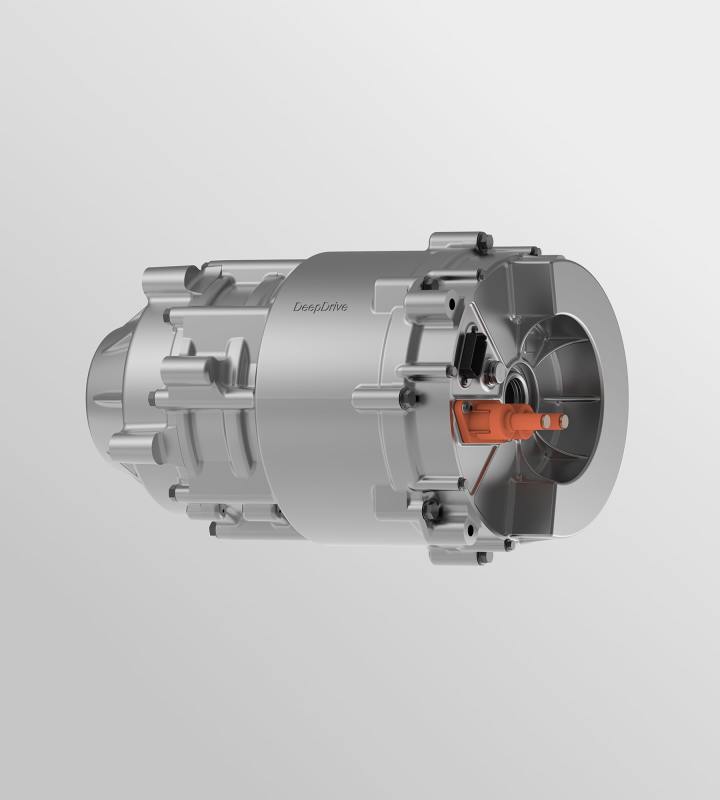
A Munich-based start-up called DeepDrive is gaining attention across the auto industry for its next-generation electric motor technology, and it may be on the cusp of a genuine breakthrough. The company’s compact, dual-rotor drive units promise up to 20 percent greater efficiency than today’s standard EV motors, a potential game-changer in an increasingly competitive global market.

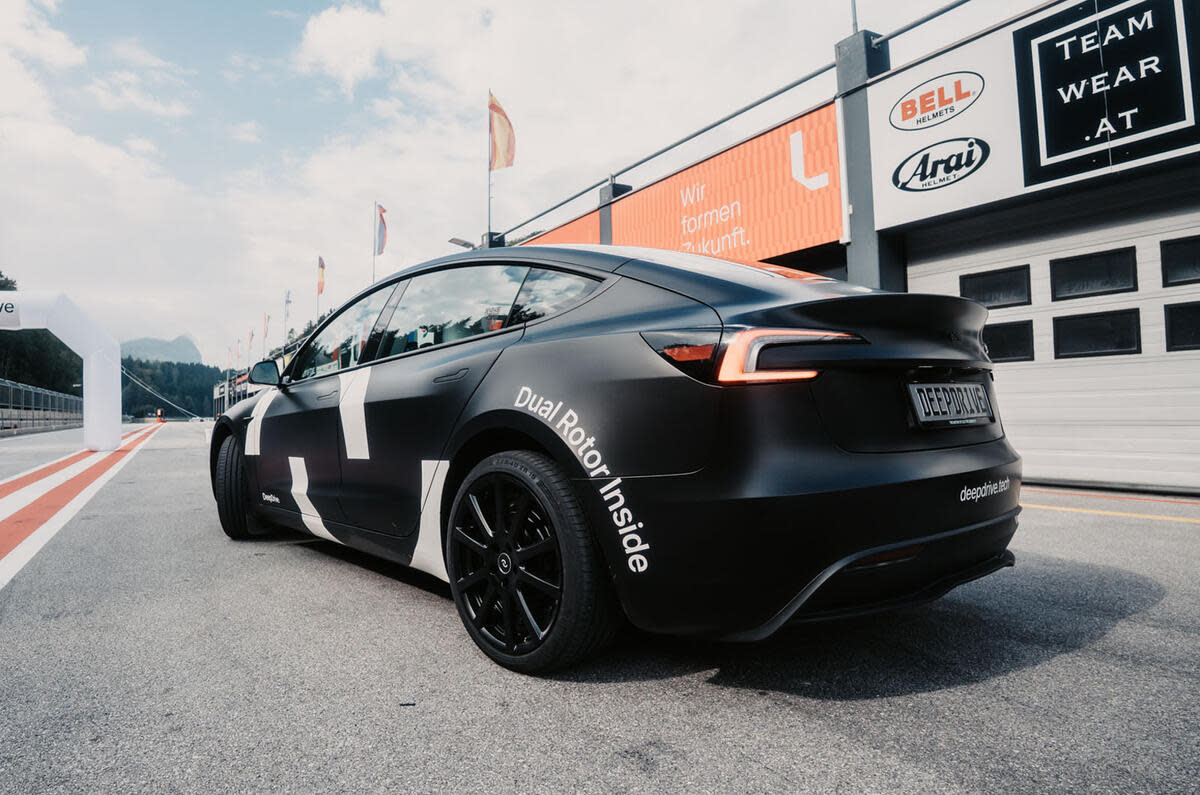
DeepDrive’s engineers have already begun testing the design in prototype vehicles from major automakers, including one test program running at Austria’s Salzburgring circuit. The technology’s goal is simple: extract more range and power from the same battery capacity, using less space and fewer materials.

DeepDrive

A Smarter Motor for a Smarter EV

DeepDrive’s most distinctive feature is its dual-rotor topology, which maximizes the magnetic field’s efficiency to create more torque while reducing energy losses. The setup is also more compact, giving carmakers greater flexibility in packaging and weight distribution, advantages that could redefine how future EVs are designed.

If production scaling succeeds, the efficiency gains could ripple throughout the market. Smaller, lighter battery packs could deliver the same range, cutting costs and environmental impact simultaneously. That’s crucial at a time when the world bought 2 million EVs in one month.

The Timing Couldn’t Be Better

Automakers are in a race to keep electric cars affordable after the expiration of federal credits and the ensuing price reshuffle. Many brands are already cutting EV prices by thousands to keep customers interested. A motor that delivers more range for less energy could be the key to maintaining profitability in this new cost-sensitive landscape.

Meanwhile, the technology shift isn’t happening in isolation. Breakthroughs in charging infrastructure are complementing progress on the drivetrain side. Charging is moving toward cable-free, bi-directional systems that will make EV ownership more seamless, especially when paired with more efficient motors.


What’s Next for DeepDrive

DeepDrive’s challenge now lies in scaling its innovation beyond prototypes. Building an efficient, compact motor is one thing; manufacturing it reliably and economically is another. The company’s founders claim the design uses fewer rare-earth materials than conventional motors, which could lower supply risk and improve sustainability, but only if the technology proves viable at mass-production levels.

Industry analysts believe early adoption could happen by 2027 if testing continues to deliver results. For now, major automakers are watching closely, as even incremental improvements in efficiency can make or break the economics of a new EV platform.

Why It Matters

Every stage of the EV race, batteries, charging, and motors, is converging toward the same goal: doing more with less. As global sales accelerate and price competition tightens, DeepDrive’s work could represent the next frontier in EV performance and affordability.

If its claims hold true, the start-up may soon help automakers squeeze more miles, more profit, and more innovation out of every kilowatt.


via Autoblog https://ift.tt/Ww5Pzmy

October 20, 2025 at 02:33PM

Why the F5 Hack Created an ‘Imminent Threat’ for Thousands of Networks

https://www.wired.com/story/f5-hack-networking-software-big-ip/

Thousands of networks—many of them operated by the US government and Fortune 500 companies—face an “imminent threat” of being breached by a nation-state hacking group following the breach of a major maker of software, the federal government warned Wednesday.

via Wired Top Stories https://www.wired.com

October 16, 2025 at 03:50PM

Honda Makes History With Its First 100% Sustainable Jet Fuel Flight

https://www.autoblog.com/news/honda-makes-history-with-its-first-100-sustainable-jet-fuel-flight

Honda Aircraft Company has become the first manufacturer of twin-turbine very light business jets to successfully fly a HondaJet powered entirely by 100% Sustainable Aviation Fuel (SAF). The achievement marks an aviation milestone and highlights Honda’s continued push toward carbon neutrality across all transportation sectors.

The test flight, conducted in Greensboro, North Carolina, used GE-Honda HF120 engines, which were validated for full SAF operation without blending with conventional jet fuel. Until now, most business jet SAF demonstrations have used 50/50 blends. Honda’s ability to operate entirely on sustainable fuel represents a step forward for small aircraft efficiency and environmental performance.

Your browser does not support the video tag.

Honda said the flight proves SAF’s compatibility with smaller turbine platforms and underscores its potential to reduce lifecycle carbon emissions by up to 80% compared with fossil-based jet fuel. The company plans to continue collaboration with regulatory and engine partners to support future certification.


From Roads to Runways

This achievement ties into Honda’s broader sustainability strategy, which spans cars, motorcycles, and now aviation. While the company’s automotive division is known for its efficient hybrids and growing EV lineup, its aircraft arm is proving that decarbonization extends beyond the road.

In the automotive world, Honda continues to sharpen its lineup through smart differentiation. As the Honda Passport Vs. Honda Pilot explains, even its SUVs are being tailored for efficiency and purpose. Similarly, the Honda HR-V Vs. Honda CR-V piece shows how the brand fine-tunes powertrains and space optimization, lessons that extend naturally into aircraft design.

The HondaJet’s Over-The-Wing Engine Mount (OTWEM) configuration, for instance, maximizes aerodynamic efficiency and cabin space while lowering drag, an engineering mindset shared with its most advanced vehicles.


Honda’s Broader Green Vision

SAF adoption is part of Honda’s multi-pronged approach to reaching carbon neutrality by 2050. Beyond aviation, the company is focusing on hybrid refinement and EV scalability, with models like the CR-V serving as key transition points. The automaker’s ongoing comparison testing, including Honda CR-V vs Hyundai Tucson, shows how its efficient hybrid and plug-in variants are keeping the brand competitive in the crossover segment.

In aviation, Honda is applying similar logic, targeting meaningful gains within existing product lines rather than developing entirely new aircraft. This incremental, data-driven strategy keeps costs down while advancing sustainability at a realistic pace.


Why It Matters

For the aviation industry, Honda’s successful 100% SAF flight could accelerate regulatory acceptance for light business jets and inspire other manufacturers to validate smaller turbine platforms. For Honda as a company, it reinforces a brand identity built on efficiency, innovation, and real-world application.

While many automakers are still experimenting with electrification in ground transport, Honda has now demonstrated carbon-reduction leadership above it, literally. The same engineering precision that separates its SUVs, crossovers, and hybrids is now propelling the HondaJet toward a more sustainable sky.

via Autoblog https://ift.tt/Jm3q1FW

October 18, 2025 at 10:15AM