
Brie, cheddar, and other high-fat cheeses linked to lower dementia risk

https://www.popsci.com/health/cheese-lower-dementia-risk/

It’s been found in ancient human feces. The U.S. government stored 6.4 metric tons of it in mountains. And a big hunk of it played a major role in a presidential farewell party. We’re talking about cheese. 

While too much of the popular dairy product can spell tummy troubles and high cholesterol for some, new research suggests that eating more high-fat cheese and cream could be linked to a lower risk of developing dementia. While the findings published today in Neurology®, the medical journal of the American Academy of Neurology, do not prove that it lowers the total risk of the disease, it shows an association. 

The high-fat debate

High-fat cheeses include cheddar, Brie, and Gouda, and contain more than 20 percent fat. High-fat creams such as whipping cream, double cream, and clotted cream typically contain 30 to 40 percent fat. These items are usually labeled as “full-fat” or “regular” versions in grocery stores.

“For decades, the debate over high-fat versus low-fat diets has shaped health advice, sometimes even categorizing cheese as an unhealthy food to limit,” said Emily Sonestedt, PhD, a study co-author and nutritional epidemiologist at Lund University in Sweden, said in a statement. “Our study found that some high-fat dairy products may actually lower the risk of dementia, challenging some long-held assumptions about fat and brain health.”

In this new study, the team analyzed data from 27,670 people in Sweden with an average age of 58 at the beginning of the study. The participants were followed for an average of 25 years. Over the course of the study, 3,208 people developed dementia.

For one week, the participants kept track of what they ate and answered questions about how often they ate certain foods. They also spoke with the researchers about how they prepared their food.

The researchers then compared people who ate 50 grams (about 1.7 ounces) or more of high-fat cheese every day with people who ate less than 15 grams (about half an ounce) daily. Fifty grams of cheese is about two slices of cheddar and a half a cup of shredded cheese and is roughly 15 grams. A serving of cheese is typically one ounce or 28 grams.. 

Of those who ate more high-fat cheese, 10 percent developed dementia by the end of the study. Of those who ate less, 13 percent developed dementia.

Risk factors

After adjusting for age, sex, education, and overall diet quality, the team found that people who ate more high-fat cheese had a 13 percent lower risk of developing dementia compared to those who ate less. 

There are over 100 known forms of dementia, but the four main types are Alzheimer’s disease, vascular dementia, Lewy body dementia, and fronto-temporal dementia. When looking at specific types of dementia, the team found people who ate more high-fat cheese had a 29 percent lower risk of vascular dementia.

There was also a lower risk of Alzheimer’s disease among those who ate more high-fat cheese. However, that risk was only lower for those who do not have the APOE e4 gene variant—a genetic risk factor for Alzheimer’s disease.

Additionally, the team compared people who consumed 20 grams (roughly 0.7 ounces) or more of high-fat cream per day to people who consumed none. For example, 20 grams of high-fat cream is about 1.4 tablespoons of heavy whipping cream and a recommended serving is about 1 to 2 tablespoons. After similar adjustments, the researchers found that those who consumed high-fat cream daily had a 16 percent lower risk of dementia, compared to those who did not consume any. 

They did not find any association between dementia risk and eating low-fat cheese, low-fat cream, high- or low-fat milk, butter, or fermented milk (yogurt, kefir, and buttermilk).

‘When it comes to brain health not all dairy is equal’

One important limitation of this study is that all of the participants were from Sweden, so results may not be the same for other populations. Sonestedt notes that in Sweden, cheese is often eaten uncooked, whereas in the United States it is often heated or eaten with meat. Sweden also has universal health coverage, which the U.S. lacks. Universal coverage typically leads to better health outcomes. Despite spending significantly more money than peer nations, Americans live shorter lives and face more barriers to basic care, so socioeconomics, pollution exposure, and other lifestyle factors can skew nutrition studies like this one.  

“These findings suggest that when it comes to brain health not all dairy is equal,” said Sonestedt. “While eating more high-fat cheese and cream was linked to a reduced risk of dementia, other dairy products and low-fat alternatives did not show the same effect. More research is needed to confirm our study results and further explore whether consuming certain high-fat dairy truly offers some level of protection for the brain.”

The post Brie, cheddar, and other high-fat cheeses linked to lower dementia risk appeared first on Popular Science.

via Popular Science – New Technology, Science News, The Future Now https://www.popsci.com

December 17, 2025 at 03:16PM
RAM prices are painfully out of control: 4 ways to avoid the gouging

https://www.pcworld.com/article/3010391/ram-prices-are-painfully-out-of-control-4-ways-to-avoid-the-gouging.html

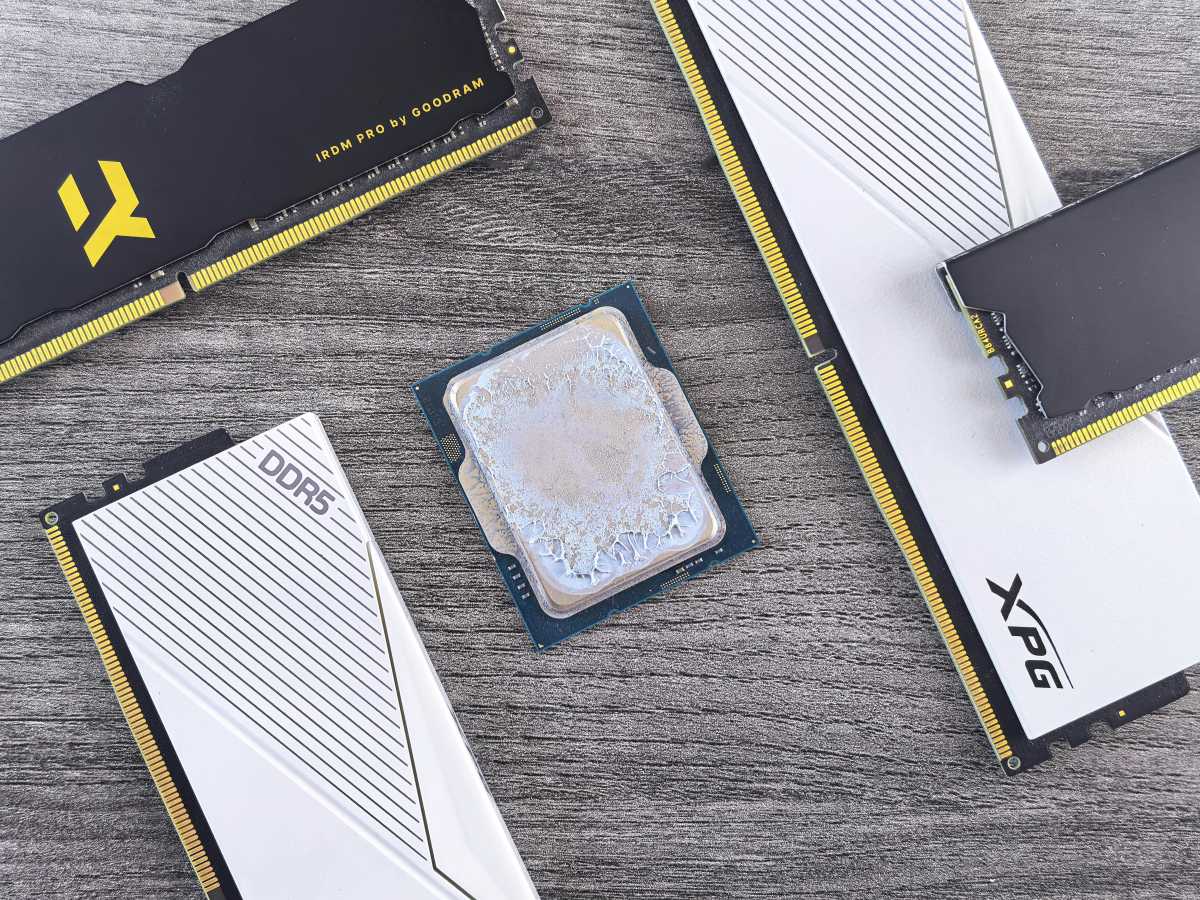
In case you hadn’t heard, there’s currently a RAM crisis affecting the PC market. The high demand by AI companies for RAM has led to a shortage of supply and pushed prices sky high. It’s a big hassle for those wanting to upgrade or build a new PC as they’re faced with paying exorbitant prices for modules. But there are a few things you can do to skirt around the situation. Here I suggest a few ideas.

Buy bundles for RAM

While the cost of individual RAM kits can leave one’s eyes watering, savvy shoppers have managed to score some great deals on RAM bundles. Buying anything in groups to save a few dollars is generally a good idea and the same can be said for RAM. Some bundle deals even include free RAM. For example, Newegg had a bundle deal on a gaming motherboard and free RAM going on Black Friday: If you bought this Asus TUF Gaming mATX motherboard you got 16GB of free Team Group DDR5 RAM as well.

Consider a prebuilt PC

If you’re in the market for a whole PC, you may as well buy a prebuilt PC and get your RAM that way. While buying individual components and building a rig can be extremely expensive in light of the RAM crisis, most companies selling prebuilt PCs still offer their products within a reasonable price range. For example, while a pair of 16GB DDR5 RAM modules can cost as much as $640 on Amazon, you can currently buy a BeastCom Q3 Gaming PC with 16GB DDR5 RAM for as little as $522 — that’s with all the other components added too — a motherboard, CPU, and the tower, included.

If you’re looking for a prebuilt PC be sure to check out our best computer deals article.

Pexels: Andrey Matveev

Choose DDR4 RAM over DDR5 RAM

Looking at the price of RAM on Amazon you’ll see a huge price difference between DDR5 RAM and DDR4 RAM, with DDR4 RAM being in some cases up to $150 cheaper than DDR5 RAM. For example, you can currently buy 32GB of of G.Skill Trident DDR4 RAM for $230, whereas 32GB of G.Skill Trident DDR5 RAM costs $360.

That makes a compelling case for choosing DDR4 RAM for any RAM upgrades or new builds, perhaps pairing the RAM with a Ryzen 5800X3D or Core i7-14700K if you’re building a new rig. DDR4 RAM is still considered good enough for most uses in 2025. It offers significant value for gaming and productivity tasks, with speeds of 3,200MHz or higher being sufficient for most games. While DDR5 offers faster speeds and higher capacities, the performance difference is often minimal for everyday use. You’ll need to be willing to use slightly older platforms and parts to go this route, but you can still find excellent performance available.

Shop the secondhand market

Good bargains can be found shopping in the secondhand market for PC parts with RAM being one of the more reasonable purchases among the different components for sale. As a general tip, don’t just look for standalone RAM sales, if you’re a savvy shopper you should also target old desktops or laptops with the intention to harvest the RAM inside.

Wait it out

Of course, the other thing you could do if you don’t want to pay exorbitant prices right now is wait until RAM prices come back down to a reasonable level. Even though it seems like the crisis won’t end, the day will come when suppliers will catch up with demand.

We saw this happen with the GPU shortage back in 2023 and 2024. GPU prices have since stabilized and returned to mostly normal. So, if your rig is doing swell and doesn’t need any big performance boosts, hold tight for a year or longer and you might be able to save some cash.

Related content

via PCWorld https://www.pcworld.com

December 17, 2025 at 08:12AM

High-Tech ‘Bubble Wrap’ Lets You Hold Fire Without Getting Burned

https://gizmodo.com/high-tech-bubble-wrap-lets-you-literally-hold-fire-in-your-palm-2000699692

Buildings can leak a lot of heat. Scientists think the remedy might come in the form of fireproof, transparent “Bubble Wrap.”

Physicists at the University of Colorado Boulder have developed a new material called the Mesoporous Optically Clear Heat Insulator, or MOCHI for short. Unlike the name, MOCHI is no dessert—it’s a nearly transparent, long-lasting silicon gel that insulates so well, you could hold a flame on your palm without getting burned. Sounds unlikely? Here’s the video evidence, courtesy of the team:

Scaled up, MOCHI could be a thin sheet applied to windows to make buildings more energy efficient, according to a recent Science paper on the material. Further down the line, MOCHI could also appear in “applications ranging from extraterrestrial habitats to lightweight apparel,” Ivan Smalyukh, study senior author and a physicist at CU Boulder, told Gizmodo in an email.

Bubble wrap air-trappers

MOCHI appears flat and transparent on the surface, but zoomed in, the material is actually a collection of tiny pores thinner than the width of a human hair, according to the paper. The secret to MOCHI’s insulating abilities lies within these small air bubbles, which trap incoming or outgoing heat within their networks.

This mechanism is similar to aerogels, which NASA uses to insulate its Mars rovers. However, the air-trapping bubbles in aerogels are typically scattered throughout the material and reflect light, giving the final material a cloudy appearance.

By contrast, MOCHI reflects around 0.2% of incoming light. About 90% of the material is air, making the material almost completely transparent, Smalyukh explained. For one of their experiments, Smalyukh and colleagues applied MOCHI to a cold window and found that doing so stopped roughly 95% of heat transfer, somewhat like high-performance building roofs and walls—but transparent, he added.

Mochi Transparency Test
CU Boulder researchers show off the transparency of MOCHI. Credit: Glenn J. Asakawa/CU Boulder

Is your building leaking?

According to Smalyukh, a major motivation for this project was the not-so-ideal energy efficiency of buildings worldwide. Specifically, buildings consume around 40% of energy worldwide, but poor insulation often leads to heat leaks that increase how much energy residents use to keep themselves comfortable, he said.

By contrast, most existing insulation materials are opaque and look unattractive when used on windows or building exteriors. MOCHI was devised to address both issues.

“Suitable building materials and technologies could allow for comfortable indoor environments at no or minimal energy consumption,” he said. “Thus, windows may finally even acquire new functions, well beyond what they are known for throughout the millennia of uses.”

A MOCHI barbecue

That said, MOCHI is still under development, as fabrication still takes quite a long time, the researchers admitted in a statement. But the team is hopeful. MOCHI ingredients are on the cheaper side, which “bodes well” for bringing the product to markets, Smalyukh said in the statement.

The team also sees much potential for MOCHI as a solution for energy sustainability. For instance, MOCHI could be repurposed as solar panels for buildings, especially in climate zones with limited access to sunlight, Smalyukh explained.

As of now, the researchers continue to test and refine their product. It’s also led to some interesting moments, like using MOCHI as a miniature grill to cook some sausages.

via Gizmodo https://gizmodo.com/

December 15, 2025 at 10:39AM

OpenAI just launched an app store inside ChatGPT

https://www.engadget.com/ai/openai-just-launched-an-app-store-inside-chatgpt-133049586.html?src=rss

OpenAI has introduced an app directory that’s now available right inside ChatGPT, the company announced. "Apps extend ChatGPT conversations by bringing in new context and letting users take action like order groceries, turn an outline into a slide deck or search for an apartment," the company wrote in a blog post. OpenAI also noted in a help document that "connector" apps like Google Drive are now simply called "apps."

The new apps section (on iOS, Android and web) is divided into Feature, Lifestyle and Productivity categories, letting you connect to commonly used apps and sites like Booking.com, Spotify and Dropbox. To use an app, simply click on it, hit "Connect" then authorize the app to access ChatGPT. With that done, you can then start a chat related to that app. In the case of Dropbox, for instance, you’ll be able to "gather insights, prepare briefs and summarize reports or internal documents," according to the description. Once connected, any app can be accessed by doing an @ mention of it.

A new addition that came along with the store is an Apple Music app that, like Spotify, helps users find music, create playlists and manage their libraries through a chat interface. Another is DoorDash, which lets you transform recipes, meal planning and staples into "an actionable shopping cart."

Along with the app directory, OpenAI is now allowing developers to submit apps for review and publication in ChatGPT according to the company’s app submission guidelines. It also published resources to help developers build such apps, including best practices, open-source example apps, an open-sourced UI library for chat-native interfaces and a step-by-step quickstart guide. That’s on top of the software developer kit (SDK) that OpenAI introduced in October.

OpenAI noted that for now, developers can only monetize apps by linking out from the ChatGPT app to the native app or website — but the company is exploring internal monetization options as well. Privacy was also emphasized, with companies required to provide "clear" policies.

The new feature is a big part of Sam Altman’s promises to make ChatGPT more versatile with the addition of custom "GPT" bots. "Over time, we want apps in ChatGPT to feel like a natural extension of the conversation, helping people move from ideas to action, while building a thriving ecosystem for developers," the company wrote.

This article originally appeared on Engadget at https://ift.tt/8vfVGJo

via Engadget http://www.engadget.com

December 18, 2025 at 07:38AM