NASA spots huge sunspot complex facing Earth. What that means for us

https://www.pcworld.com/article/2998951/nasa-spots-huge-sunspot-complex-facing-earth-what-that-means-for-us.html

One of the largest sunspot formations of the past several years is currently visible on the sun. The group, catalogued as AR 4294-4298, is so large that several of the dark regions exceed the Earth’s diameter. According to Newsweek, these are the largest sunspots in a decade.

With binoculars or a telescope and an appropriate solar filter, the spots on the western side of the sun can be clearly identified. NASA’s solar probe Solar Dynamics Observatory (SDO) recently documented a solar flare in this region.

Possible effects on Earth

The sunspots are currently pointing towards Earth. The Space Weather Prediction Center (SWPC) of the US National Oceanic and Atmospheric Administration (NOAA) reports that coronal mass ejections (CME) from the active regions have not yet hit Earth. Nevertheless, experts predict that they could turn to more favorable positions over the next week, such that activities like solar flares could also be felt on Earth.

For those of us on Earth, this could mean a special visual spectacle: auroras are possible when the plasma hurled into space by the sun hits the Earth’s magnetic field. The sunspot AR 4274 already caused spectacular northern lights some time ago. After rotating around the sun’s axis, the sunspot is now back under the new designation AR 4294-4298 and it’s significantly larger than before.

Historical comparison and risks

SpaceWeather.com draws a comparison with the sunspot region of 1859, which triggered the so-called “Carrington Event,” which was the strongest documented solar storm to date. The current formation is around 90 percent the size of that historical one.

Although the exact impact on Earth and technology is still unclear, strong solar storms can jeopardize satellites, including systems like Starlink as well as GPS-based navigation systems. According to some studies, underwater internet repeaters could be particularly vulnerable, leading to regional or even global outages. Land-based fiber optic connections are less affected, so the US is somewhat less at risk.

Experts are monitoring the sunspot activity closely so that they can react in good time in the event of an emergency.

via PCWorld https://www.pcworld.com

December 3, 2025 at 10:46AM

Calorie Counting and 10,000 Steps a Day — How Closely Should You Follow These 5 Health Goals?

https://www.discovermagazine.com/calorie-counting-and-10-000-steps-a-day-how-closely-should-you-follow-these-5-health-goals-48343

Rules of thumb for maintaining healthy lifestyles may seem ubiquitous. They dictate how many steps we should be getting in a day or how many glasses of water we need to stay hydrated. But how many of these goals have been backed by science, and how many should be put back on the shelf?

Here are five common health goals that you may have heard of and the scientific research that either validates them, or discredits them.

1. Use the Food Pyramid for Balanced Meals

The typical pyramid, with grains at the bottom, fats at the top, and fruits, vegetables, and dairy in between, may have been our first introduction to balanced meals. But this method of meal planning is actually outdated, with origins tracing back to World War II, when food sources were scarce, and rationing was necessary, according to Britannica.

When it comes to improved nutritional guidelines, according to Paige Cunningham, assistant professor of nutritional sciences at Cornell University, MyPlate is now the way to go.

“It’s beneficial for obesity prevention, potentially, and we know this from epidemiological data and randomized control trials,” she says. “It’s striking a balance between all of the different food groups so that we can make sure we are getting that dietary variety that can offer all the nutrients we need for a healthy lifestyle.”

Specifically, MyPlate visualizes a plate half-filled with fruits and vegetables, with the other half quartered into proteins and grains. It also suggests consuming healthy unsaturated fats in moderation.

It isn’t the gospel of dieting, as experts in the Journal of the Academy of Nutrition and Dietetics in 2014 emphasized; it’s more so a method to inspire healthier and more conscious eating practices.


Read More: New Diet in 2025? Basic Nutrition Is the Best Place to Start


2. Drink Eight Glasses of Water a Day

Another classic health goal is to drink at least eight cups of water per day. Drinking adequate amounts of water can lower our risk of developing kidney stones and help remove waste from our bodies, according to a study in Springer Nature Link. But such a myth can be misleading.

“The challenge with that recommendation is that first of all, there’s no evidence that that amount of water is needed,” Cunningham says. “Humans are very good at physiological regulation of hydration status. We drink when we’re thirsty, and that thirst occurs before dehydration. So we’re very good at maintaining the hydration balance that we need.”

Moreover, water isn’t our only source of hydration. According to Cunningham, lots of water-rich fruits and vegetables can help with hydration.

According to Tufts University, women should aim to drink 11 cups, while men should aim for 15 cups of water each day. But ultimately, how much you really need depends on factors like how much you’re moving in a day and the climate where you live.

3. Walk 10,000 Steps Each Day

The idea that 10,000 steps per day is the golden amount for a healthy lifestyle is another popular health myth.

“Very few people get that number of steps, and getting that number of steps doesn’t seem to be necessary,” Cunningham says. “A lot of studies are finding that anywhere between 6,000 to 8,000 steps can confer benefits to health.”

Indeed, a 2019 study published in JAMA Internal Medicine examining the relationship between step counts and mortality rates in older women found that mortality rates progressively decreased with increasing step counts, peaking at around 7,500 steps per day. How intense those steps were didn’t have as much impact on mortality rates as long as they happened in the first place.

Likewise, another recent article published in Lancet Public Health by an international group of researchers reviewing the field found that striving for 7,000 steps a day led to improved health outcomes, ranging from mortality rates to even depressive symptoms.

“There does seem to be a sort of dose-response effect, whereby the more steps you get, the better, but it plateaus at those higher numbers,” Cunningham says.

As for where the number 10,000 came from, a Harvard researcher who co-authored the JAMA study traced its origins to a 1965 marketing campaign by a Japanese company to sell pedometers.


Read More: Eating More Protein Isn’t Always Better — How Much Is Too Much?


4. Cutting Calories Is More Important For Weight Loss Than Exercise

When it comes to getting your daily steps or other forms of exercise and movement, you might’ve heard that diet plays a much larger role in weight loss than you think. This idea does hold some credence, as researchers have found that exercise alone does not trim weight by much.

“If you think about the energy that we consume from food, it’s a lot easier to cut out calories from diet than it is to cut out those calories from physical activity,” Cunningham says.

That doesn’t mean that dieting alone is the key to weight loss: A 2020 study in Women’s Health found that combining healthy eating and exercise habits tended to lead to the most beneficial outcomes, with improvements in both physical and mental health.

Exercising is also helpful for maintaining weight, Cunningham adds, as keeping a consistent weight even after losing it can be quite challenging for several reasons.

Though seeing consistent, obvious results from dieting and exercise can be challenging, experts writing in a study in Diabetes Spectrum argue that people should stick with it — if only because of the numerous other health benefits of an active lifestyle, ranging from improved mental health to reduced risk of heart disease and diabetes.

5. BMI Is an Ideal Measurement for Health

Body mass index (BMI) has long been used as a health indicator, though it doesn’t offer a direct diagnosis of obesity or the amount of body fat, according to a study in JAMA Network Open. The measurement has come under fire in recent years, with scientists debating whether its continued usage is necessary.

BMI has origins dating back to 1835, initially developed as a way to compare the weights of different people at different heights, though it has evolved over time. Researchers have cautioned that it isn’t easily generalizable to all populations, especially those that have been historically underrepresented, according to a study in Springer Nature Link.

For example, people may have higher BMIs despite lower body fat due to greater muscle mass. The health index cannot account for all cases and body types.

“For individuals that fall out of that normal range for muscle mass, it’s perhaps not the best metric,” she says. “But for the average person, it’s highly correlated with disease risk, and it’s a pretty easy and approachable way to assess body fat percentage and adiposity.”

Experts have similarly argued that the limitations of BMI could be addressed by considering other health measures, such as waist circumference or bone mass.

“I think all of these different measures have their place, and I think that we maybe can start using a combination of different metrics, but I wouldn’t by any means say that BMI is useless,” Cunningham says.


Read More: Is Fibermaxxing the Next Big Thing in Nutrition, or Just Another Trend?


What Is The Best Rule Of Thumb For Health?

There is ultimately no single golden rule for a perfectly healthy life — our bodies are a conglomeration of our circumstances, habits, and movements, and putting a number to anything we do or are, with certainty, is difficult. However, for some, Cunningham says, following rules of thumb with solid scientific backing can help set achievable goals.

As with all things in nutrition, balance and nuances are necessary, according to Cunningham, alongside a healthy dose of skepticism. Something that works for one person might not for the next.

“Everyone needs to follow what works for them,” she says.

This article is not offering medical advice and should be used for informational purposes only.

Article Sources

Our writers at Discovermagazine.com use peer-reviewed studies and high-quality sources for our articles, and our editors review for scientific accuracy and editorial standards. Review the sources used below for this article:

via Discover Main Feed https://ift.tt/KNZe6LJ

December 4, 2025 at 09:04AM

Shingles Vaccine May Reduce Dementia Risk and Could Slow Disease Progression

https://www.discovermagazine.com/shingles-vaccine-may-reduce-dementia-risk-and-could-slow-disease-progression-48344

The shingles vaccine has long been suspected of having an impact on developing dementia. However, strong evidence through clinical trials to confirm suspicions on the vaccine’s protective effects on the neurodegenerative disease was lacking.

Now, researchers from Stanford Medicine report in Nature and Cell that people who received the shingles vaccine were about 20 percent less likely to develop dementia than those who did not. The analysis, based on Welsh health records, also found that vaccinated individuals diagnosed with dementia were less likely to die from the disease, suggesting the shot may influence disease progression as well as risk.


Read More: Why are Painful Blisters From Shingles Appearing on People Under 50?


Why Shingles Might Matter for Dementia

The varicella-zoster virus, which causes chickenpox in childhood, remains dormant in the nervous system long after the initial infection resolves. In older age, the virus can reactivate as shingles, which can sometimes lead to severe neurological complications.

In recent years, researchers have increasingly explored the possibility that viruses affecting the nervous system may contribute to dementia risk. With millions of people worldwide living with dementia, identifying modifiable risk factors has become a public health priority.

According to the study’s press release, previous studies had reported associations between shingles vaccination and lower dementia rates. However, those findings came with major uncertainty:

“All these associational studies suffer from the basic problem that people who go get vaccinated have different health behaviors than those who don’t,” said senior study author Pascal Geldsetzer, assistant professor at the Division of Primary Care and Population Health of Stanford University, in the news release. “In general, they’re seen as not being solid enough evidence to make any recommendations on.”

Unusual Vaccination Program Provides Solid Data on Dementia

A quirk in public health policy allowed the Stanford team to overcome that limitation.

In 2013, Wales faced a shortage of the shingles vaccine and limited eligibility to people who were 79 years old on September 1 of that year — for one year only. Those who had already turned 80 were permanently excluded.

As a result, eligibility hinged entirely on a narrow birthdate cutoff, not health status or personal choice, and researchers were able to isolate the impact of vaccination itself.

“Because of the unique way in which the vaccine was rolled out, bias in the analysis is much less likely than would usually be the case,” said Geldsetzer.

The study analyzed records from more than 280,000 adults aged 71 to 88 who were dementia-free at the start. Over seven years, vaccinated individuals experienced a 37 percent reduction in shingles cases and a 20 percent reduction in dementia risk.

“What makes the study so powerful is that it’s essentially like a randomized trial with a control group — those a little bit too old to be eligible for the vaccine — and an intervention group — those just young enough to be eligible,” he added. “It was a really striking finding. This huge protective signal was there, any which way you looked at the data.”

Potential of Shingles Vaccine to Slow Dementia Progression

Additional analysis suggested benefits beyond delaying onset. Vaccinated individuals were less likely to be diagnosed with mild cognitive impairment, and those vaccinated after a dementia diagnosis were significantly less likely to die from the disease during nine years of follow-up.

“The most exciting part is that this really suggests the shingles vaccine doesn’t have only preventive, delaying benefits for dementia, but also therapeutic potential for those who already have dementia,” Geldsetzer said.

The biological mechanism remains unknown, though immune system effects or reduced viral reactivation are possible explanations. Geldsetzer and his colleagues are now calling for a large randomized clinical trial to determine whether the relationship is causal.

This article is not offering medical advice and should be used for informational purposes only.


Read More: A New mRNA Vaccine Has the Potential to Cure Seasonal and Food Allergies


Article Sources

Our writers at Discovermagazine.com use peer-reviewed studies and high-quality sources for our articles, and our editors review for scientific accuracy and editorial standards. Review the sources used below for this article:

via Discover Main Feed https://ift.tt/KNZe6LJ

December 3, 2025 at 04:28PM

Hyundai’s MobED Proves Perfect Suspension System Exists

https://www.autoblog.com/news/hyundais-mobed-proves-perfect-suspension-system-exists

The Robot That Accidentally Solved a Car Problem

Ask any engineer, and they’ll tell you there’s no perfect suspension system. Every setup is a compromise depending on usage – too soft and the vehicle wallows; too stiff and it beats up the occupants. Sure, fully active adaptive suspension exists in high-end nameplates, but it still has limitations (read: off-road).

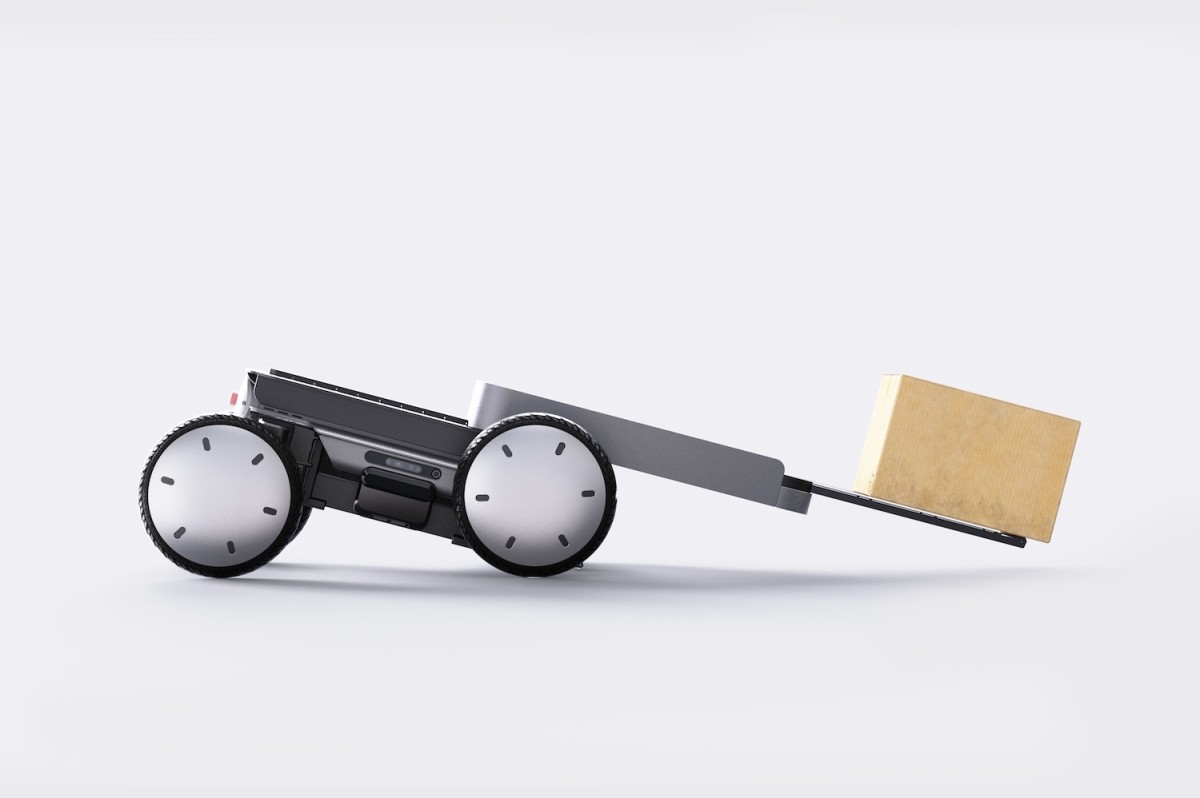
Hyundai may not have set out to break this rule, but its latest creation comes surprisingly close. The Mobile Eccentric Droid, or MobED, started life as a 2021 concept and has now evolved into Hyundai Motor Group Robotics LAB’s first production-ready mobility robot platform.

MobED’s purpose isn’t automotive at all. It’s designed as a versatile industrial and everyday tool, capable of autonomous navigation, handling deliveries, carrying equipment, and supporting research or service applications. It blends precision engineering with modular adaptability, and Hyundai positions it as a platform that can work in almost any environment – indoors, outdoors, smooth floors, rough terrain, or tight industrial lanes. The fact that it looks like a rolling testbed for the next suspension revolution is a bonus Hyundai may have unintentionally created.

The Wheel System That Makes Everything Possible

The secret is in MobED’s wheel and Drive-and-Lift modules, each with fully independent power, steering, and posture-control hardware. Every wheel can raise, lower, tilt, or stabilize itself through an eccentric drive mechanism, letting the platform stay level even when the ground isn’t. In practice, it acts like a suspension system that never stops adjusting – like a fully active adaptive suspension but on steroids.

Even better, MobED can widen its wheelbase for maximum stability or retract as needed for tighter environments. The independence of each wheel means, in theory, this system could be tuned for performance, comfort, or both – something car suspensions rarely manage at the same time. If this technology ever reaches a passenger vehicle, it could redefine on-road smoothness and off-road confidence.

As we see it, the biggest hurdles to putting this system into a production vehicle are weight and costs, but those are problems this journalist won’t dare solve.

Hyundai

MobED Hitting the Market Next Year

Hyundai is already playing with a related idea. A separate development – a four-wheel-steer system capable of sliding a car sideways – shows how independent wheel control can transform parallel parking. It’s essentially a real-world crab-walk demonstration, and it’s proof that Hyundai is exploring applications beyond robotics.

But back to MobED – the platform runs on a 1.47-kWh battery pack, provides more than four hours of operation, and supports manual or autonomous charging. Both the MobED Pro and MobED Basic will be commercially available starting in the first half of 2026.

Now all that’s left is for Hyundai to bring this "suspension" philosophy to an actual vehicle, like maybe the production derivative of the Crater Concept. We’re waiting, Hyundai.

Hyundai


View the 13 images of this gallery on the
original article

via Autoblog https://ift.tt/RXLmZK7

December 4, 2025 at 09:38AM