MOSES LAKE, Wash. — A prototype, all-electric airplane took its first flight Tuesday morning in central Washington state.
The Seattle Times reports that if the Federal Aviation Administration eventually certifies the small airplane to carry passengers, it could become the first all-electric commercial airplane.
The plane, built by startup Eviation, was built to carry nine passengers and up two pilots. It took off from Moses Lake, Washington, at 7:10 a.m. Tuesday, and landed eight minutes later.
The company’s goal is to show such electric planes are viable as commuter aircraft flying at an altitude of about 15,000 feet (4,572 meters).
The plane, designed by engineers in Washington state and Israel, is powered by 21,500 small Tesla-style battery cells.
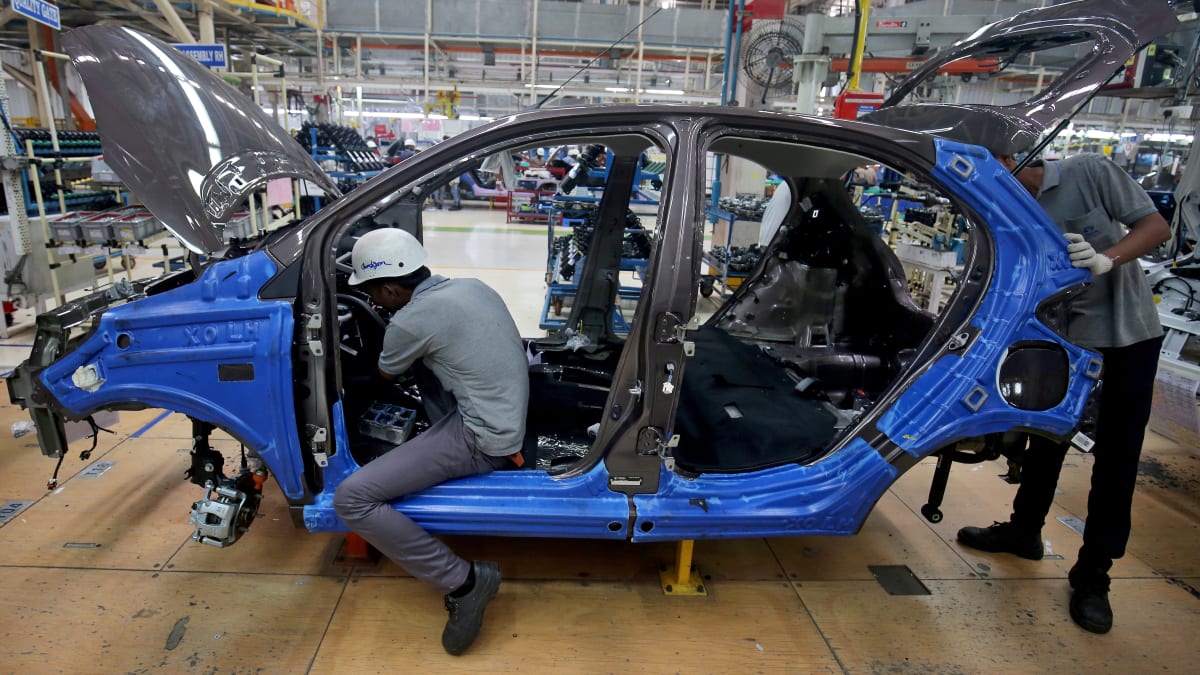
NEW DELHI — Tata Motors launched India’s lowest priced electric car at a little over $10,000 on Wednesday as the country’s only electric vehicle (EV) maker looks to draw in more buyers.
Tata leads India’s EV market, helped by government subsidies and high tariffs on imports.
Its move comes as domestic rival Mahindra & Mahindra is in talks with investors to raise up to $500 million for its EV unit and plans to launch its first electric sport-utility vehicle (SUV) in January.
Tata’s Tiago EV, an electric version of its popular Tiago hatchback, will have a sticker price starting from 849,000 rupees ($10,370). The bulk of cars sold in India, the world’s fourth-largest car market, are priced below $15,000.
That is much cheaper than India’s next most affordable EV – the electric version of Tata’s Tigor compact sedan which starts at around $14,940. China, however, has some EV models that start as low as 32,800 yuan ($4,525).
The Tiago EV’s operating cost is expected to be about a seventh of the gasoline version, making it a “compelling proposition”, said Shailesh Chandra, managing director of Tata Motors Passenger Vehicles and its EV subsidiary.
“We are not chasing to be the lowest cost,” said Chandra, adding the aim was to pack in connected car features and other advanced technologies while keeping the price accessible.
Chandra said the car’s “disruptive” pricing would open new opportunities and markets for Tata in smaller towns and cities, where buyers tend to be more price-conscious.
Tata, India’s third-largest carmaker, last year raised $1 billion from TPG for its EV unit at a $9.1 billion valuation, and has outlined plans to launch 10 electric models by March 2026.
India’s car market is tiny compared to its population, with electric models making up just 1% of total car sales of about 3 million a year, but the government wants to grow this to 30% by 2030.
The cheapest version of the Tiago EV – Tata’s third electric car – will have a driving range of 250 kilometres (155 miles) on a single charge, while a more expensive version will offer a range of 315 km.
Chandra said data from existing Tata EV owners showed average daily use of about 50 km, which prompted the company to provide a shorter driving range to keep the price down.
“There’s always a challenge of how we strike the right price,” Chandra said, adding the current sticker price was only for the first 10,000 buyers.
On Android, there is no shortage of ways one can remind oneself to do something. For example, you can ask Google Assistant to set a reminder or you can plug a reminder into Google Calendar. It can get a bit messy, so in order to tidy up this flow, Google has announced a migration of Assistant and Calendar Reminders to Google Tasks that is to take place over the coming months.
There is a big bonus to this move, even if it may take a bit to get used to. As Google explains, Google Tasks is the perfect home for this exact thing because it can already be synced to all of your devices and also supports Workspace apps via built-in integration on Gmail (shown above), Calendar, and Chat.
For non-Workspace users, this will affect how you create reminders/tasks with Google Assistant, too, but in a good way. For example, if you need to remind yourself to take a medication every day at a certain time, creating and managing that task is as easy as saying, “Ok Google, remind me to take my pill at 6pm everyday.” Google Task’s UI will then appear and help you manage that task.
Google says that these changes will take place “soon,” so if you want to take a look at Google Tasks right now, feel free to download the app below. The company notes it will send out notifications to users when it is ready for folks to start testing out this new functionality.
YouTube creators often implore their viewers to ‘smash that Like button,’ believing its feedback to be vital to their future success on the algorithm-driven platform. But a new study from the Mozilla Foundation suggests that users who hit the Dislike button on videos to weed out content they don’t want to see are wasting their time.
The study used inputs from 22,722 users who had installed Mozilla’s RegretsReporter browser extension, who were tracked between December 2021 and June 2022. Researchers analyzed more than half a billion YouTube recommendations that were made after users clicked on one of YouTube’s negative feedback tools, such as the Dislike or Don’t Recommend Channel buttons. “These are the tools YouTube offers for people to control their recommendations, but how does that actually impact your recommended videos?” asks Becca Ricks, senior researcher at Mozilla, pointing to YouTube’s own support site on how to “manage your recommendations and search results.”
Different button inputs had different effects on the likelihood of being recommended similar content going forward. Pressing Don’t Recommend Channel would stop only 43 percent of unwanted video recommendations, according to Mozilla, while the Dislike button stopped only 12 percent of recommendations users did not like. “What we found was that YouTube’s control mechanisms do not really seem to be adequate for preventing unwanted recommendations,” says Ricks.
Mozilla’s investigation was prompted by YouTube’s increased public comments in recent years about its recommendation system. “They’ve been talking a lot about metrics like time well spent or user satisfaction as opposed to watch time,” says Ricks. “We were really curious to what degree some of those signals were being picked up by the algorithm, especially because in the previous YouTube report we worked on, we had heard from people that they didn’t feel like they were in control, or they didn’t really feel like taking actions on unwanted videos really translated well to the recommender system.”
For instance, one user in the Mozilla study responded negatively to this Tucker Carlson clip posted by Fox News on February 13. One month later, he was recommended another clip of Carlson’s TV show, again posted by Fox News’s official YouTube channel. A different user expressed a negative response to a video showing webcams focused on Ukraine’s conflict zones in late February; within a month, they were shown another video, this time from the WarShock YouTube channel, detailing how dead Russian soldiers are removed from Ukraine. Ricks has no qualms with the content of the videos, saying it doesn’t breach YouTube’s guidelines. “But if you as a user say you don’t want to see it, it’s kind of shocking that it continues to be recommended,” she says.
“I’m not really surprised,” says Guillaume Chaslot, a former YouTube employee and founder of AlgoTransparency, a site that highlights the YouTube algorithm. “I feel, big picture, you should be able to choose and specify to the algorithm what you want, and YouTube absolutely doesn’t let you do that,” he adds.
This is today’s edition of The Download, our weekday newsletter that provides a daily dose of what’s going on in the world of technology.
This artist is dominating AI-generated art. And he’s not happy about it.
Those cool AI-generated images you’ve seen across the internet? There’s a good chance they are based on the works of Greg Rutkowski.
Rutkowski is a Polish digital artist who uses classical painting styles to create dreamy fantasy landscapes. His distinctive illustration style has been used in some of the world’s most popular fantasy games, including Dungeons and Dragons and Magic: The Gathering.
Now he’s become a sudden hit in the new world of text-to-image AI generation, becoming one of the most commonly used prompts in the new open-source AI art generator Stable Diffusion, which was launched late last month.
But this and other open-source programs are built by scraping images from the internet, often without permission and proper attribution to artists. As a result, they are raising tricky questions about ethics and copyright. And artists like Rutkowski have had enough. Read the full story.
—Melissa Heikkilä
Hated that video? YouTube’s algorithm might push you another just like it.
What’s happened: YouTube’s powerful recommendation algorithm drives 70% of what people watch on the platform, and the company has created controls that purport to allow people to adjust what it shows them. But, a new study finds, those tools don’t do much. Users have little power to keep unwanted videos—including hate speech—out of their recommendations.
How they did it: Mozilla researchers analyzed seven months of YouTube activity from over 20,000 participants to evaluate the ways that YouTube says users can “tune their recommendations.” The controls had a “negligible” effect on the recommendations participants received, and that content that seemed to violate the platform’s own policies was still being actively recommended to users even after they’d sent negative feedback. Read the full story.
—Hana Kiros
The must-reads
I’ve combed the internet to find you today’s most fun/important/scary/fascinating stories about technology.
1 The race to decarbonize Europe’s heavy industries Scaling up promising technologies is among the biggest obstacles—but they’re not insurmountable. (Economist $) + Nature documentaries tend to skim over human suffering. (Wired $) + Carbon removal is now “essential.” (MIT Technology Review)
2What we misunderstand about the abortion pill Medical trials, politicians and the public have focused on the less important of the two drugs. (The Atlantic $) + Where to get abortion pills and how to use them. (MIT Technology Review)
3 A law banning social media from ‘censoring’ content has been upheld The Texas ruling could prevent platforms from moderating user content at all. (Vox) + Experts are concerned by the law’s extremity. (WP $) + Here’s what Big Tech might do next. (Protocol)
4 AI art’s charm lies in what it gets wrong When its images become too slick and polished, things get weird. (NY Mag $) + Stock image sites are quietly removing AI images. (Motherboard) + Graphic designers are growing increasingly uneasy. (Slate $) + The dark secret behind those cute AI-generated animal images. (MIT Technology Review)
5 These women are speaking out against Tesla’s toxic culture Time and time again, their complaints were ignored. (Rolling Stone $)
6 How Russia’s trolls undermined the US Women’s March movement The disinformation machine’s campaign of social media exploitation was chillingly effective. (NYT $) + Donald Trump’s “big lie” narrative influenced a generation of creators. (WP $)
7 Electric vehicle makers can’t keep up with demand But frustrated customers won’t wait forever. (WSJ $) + EVs still represent the power grid’s best shot at solving its issues. (Wired $) + Detroit is also betting big on EVs. (Economist $)
8 Myanmar’s resistance groups are embracing digital currency But concerns over its security are hard to shake. (Rest of World)
9 How VR could change theme parks for good Visitors want cutting-edge tech, but headsets can only take you so far. (The Guardian)
10 Gen Z loves captions And it’s nothing to do with hearing loss. (WSJ $)
Quote of the day
“He is obviously on the run.”
—A spokesperson for South Korean prosecutors explains why they have issued an arrest warrant for Do Kwan, the missing developer behind the collapsed TerraUSD and Luna cryptocurrencies, who denied he’s on the run from authorities, according to the Financial Times.
The big story
Cops built a shadowy surveillance machine in Minnesota after George Floyd’s murder
March 2022
Law enforcement agencies in Minnesota have been carrying out a secretive, long-running surveillance program targeting civil rights activists and journalists in the aftermath of the murder of George Floyd in May 2020.
Run under a consortium known as Operation Safety Net, the program was set up in spring 2021, ostensibly to maintain public order as Minneapolis police officer Derek Chauvin went on trial for Floyd’s murder.
But an investigation by MIT Technology Review reveals that the initiative expanded far beyond its publicly announced scope to include expansive use of tools to scour social media, track cell phones, and amass detailed images of people’s faces. Read the full story.
+ These autumnal disguises are ingenious. + This is a really interesting behind-the-scenes look at how real estate photographs are optimized to look extra-roomy. + Who knew eels were so mysterious? + Here’s how royalty has shaped Britain’s rock music over the decades. + It’s all kicking off in Australia!
via Technology Review Feed – Tech Review Top Stories https://ift.tt/Y9vHnUo
Tile has just launched "Lost and Found" QR labels that are a essentially a low-tech way to get your stuff back. They’re meant to be used on small or perhaps not particularly valuable items like "travel mugs, musical instruments, sports equipment and earbud cases," the company said. It’s the company’s first new product release since its acquisition by location sharing service Life360.
Unlike its Tile trackers that let you see where an object is physically located via Bluetooth, the new stickers are effectively a fancy version of an airport luggage tag. Anyone who finds it can scan the QR code to bring up your contact information, and then (if they’re honest) contact you to return the item.
Tile
Without tracking or beeps to locate your object, privacy is less of an issue than it is with Tile’s trackers or Apple AirTags. That said, you’re still potentially putting your contact information out in public, so you should make sure the labels never appear in public social media posts, for instance. They’re priced at $15 for three sheets of five labels, which is a lot cheaper than the $25 trackers — but $1 for a sticker still seems like a lot.
After several moves that indicated this day was coming, Spotify has officially added audiobooks as yet another listening option in its app. Starting today, users in the US will have a dedicated section for the format that allows standalone purchases via a web link. At launch, the company says its library will contain over 300,000 titles.
In addition to their own section alongside music and podcasts, audiobooks will show up in your recommendations on the main page. When you dive into the audiobooks tab, you’ll see a collection of picks from Spotify at launch. Over time, this section will be tailored to your activity just like any other content that’s recommended for you on the service. The service’s library of titles will also show up in search results like artists, albums, songs and podcasts already do.
When you select an audiobook, you’ll see a lock icon on the play button that indicates you haven’t yet purchased the title. If you decide to do so, a link will boot you out to a browser to complete the transaction before beaming you back to Spotify to start listening. Any purchased titles will automatically appear in your library and will be available for offline listening. Just like podcasts, the service will offer speed controls so you can listen at your preferred pace.
Spotify
Spotify has been heading down this path for quite a while. The service offered an audio version of Harry Potter and the Philosopher’s Stone read by various celebrities in the spring of 2020. In a test early last year, the company added a selection of public domain books in the spoken word format — again read by a roster of famous names. Spotify then announced that Storytel subscribers would be able to link their account to the streaming service as the audiobook platform was is one of the first major publishers to take advantage of Spotify’s Open Access Platform (OAP). The tech allows publishers and creators to stream their content through Spotify while using their existing login system. In November, Spotify acquired Findaway, an audiobook platform with over 325,000 titles and tools for creators. That was seemingly the last piece of the puzzle.
Spotify is clear this is "the first iteration"of audiobooks on its platform. The company plans to take notes and see what needs to be changed before expanding to other markets. It also wants to "innovate the format" so that listeners, authors and publishers benefit more from what the format can offer.