From Droid Life: Samsung Galaxy S4 to Utilize New “Eye-Scrolling” Feature

samsung logo

With the introduction of last year’s Galaxy S3, Samsung showed the world how smart a smartphone could be. With Smart Stay, the S3′s camera would see if your eyes were open and focused on the device, and would determine if it should dim its display or not. Fancy, right? Well, Samsung is looking to take that a step further with a new eye-scrolling feature that is said to come equipped on the Galaxy S4. 

With eye-scrolling, once a user has reached the bottom or end of a page, the device will automatically scroll onward to the next section of whatever it is you are reading/looking at. According to the source, it was not yet determined if this feature would be shown off at the March 14 Unpacked event, but the device’s software enhancements were most definitely in the front seat compared to hardware this year.

As for me, I don’t have any of the Smart features enabled currently on my Note 2, but this one is definitely something I would like to try out.

Via: NYT

from Droid Life

From AnandTech: Seagate Announces New Laptop and Desktop SSHDs (Solid State Hybrid Drives)

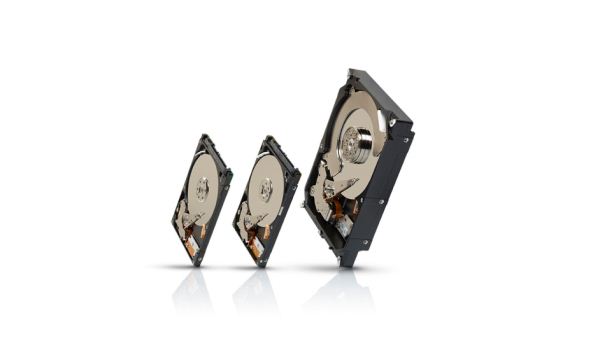
A few days ago we reported that Seagate would stop selling 7200 RPM 2.5” hard drives by the end of the year. Now we know why. Seagate will continue to offer 5400 RPM 2.5” drives, but if you want more performance without diving into the performance/capacity tradeoffs of an SSD Seagate will offer you its 3rd generation solid state hybrid drive (SSHD).

Once sold under the Momentus XT brand, the 3rd gen hybrid drives will simply be sold under the SSHD moniker. As Seagate alluded to many times in the past, we’ll also be getting a 3.5” hybrid drive as well. The two families will simply be called the Seagate Laptop SSHD and Seagate Desktop SSHD.

While both families will have many members, at launch we’ll see the following:

Seagate SSHD Lineup 1H 2013
  Capacity Form Factor Platters Speed NAND Price
Seagate Laptop SSHD 500GB 2.5″ 7mm 1 5400 RPM 8GB MLC $79
Seagate Laptop SSHD 1TB 2.5″ 9.5mm 2 5400 RPM 8GB MLC $99
Seagate Desktop SSHD 1TB 3.5″ 1 7200 RPM 8GB MLC $99
Seagate Desktop SSHD 2TB 3.5″ 2 7200 RPM 8GB MLC $149

All of the drives use a standard SATA interface, and all of them feature 8GB of MLC NAND (with a small portion of the NAND set aside for use in SLC mode, similar to SanDisk’s nCache). This is a disappointingly small amount of NAND, however Seagate hinted at future, higher performance versions shipping with somewhere around 32GB of NAND. As we found in our investigation of Apple’s Fusion Drive, the ideal number is likely somewhere in the 128GB – 256GB range but that puts you in a very different price class.

The benefit of using only 8GB of NAND is that Seagate is able to keep prices very low. Both Laptop and Desktop SSHDs are expected to carry around a $15 – $20 price premium over competing 7200RPM alternatives.

The NAND mostly acts as a read cache, although this time around Seagate claims it will be able to cache some writes. Seagate is understandably sensitive to writing tons of data to the NAND since it’s only an 8GB MLC device, but endurance shouldn’t be too much of a problem to navigate around with good firmware. There’s no data separation, everything that is written to NAND also exists on the hard drive – although it’s not clear if that write happens in tandem or sequentially.

Seagate is particularly proud of their very low time to use performance with the new SSHDs. Apparently Seagate aggressively tuned its algorithms to cache roughly all accesses that happen within the first minute of power on.

Although I’m not very excited about the performance of these drives compared to SSDs, their low price should make Seagate’s SSHDs an obvious choice compared to a traditional hard drive. The fact that we’ll get both 2.5” and 3.5” SSHDs is nice since many SSD users on the desktop are still consumers of mechanical drives as well. Personally I’m not sure how much I’d benefit from using Seagate’s Desktop SSHDs in my RAID array since I mostly do large block sequential transfers (which would be uncached) to/from the array. For gamers or folks who have an SSD that’s smaller than their total application footprint these SSHDs might be compelling.

When I first reviewed the Momentus XT I concluded “There’s no reason for any performance oriented mechanical drive to ship without at least some small amount of NAND on board.” Three years later, it looks like that vision has finally come to be.

from AnandTech

From The UberReview: Oh MYO My! It’s MYO Wearable Gesture Control!

As each day passes, it is my job to give you more examples that prove we are pretty close to living how the Jetsons once did. So here is one more: MYO. The wearable armband is used as gesture control, and works with a number of compatible devices. Be it a gaming console, or navigating through your iTunes, MYO allows for wireless control that is both groundbreaking and futuristic. The device works by sensing muscle activity and motion in 3D Space, with accuracy so precise that it even measures the movement of each finger individually. But as we say in the South “I can show you better than I can tell you.” Check out the video below, and if you’re intrigued you can pick one up here.

[Source]

from The UberReview

From Engadget: Microsoft confirms Office 2013 licenses can’t be transferred to other computers

Microsoft confirms Office 2013 licenses can't be transferred to other computers

It’s no secret that copies of Office 2013 bind themselves to a single computer, but Microsoft has now confirmed to Computerworld that the software’s license can’t be reassigned to another PC, as is possible with Office 2010. When asked whether a license could be transferred to another machine if the original rig was destroyed, lost or stolen, Microsoft replied with a frosty, “No comment.” However, Redmond did mention that the productivity suite could be reinstalled on the same PC after a crash. Just how Ballmer and Co. will enforce the policy remains a bit murky, but it’s pretty clear they hope folks who have a penchant for switching up computing environments will be enticed by an Office 365 subscription.

Filed under:

Comments

Source: Computerworld

from Engadget

From Popular Science – New Technology, Science News, The Future Now: Videos: Space Rock Explodes Over Russia, Slams Into Building

Incoming! A fireball streaks across the sky on February 15, 2013, as seen from the vantage of a Russian driver’s dash-mounted video camera. NEproskochil/YouTube
A space rock detonated into flames and smoke over western Russia Friday during the region’s morning commute, ultimately smashing into a factory.

The same day that an asteroid half the size of a football field will narrowly miss Earth, a different space rock exploded over three cities in western Russia. The fireball went down during the region’s morning commute today, sending drivers scrambling to upload their in-dash videos to the web.

Fireballs bursting over the Earth is nothing unusual. What is rare is to catch them on camera — from perhaps hundreds of vantage points.

Here’s why there are so many videos of the Russian meteorite. Crooks in that country will do anything for a ruble, including throw themselves into a moving car to extort money from drivers. Russian traffic laws make it practically impossible for drivers to defend themselves in court without video evidence, however, which is why most Russian drivers today have wide-angle video cameras on the dash.

So, when this morning’s meteorite exploded 12 miles above the ground, users flooded Twitter and YouTube with footage of the astronomical event. (See below.)

Russia Today’s news report suggests that the space rock ultimately crashed through the wall of a zinc factory in Chelyabinsk, spraying bricks onto a road. One image in that story, taken from Twitter, shows a smoldering, gaping hole in the factory’s roof. Other images show shattered windows and contrails left by the speeding meteorite. Reports of injuries also abound — roughly 400, according to one news source.

But the details and numbers could change, as news of the meteorite is still breaking. Early reports from panicked citizens alleged that the meteorite was a UFO, a crashing military aircraft, or even a missile intercepting the asteroid en route to the ground. (The most recently updated Russia Today news story discounts these tales.)

It’s worth pointing out the comically coincidental timing of this fireball. It occurred within the same 24 hours that a 160-foot-wide asteroid, called 2012DA14, is scheduled to swing within 14,913 miles of Earth — thousands of miles closer than any geosynchronous communications satellite. Now is also a time when asteroid hunting is ramping up and about to become a privatized affair.

But enough with the words. Watch these videos and be amazed.


Legit fireball Yes, this video looks like a scene out of a blockbuster movie. But unless the fireball is a truly cosmic joke by Russia on the rest of the world, no, it’s not fake. (There are simply too many videos of this thing from countless vantage points circulating on the web at one time.) Video: Андрей Борисович Королев/YouTube


Crazy commute Another stunning view of the Russian meteorite from a driver’s dash-mounted HD camera. Video: NEproskochil/YouTube


KABOOM! Listen to this one. We detect not one, not two, but at least three loud concussions from the fireball, plus the shimmer of breaking glass (and, of course, the blare of car alarms). Video: Григорий Ченцов/YouTube


Space rock yonder Men working in a yard seem oblivious to the fireball in the distance. Video: NEproskochil/YouTube


Blinding flash Skip about 40 seconds into this video of an intersection. The fireball bursts, coloring the scene orange and red, and then blinds the camera with intense light.
Video: NEproskochil/YouTube

from Popular Science – New Technology, Science News, The Future Now