
Lytro, the mind-boggling, anything can be in focus camera, now works with Windows. Which means, Windows computers can process and edit Lytro’s proprietary image file format that could previously only be done with OS X. More »
from Gizmodo

For everything from family to computers…

Since the end of WWII, America’s naval might has been undisputed and our aircraft carriers have been its crown jewels. However, the days of dominance could end with China’s new DF-21D ballistic missile—the only device on Earth capable of sinking an aircraft carrier—four and a half acres of sovereign US territory—with one shot. More »
from Gizmodo

The last time we ran into Ben Heck, the tinkerer extraordinaire was waxing poetic at Maker Faire about the Raspberry Pi and cheese curds. One more thing he also talked about, however, was his latest 3D printer project, which he now explains in greater detail in the latest episode of the Ben Heck Show. Improvements made to the device include use of a Birdstruder for easier access to the filament and the ability print off an SD card if you don’t have a computer handy. The 3D printer also sports an expanded 200-square-millimeter print area with a solid copper cover for added sturdiness and accuracy. As usual, size matters for Mr. Heckendorn so the device got a boost in portability, now neatly folding James Bond-like into a briefcase that measures 18 x 14 x 4.2 inches. Interested in a briefcase printer of your own? Well, Heckendorn mentioned during the Maker Faire interview that he’s already working on an improved version and thinking about putting it up on Kickstarter so hope springs eternal. In the meantime, you can glean more details about the device by checking out the video after the break.
from Engadget
A curious trend has developed in recent quarters: When iPhone sales fall, business improves for AT&T and Verizon.
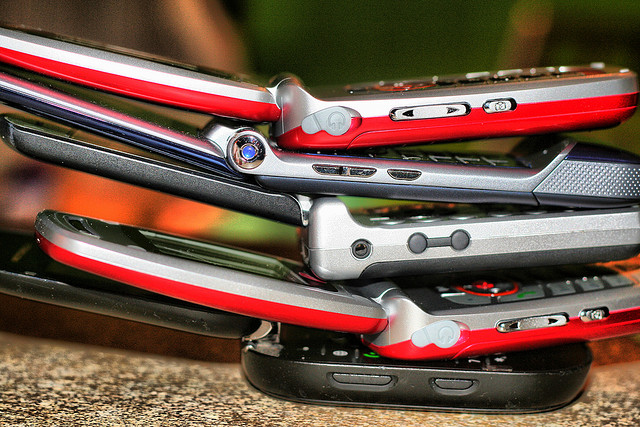
NTP Inc., a patent-holding company that won a $612.5 million settlement from RIM in 2006, has struck again with a settlement involving 13 of the biggest companies in the tech industry.
NTP, noting that it holds eight US patents “relating to the delivery of electronic mail over wireless systems,” today said it reached a settlement with 13 companies representing just about everyone involved in building and selling smartphones or delivering e-mail to them. The 13 companies are AT&T, Verizon Wireless, Sprint Nextel, T-Mobile, Apple, HTC, Motorola Mobility, Palm, LG, Samsung, Google, Microsoft, and Yahoo.
“The signed agreement provides broad coverage under NTP’s patent portfolio to all of the companies,” NTP said. Consequently, “all pending litigation between NTP and these companies will be dismissed.”
from Ars Technica

In the 1930s engineer Adolf Busemann conceived of a supersonic biplane that produced no sonic boom-the shock waves would bounce off the plane’s two wings at opposing angles, nullifying each other. But the design created so much drag that the plane wouldn’t have been able to fly. Now two groups are trying to improve the concept with computer simulations. Engineers at Japan’s Tohoku University devised wings with shifting flaps that adjust for drag at different speeds. And researchers from MIT and Stanford University widened the air channel between the wings and tilted their leading and trailing edges. If either design gets built, it could be the first supersonic biplane to take off.
See the supersonic Concorde jet breaking the sound barrier below.

from Popular Science – New Technology, Science News, The Future Now
One of the biggest changes ever made to WiFi is coming in the next year with a new standard supporting the 60GHz band, powering much faster transmissions than are possible in the existing 2.4GHz and 5GHz bands. All that’s needed are some chips, and products to put them in.
Slowly but surely, the chipmakers embracing 60GHz technology are making their plans known. The latest is Marvell, which today announced a partnership with startup Wilocity to make tri-band chips that will use all three bands. That will allow consumer devices to connect to existing WiFi networks while also taking advantage of the super-fast 60GHz band for high-speed data transfer and high-quality media streaming. Under the developing 802.11ad standard, 60GHz transmissions can hit 7Gbps.
Wilocity already has a partnership with Qualcomm Atheros, Qualcomm’s networking subsidiary, to build tri-band chips. Those are expected to come out by the end of this year and focus on the PC notebook market—for example a laptop bundled with a remote docking station. The partnership with Marvell won’t result in shipping products until 2013, but Wilocity’s VP of Marketing, Mark Grodzinsky, told us that the Marvell/Wilocity chips will focus on a broader range of products including tablets, Ultrabooks, and phones. The two companies are also targeting access points, residential gateways, and media center devices.
from Ars Technica