The Morning After: Duolingo is ready to teach you math

https://www.engadget.com/the-morning-after-duolingo-is-ready-to-teach-you-math-111548678.html?src=rss

Duolingo Math is now available on iOS, over a year since it was first teased. Naturally, the new math app feels a lot like the company’s language app, including colorful animations and interactive exercises all built into gamified lessons.

There are two main components to the app: an elementary-level math curriculum that goes over classroom topics and a brain-training course aimed at adults, with a focus on improving mental math skills. Dr. Kawashima has a lot to answer for. For those anxious about their math skills, it could be a subtle way of brushing up on those multiplication skills. Sadly, mental arithmetic remains not quite as dreamy as learning a second language.

Duolingo’s reputation should help it stand out in a sea of similar apps, and like many rivals, Duolingo Math is free. The app is available on iPhone and iPad, only in English for now. No word yet on when it will be available on Android.

– Mat Smith

The biggest stories you might have missed

SpaceX’s pricier Starlink internet service for RVs now works on moving vehicles

You’ll have to pay $2,500 upfront for the hardware.

TMA
Getty

SpaceX has launched a new variant of Starlink for RVs called "Flat High Performance" that you can use on moving vehicles. You will have to be willing to pay almost five times as much for the dish needed to be able to access the service. It’s designed for in-motion use, with a bigger rectangular terminal that can see 35 percent more sky than its standard counterpart. It also has enhanced GPS capabilities, giving the dish the ability to connect to more satellites. SpaceX is already taking pre-orders for the new service and will start deliveries in December. The hardware kit, which includes its dish and mount, will set you back $2,500.

Continue reading.

Nothing’s $99 Ear Stick earbuds have a fancy twisting case

But there’s no noise cancellation.

TMA
Nothing

Nothing’s second attempt at wireless headphones come in a carry case that tries to combine a cosmetics packaging aesthetic with the glossy white, transparent style of its other devices so far. While the $99 Nothing Ear Stick wireless earbuds are cheaper than its predecessor, these buds lack active noise cancellation. There are no silicone buds this time around, so you can expect more noise bleed-through, too, although some headphone wearers may find them a more comfortable fit. Expect to read our impressions on the buds very soon.

Continue reading.

The best monitors for 2022

HDR, refresh rate, curved screens? Help!

Computer monitors keep evolving rapidly, with new technology like OLED Flex, QD-OLED and built-in smart platforms just in the last year alone. That’s on top of big improvements in things like color accuracy, size and resolution. As there are a lot of products in this market and a lot of features, it can be overwhelming, so we’ve researched the latest models for all kinds of markets, whether you’re a gamer, business user or content creator. Read on to find out which model is the best for you and, especially, your budget.

Continue reading.

‘The Callisto Protocol’ hands-on

Think ‘Dead Space’, but grosser.

TMA
Callisto Protocol

The Callisto Protocol is a new game from a studio with zero releases to its name, but playing it feels familiar – according to Engadget’s Jessica Conditt. It all seems to unapologetically feed off the immersive sci-fi horror concepts of Dead Space. This is the first game out of Striking Distance Studios, a team led by Dead Space co-creator Glen Schofield — so yeah, all the references are coming straight from the source.

Continue reading.

Sony’s new high-end camera shoots 8K video with AI-powered autofocus

The high-resolution A7R V uses ‘human pose estimation.’

Sony’s $3,900 A7R V is expensive and impressive. Built for shooting portraits, landscapes and other subjects that require as much resolution as possible, it’s plenty capable in other regards, too. The new model carries the same 61-megapixel resolution as the A7R IV, but the key improvement may be in the autofocus. This is Sony’s first camera to introduce "human pose estimation." The system can see 20 different points in the human body and thus figure out where the eye is supposed to be, and keep faces in tight focus.

Continue reading.

Google Workspace individual plans jump from 15GB to 1TB of storage

You probably won’t run out of Gmail and Drive storage space anytime soon.

Google has some good news for those using its Workspace plans. Users will soon get a significant storage upgrade from 15GB to 1TB at no extra cost. This storage will be accessed through Gmail, Drive and other Google services attached to your Workspace account, and it’s a major space upgrade, and it’ll come at no extra cost.

Continue reading.

via Engadget http://www.engadget.com

October 27, 2022 at 06:41AM

The bilingual brain

https://www.technologyreview.com/2022/10/25/1060386/the-bilingual-brain/

Close your eyes and, for a moment, imagine you know two languages. For any noun you can think of—object, feeling, place—two words exist where a monolingual brain comes up with only one. When speaking, reading, or writing, your brain must decide which of those words to use—an added task on top of the language processing you’re already doing. 

Scientists suspect that sorting through those extra words—and switching between them—gives bilingual people more practice with cognitive control. But whether bilingual brains are neurologically different from monolingual ones is still unknown. 

Saima Malik-Moraleda, a fifth-year PhD student in the Harvard/MIT Program in Speech and Hearing Bioscience and Technology, is trying to help answer this question. In the process, she hopes to uncover ways to ease some of the cultural and political tensions that surround bilingualism, especially in cultures where certain languages carry distinct political connotations. As a member of the McGovern Institute lab of Ev Fedorenko, PhD ’07, who researches how brains create language, Malik-Moraleda is studying bilingual brains in a new way. 

Neurobiologists typically focus on the relative involvement of different brain regions in bilingual activity. Malik-Moraleda is taking that one step further by studying neural networks—the specific pathways by which information travels in the brain. Instead of simply observing which brain regions light up during a particular activity, she uses what’s known as a localized approach, tracking the reactions of specific sets of neurons within—or sometimes between—those regions.

Malik-Moraleda herself speaks Spanish, Kashmiri, Catalán, English, Urdu, Hindi, and French, and she is learning Arabic. She has always been cognizant of the cultural questions that bilingualism presents. Her mother is from Spain and her father is from Kashmir, a disputed region of South Asia that is claimed by both India and Pakistan. Growing up, she would spend the school year in Girona, a city in Spain’s Catalonia region, and travel with her father to Kashmir during summer breaks. 

Splitting her year between the two places revealed to Malik-Moraleda how differently they treated bilingualism. Both regions are culturally different from surrounding areas and have historically fought for independence, so residents often speak a region-specific language as well as the primary language of the surrounding country (or countries). On street signs in Barcelona, for instance, “you’re going to see Catalán first, then Spanish, and then English,” Malik-Moraleda says. But while Catalonians prefer Catalán and tend to speak Spanish only when necessary, in Kashmir, she says, parents generally discourage their children from even learning Kashmiri. Instead, they urge them to speak the more commonly used languages of Urdu or English to better prepare them for schooling and a career. 

As a polyglot child, watching her relatives neglect Kashmiri bothered Malik-Moraleda. More than sadness or anger, she felt confusion—why, when given the chance, would someone not seize the opportunity to speak two languages? “It always blew my mind,” she says. She decided to pursue a career uncovering how bilingual brains actually work so she could show her community that bilingualism might have some valuable advantages too. 

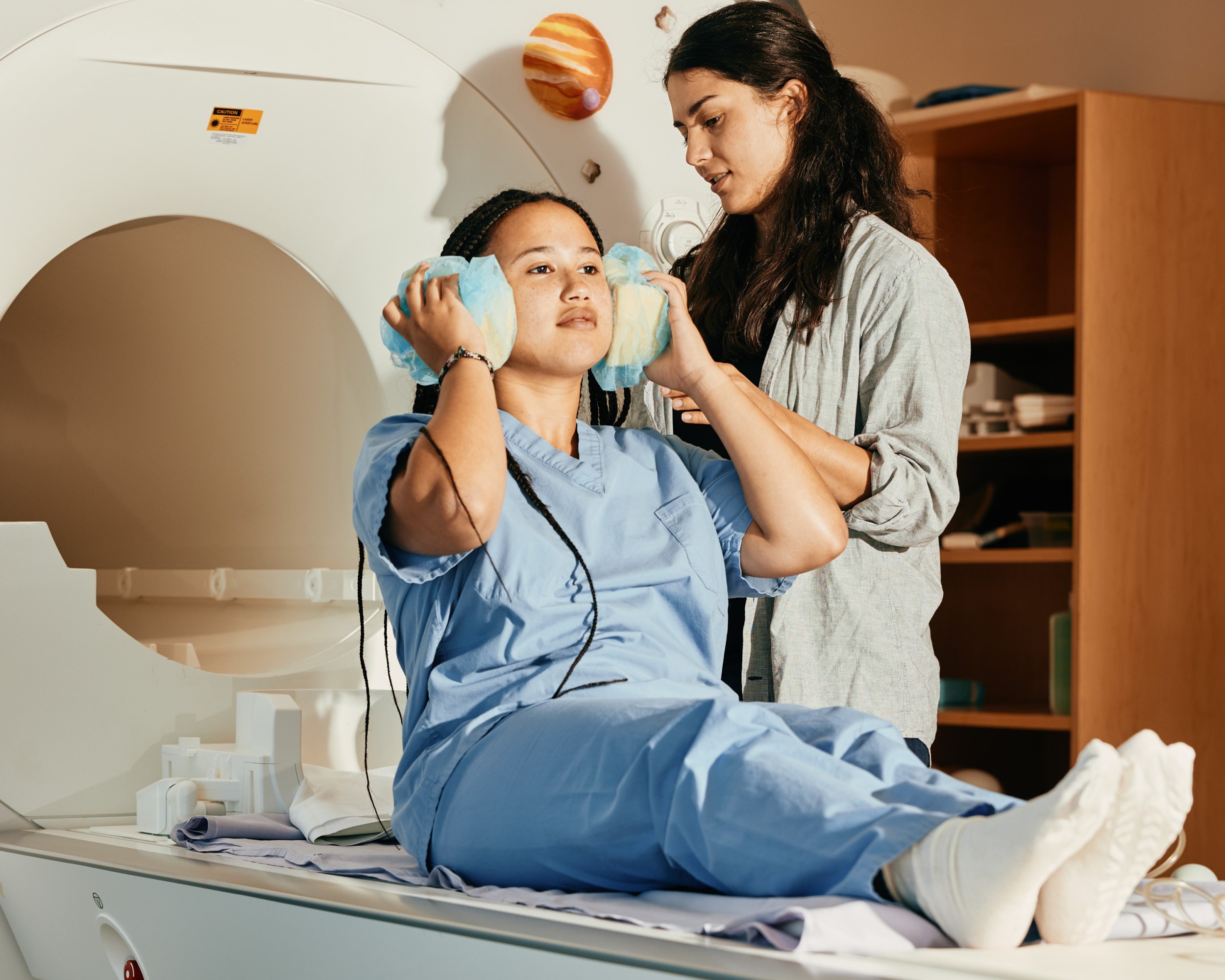
Saima Malik-Moraleda prepares a person to enter the MRI machine
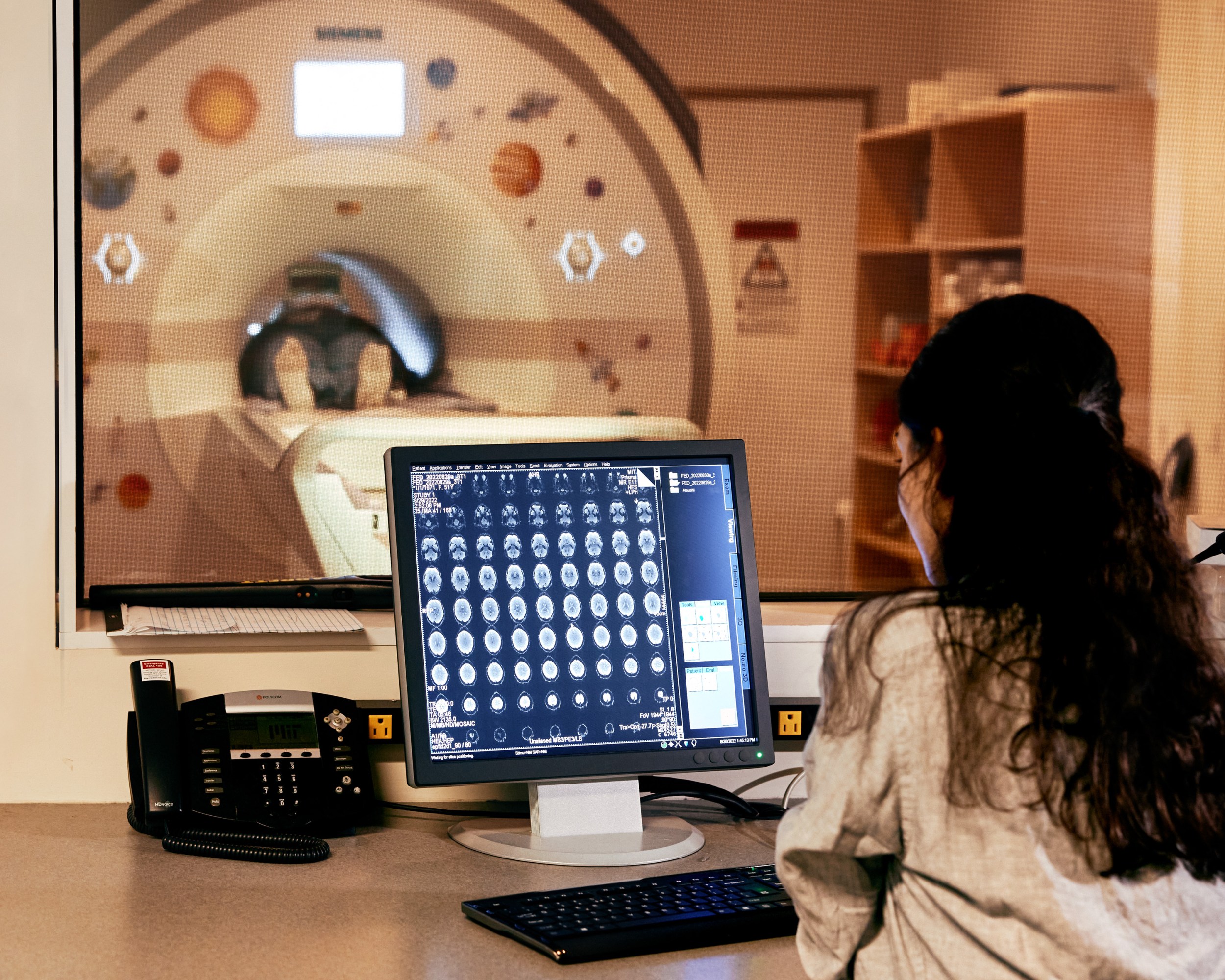
Saima Malik-Moraleda at a computer viewing brain scans

Saima Malik-Moraleda prepares a lab colleague for an MRI imaging session and reviews brain images. Typically, she scans people as they listen to their native language and any other languages they speak.

She began in high school, writing a senior project about bilingual brains. Then she majored in psychology at the Autonomous University of Barcelona and spent her junior year at the University of California, San Diego. While in San Diego, she attended a talk by MIT professor of brain and cognitive sciences Nancy Kanwisher ’80, PhD ’86, who mentioned the work of Fedorenko, a close collaborator and the Middleton Career Development Associate Professor of Neuroscience at MIT. 

Malik-Moraleda was living in New Delhi after college when she learned of the “Alice” project, a new effort led by Fedorenko. The study, which has participants listen to translations of passages from Alice in Wonderland while in an MRI machine, aims to map the neural networks used for language processing in speakers of as many world languages as possible. 

Because Malik-Moraleda had access to speakers of languages like Hindi, Telugu, and Tamil in New Delhi, she emailed Fedorenko, offering to help. To her surprise, Fedorenko responded within a day, and offered her coauthorship. “It was crazy,” she says. “That’s what led me to be like, ‘Yes, I really want to work with this person.’”

Malik-Moraleda’s work since she arrived at MIT—where she is also advised by professor of brain and cognitive sciences Ted Gibson—has formed the basis of a 2021 study with Fedorenko looking at executive function in bilingual people. Previous studies had yielded conflicting results about whether bilingualism is linked to superior executive function, in part because bilingual people often learn different languages at different ages and speak at different levels of proficiency. 

For their study, Malik-Moraleda and Fedorenko used data that the lab had collected by scanning people’s brains while they completed a task related to spatial working memory: remembering where a sequence of light flashes had appeared on a grid. They identified 55 bilingual and 54 monolingual subjects who were otherwise similar, and controlled for different kinds of bilingualism by including only bilingual people who had learned their second language before age six and reported a proficiency score of 4 or 5 on a scale of 1 to 5. 

Previous studies had been anatomy-based, looking at brain activity in specific regions associated with executive function tasks, such as the left frontal cortex. But the left frontal cortex is associated with many networks, including both the domain-­general multiple-demand (MD) network, which supports executive function, and the language-selective network, which does not. Malik-Moraleda and Fedorenko suspected that the anatomy-­based studies produced conflicting results because they didn’t attempt to identify which network was being activated. 

What’s more, the exact boundaries of the MD network can differ from one person to the next, and it only partially involves the left frontal cortex. So instead of simply looking for activity in that brain region, they took the localized approach and looked specifically at the MD network. They found that bilingual people consistently showed stronger neural responses in that network than monolingual people did when performing the flashing-light task—and they performed better. 

Malik-Moraleda hadn’t expected the 2021 paper—which she thinks was the first to use the localized approach to study bilingual brains—to corroborate anatomy-based studies that had showed stronger executive function responses in bilingual brains. She’d thought it might show that there was no difference. 

But while the results are exciting, Malik-Moraleda says there could be other explanations for the increased activity in the MD network. For example, a lot of bilingual people are immigrants, or children of immigrants, who have had to deal with more challenges in their lives. “More motivation and grit,” she says, could also be linked to higher executive functioning. 

Under the umbrella of the Alice project, Malik-Moraleda has contributed to other high-impact language research, including a 2022 paper in Nature Neuroscience outlining the discovery of similarities in brain processing among speakers of diverse world languages. The team (on which she served as lead author with Dima Ayyash ’12, MCP ’13) reported that the language network of the brain responds similarly across 45 languages.

“It does seem like the language network in the brain is evolved to support all the languages in the world,” says Malik-Moraleda. 

One purpose of the research was to make it easier to study how language works in general—not just for English speakers, who have been the subjects of most studies to date. Other languages don’t share all of English’s features, such as its conventions for word order. Establishing the properties of the language network over 45 different languages, though, lays the groundwork for future studies of linguistic elements that might be difficult to study in English speakers.

The researchers published all their fMRI data as well as recordings and other materials used in the study, and she hopes other neurobiologists will use them to improve methods of studying language and expand the number studied. “It’s an invitation for researchers who are in an area [where people] speak a language that is not usually researched to use those tools as well,” she says.

“Her work helps build a diverse and inclusive language research community,” says Fedorenko, who calls Malik-Moraleda a fearless researcher and a wonderful colleague. 

After finishing her PhD, Malik-Moraleda plans to use her research to tackle social and political problems. While she has realized that the science behind language processing is much more complex than she originally imagined, she hopes that revealing the features of the bilingual brain will help convince people like her relatives in Kashmir that speaking multiple languages is a gift.

Malik-Moraleda would also like to examine whether some languages might be more conducive to cult-building because of how they are structured. And she wants to study how the brain’s response to constructed languages—like Klingon from Star Trek or Dothraki from Game of Thrones—differs from its response to natural languages. More than anything, though, she’s committed to keeping in mind the need to study diverse languages, which she says will give researchers a more holistic understanding of language processing. 

“We have to look at as many languages as possible,” she says, “for us to be able to understand language processing in its entirety.”

via Technology Review Feed – Tech Review Top Stories https://ift.tt/ekmtC3J

October 25, 2022 at 05:30PM

SpaceX’s costlier Starlink internet service for RVs works on moving vehicles

https://www.engadget.com/starlink-rv-works-on-moving-vehicles-113342022.html?src=rss

The Starlink service for RVs gives you a way to stay connected online even while you’re off the grid, but it comes with one big limitation: It can’t be used while in motion. Now, SpaceX has launched a new variant of Starlink for RVs called "Flat High Performance" that you can use on moving vehicles. You just have to be willing to pay almost five times as much for the dish needed to be able to access the service. 

The Flat High Performance Starlink for RVs was designed for in-motion use, with a bigger rectangular terminal that can see 35 percent more sky than its standard counterpart. It also has enhanced GPS capabilities, giving the dish the power to connect to more satellites, which enables connection to the Starlink internet even while a vehicle is on the move. The terminal features improved weather resistance and better performance in both hot weather and snow, as well. Unlike the standard version that can be placed on the ground, though, the Flat High Performance dish must be permanently installed on top of your RV.

SpaceX is already taking pre-orders for Flat High Performance in select markets and will start deliveries in December. Take note that its hardware kit, which includes its dish and mount, will set you back $2,500. The standard Starlink for RVs only requires an upfront payment of $599 for its kit. The service itself costs $135 a month just like the standard version, which is $25 more than a regular Starlink connection. You can pause (and un-pause) the service anytime, though, so you won’t have to pay for those months when you don’t use it. 

via Engadget http://www.engadget.com

October 26, 2022 at 06:57AM

Nvidia PC Graphics Card Cables May Be Burning, So There’s An Investigation

https://kotaku.com/nvidia-4000-series-graphics-card-burning-melting-1849702050


Image: Smith Collection / Gado / Contributor / Kotaku (Getty Images)

Perhaps the over-sized, power-hungry, and highly-priced 4000-series graphics cards from Nvidia are a bit too hot of a product right now. After one user posted photos of their charred 12-volt, high power (12VHPWR) connector on Reddit, Nvidia responded with an investigation into at least two cases.

Yesterday, Reddit user reggie_gakil shared photos of a freshly seared cable and power connector on their RTX 4090 graphics card, titled “RTX 4090 Adapter burned” with a caption that reads “IDK [how] it happened but it smelled badly and I saw smoke.” Though the card reportedly still works, reggie_gakil was not alone. Another Reddit user began their reply with, “You aren’t the only one. This happened to me today as well.” This follows reports that PCI-SIG, the consortium that sets standards for PCI, PCI-X, and PCI-Express connections (the ones used in said graphics cards), was aware of potential “safety issues under certain conditions.” According to The Verge, Nvidia is now investigating these cases.

In a statement to Kotaku, Nvidia said it is “in contact with the first owner and will be reaching out to the other for additional information.”

With the increased power draw of these new graphics cards and new ATX power standards that have raised eyebrows, this might not be so much of a surprise. Indeed, YouTube channels like JayzTwoCents are doing a bit of an “I told you so” victory lap.

The 12VHPWR cable is DANGEROUS! But NVIDIA doesn’t agree…

As mentioned in JayzTwoCents’ video, Brandon Bell, senior technical marketing manager for Geforce at Nvidia dismissed early fears over unsafe power cables as “issues that don’t exist” and that “it all just works, man.” While the results of Nvidia’s investigation have yet to determine if the initial Reddit post that sparked alarm is an outlier, there’s certainly cause for concern.

G/O Media may get a commission

40% Off

Govee Glide TGBIC LED Smart Wall Lights

Smart light it up
Can display up to 57 colors at one time, have an incredible range of combinations, can react to your music, be shaped as you like using the segments, and work with most voice assistants.

Nvidia’s competitor, AMD, also responded to reggie_gakill’s melted-cable story. AMD Radeon’s senior vice president replied to a Tweet staying that “the Radeon RX 6000 series and upcoming RDNA 3 GPUs will not use [the 12VHPWR] connector.”

via Kotaku https://kotaku.com

October 25, 2022 at 05:24PM

Gymkhana 11 goes electric with Ken Block in the Audi S1 E-Tron Quattro Hoonitron

https://www.autoblog.com/2022/10/25/gymkhana-11-ken-block-audi-hoonitron-video/


By now, automotive enthusiasts the world over are more than familiar with the Gymkhana exploits of Ken Block and his Hoonigan team. Various vehicles have been used, from Subarus to Ford Fiestas, Mustangs, Escorts and even some tube-framed pickup trucks. You’ll note that all of those machines have featured a few things in common: they are turbocharged to within an inch of their lives, and, importantly, all of them run on fossil fuels. Until today, that is.

Block’s latest Gymkhana video — the 11th in the series for those keeping track — switches (almost) everything up. Drifting, spinning, smoking and jumping all happen as expected, this time running around a series of famous landmarks in Las Vegas, Nevada. The sounds, on the other hand, are very different from any such video you’ve seen before. That’s because there’s no internal combustion to be found.

Instead of a force-fed, gasoline-fueled beast, this latest Gymkhana stars Block in an electric Audi. You’ve seen the S1 E-Tron Quattro Hoonitron already, but not like this. There’s a lot we don’t know about the machine, including how much power it makes. The video description says it runs an 800-volt system, but there’s no mention of the power flowing to those four poor tires.

In reality, it probably doesn’t much matter. You’re here for the smoky stunts, and those are delivered in spades. See for yourself in the video up above.

Related video:

via Autoblog https://ift.tt/nJVMZIG

October 25, 2022 at 08:29AM

Photographers Capture Russian ‘Suicide Drones’ Before Impact in Ukraine

https://gizmodo.com/russia-ukraine-suicide-drones-iran-kyiv-shahed-geran-1849665655


Photo: Yasuyoshi Chiba (Getty Images)

Reports started to surface last month that Iran was supplying Russia with so-called suicide drones, sent to attack civilian targets in Ukraine. And now stunning new images of what those drones look like in the air have been captured by photographers in Kyiv as the city suffered fresh attacks on Monday.

The photos of the drones were captured by Yasuyoshi Chiba and Sergei Supinsky on Monday as Russia launched another offensive against Kyiv, a city of 2.8 million that saw missiles rain down from Russia just a week ago.

The drones appear to match the physical description of Iran’s HESA Shahed-136 drone, a so-called “swarming” aerial weapon that’s launched almost horizontally and contains a warhead in its nose. Russia has renamed the Shahed drones Geran-2, according to the Associated Press. Officially, Iran has denied supplying weapons to Russia since it first invaded Ukraine on February 24.

While some of the drones were shot down by Ukraine on Monday, Russia succeeded in hitting at least four targets in Kyiv, including a residential building and a train station. At least one person died in the attacks, according to Kyiv’s mayor.

Click through for more images from Monday, including Chiba’s photos of the aftermath of the drones, as well as images captured by other photographers in Kyiv today.

via Gizmodo https://gizmodo.com

October 17, 2022 at 06:16AM

Logitech’s G Cloud Cloud Gaming Device is Actually Pretty Awesome

https://www.droid-life.com/2022/10/13/logitechs-g-cloud-cloud-gaming-device-is-actually-pretty-awesome/

Cloud gaming is in an interesting place, at least for us Android users. In our eyes, it’s not looking great, with Google announcing the shutdown of Stadia and refunds to be issued for games purchased. It’s just not a good, reassuring look for those who might be thinking about dropping money on a cloud-based version of their favorite game. While Google may be taking a step back, other companies are pushing forward, with Logitech recently announcing the G Cloud handheld gaming device.

Available later this month, but up for pre-order right now for the early bird price of just $299 ($349 regular price), the G Cloud is what NVIDIA’s SHIELD Portable should have eventually evolved into. It’s a relatively underpowered device that takes full advantage of the cloud-based systems that companies like Microsoft and NVIDIA are pouring a ton of resources into. Think of G Cloud like an Android-powered Steam Deck, but with a lot less onboard computing power.

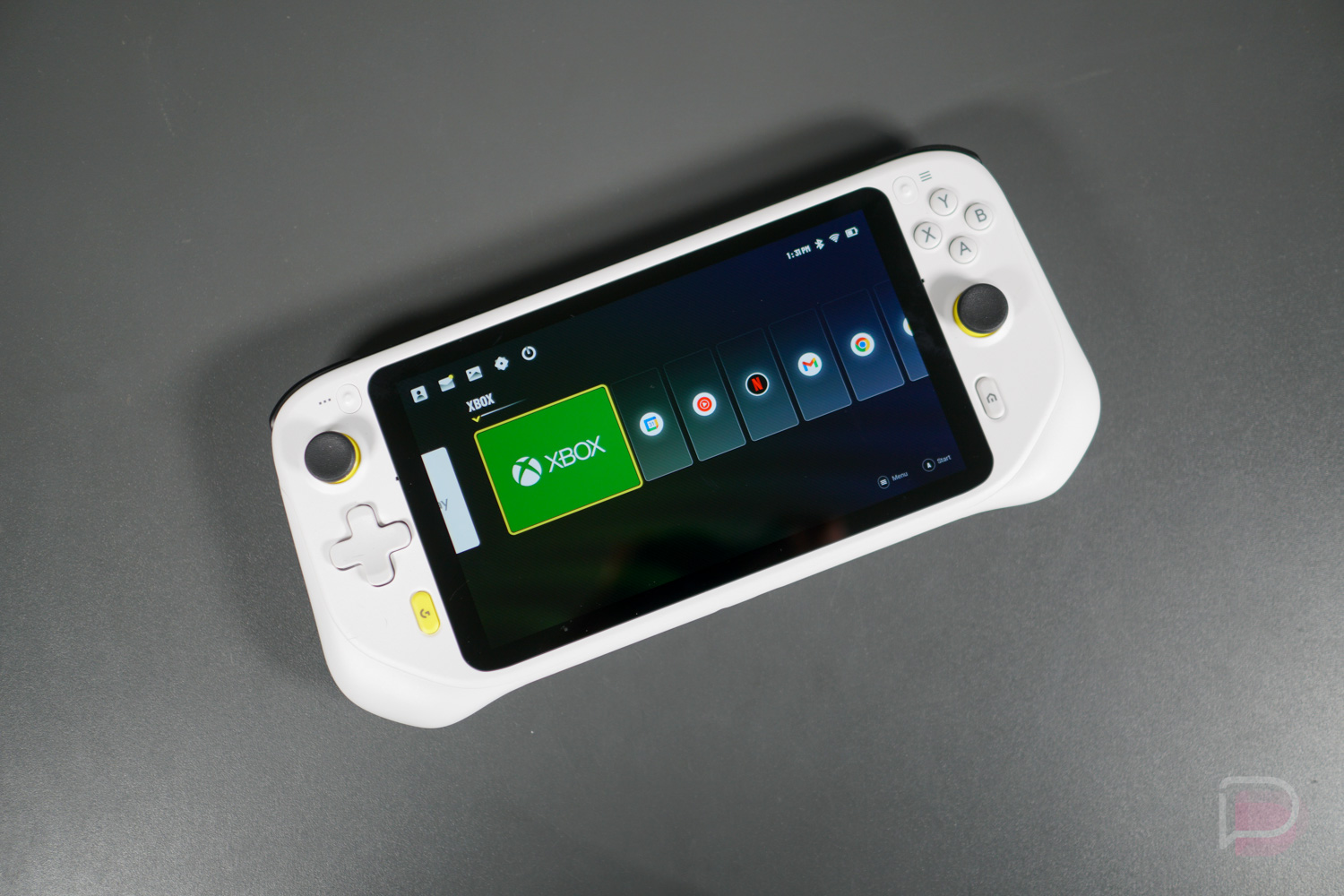
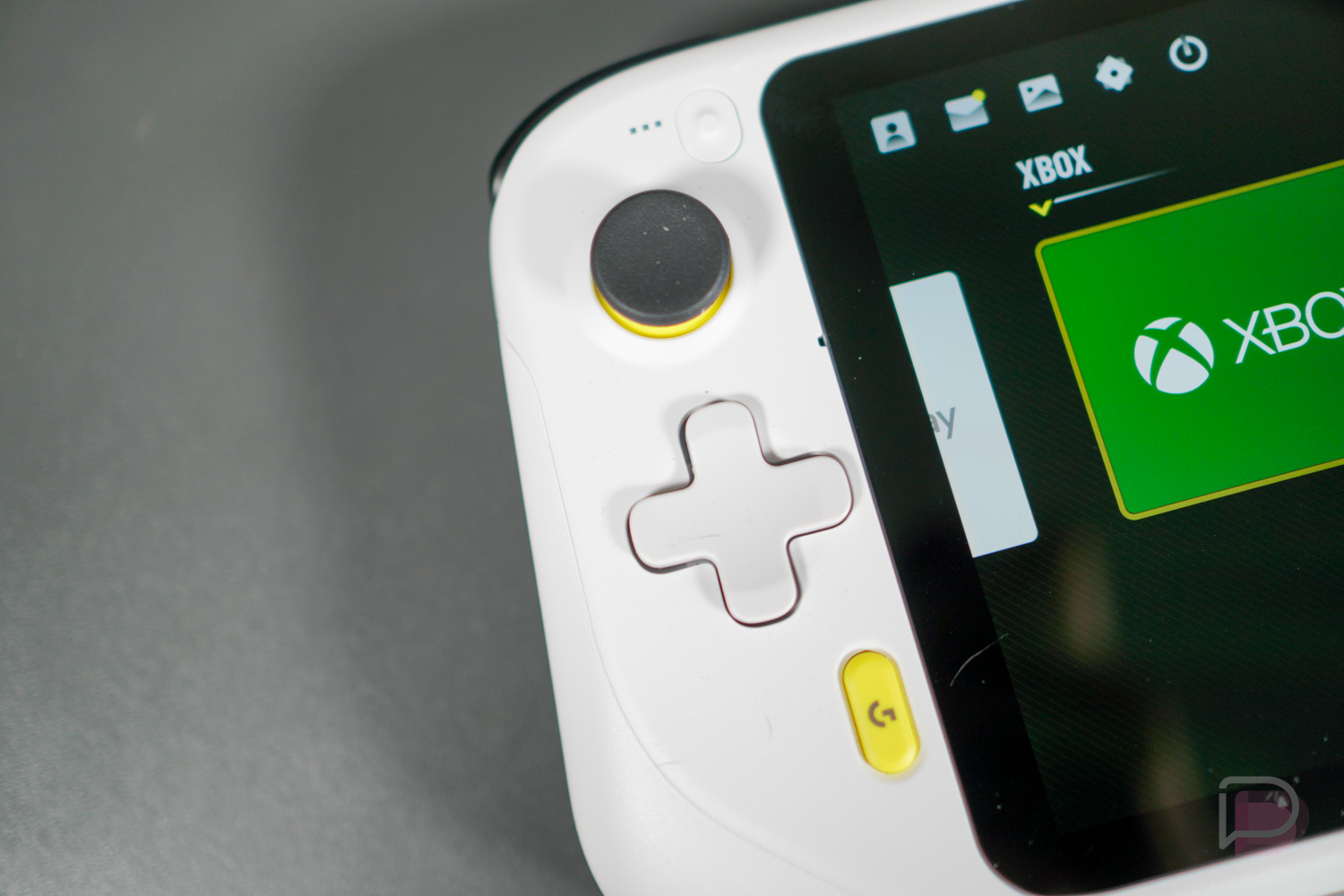
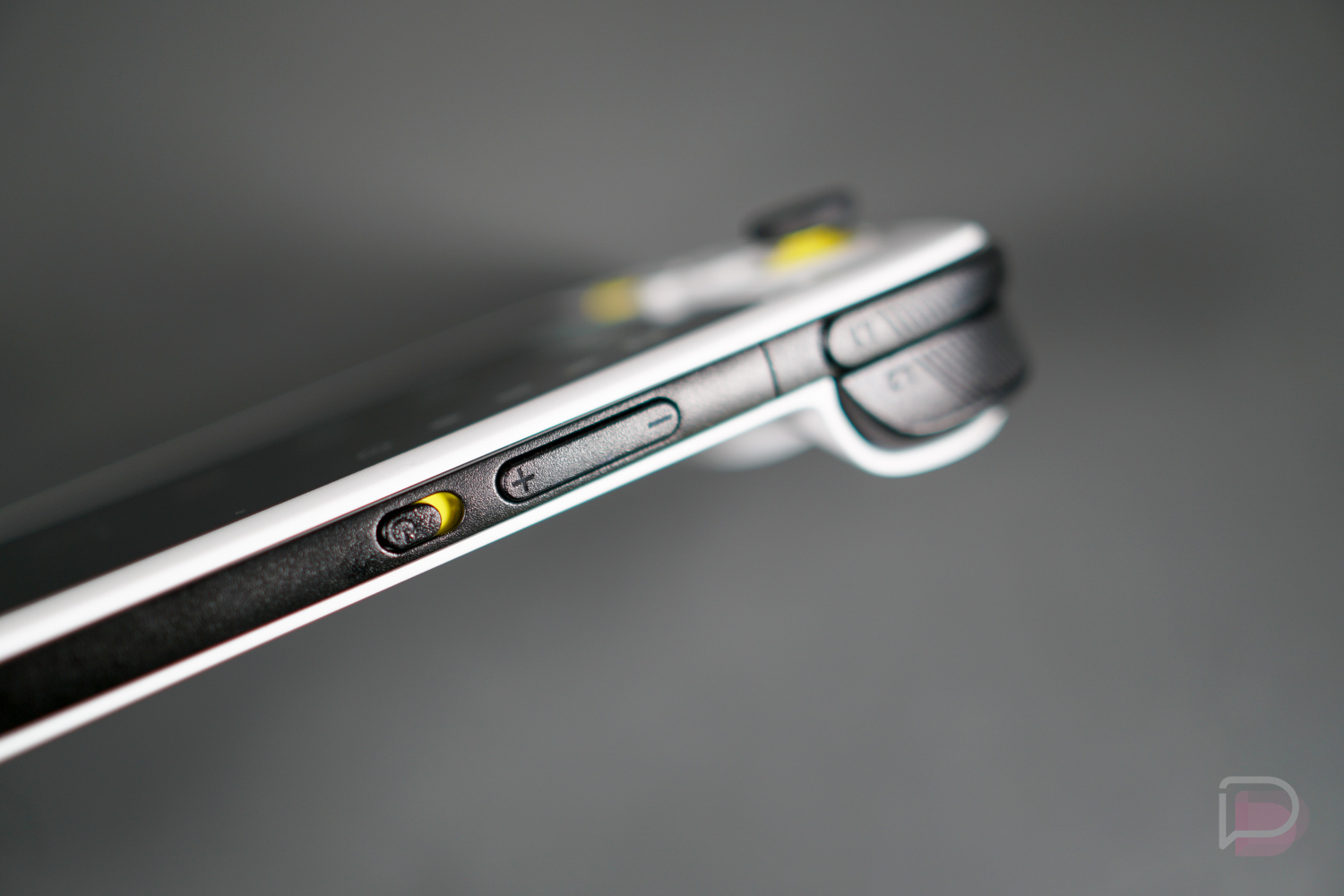
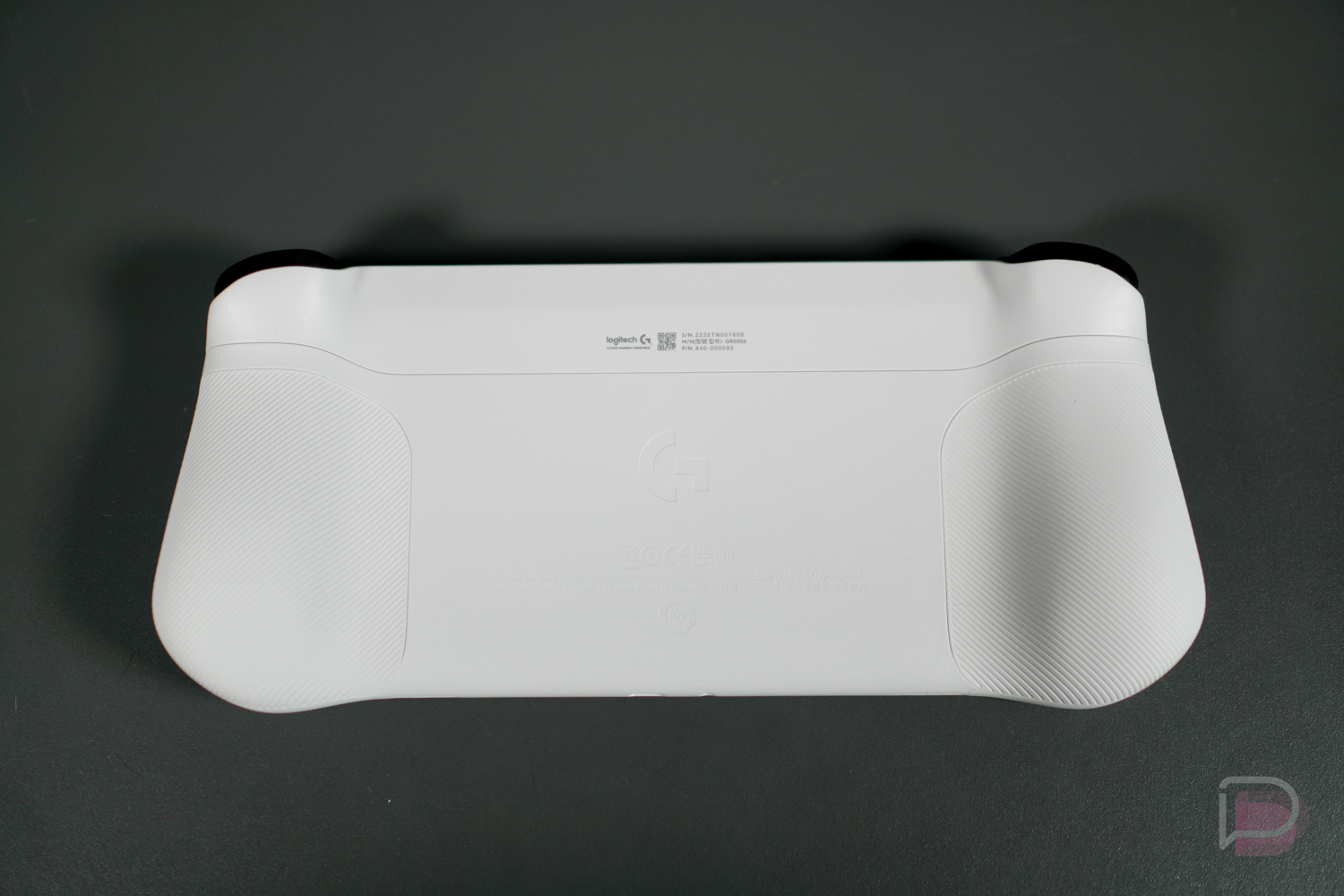
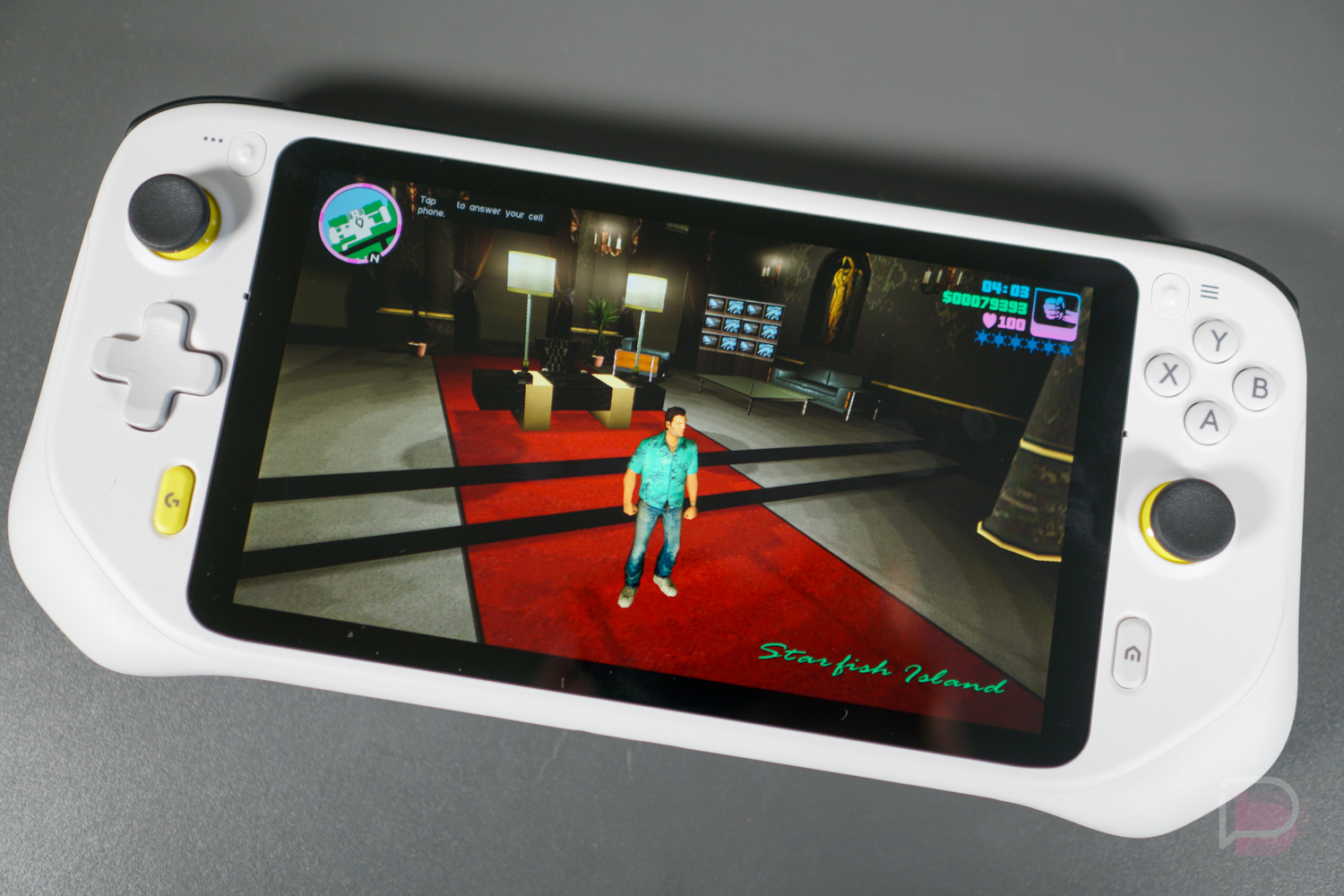
For hardware, we have a plastic body complete with all of the triggers, bumpers, and buttons one may need for gaming. It’s a very solid body with a nice bit of weight thanks to a large built-in 6,000mAh battery and 7-inch Full HD (60Hz) display. All of the buttons, thumbsticks, D-Pad, triggers, and bumpers feel solid. To put it simply, it doesn’t feel like a $349 device, if that makes sense. On the inside, we have a Snapdragon 720G processor and 4GB RAM running Android 11, with a custom launcher created by Logitech to act as the interface you’ll mostly see for jumping in and out of games. There’s also a Tablet Mode, should you want that at some point. A full spec rundown can be viewed on our original announcement post. For anyone on the fence, it’s possible that the specs are what seem a little lacking. After all, it’s a SD720G with 4GB RAM running a version of Android from over two years ago. I totally get it, and let me assure you, I felt the same way when I was first learning about this device.

Now having used the device for games from both the cloud and Google Play, I can honestly say that these specs work perfectly fine for what most may need, plus the overall experience at the Early Bird price of $299 is pretty great. Do I wish the device could support higher refresh rates? Yes, that’s my number one complaint, but other than that, performance is surprisingly good, which makes perfect sense when we consider that all this device has to do is have a solid WiFi connection to play the world’s most demanding AAA titles. We can all admit that this is what makes the idea of cloud gaming attractive, having all graphical settings set to ultra but not actually needing the thousands of dollars worth of hardware required to make that happen. The issue is, while it is possible on G Cloud, you still can’t truly experience the cloud’s ultimate power because we’re still limited by the machine’s own display specs. To reiterate, in the performance department, all this device needs is a 90-120Hz display and I’d be completely onboard. The display’s colors are good, brightness is super solid, and the contrast levels are very nice. It really just needs that higher refresh rate that my eyes have grown accustomed to.

Battery life is exceptional. To give examples, I tested a few things. For starters, I downloaded a ton of games from Google Play, such as Sonic the Hedgehog, GTA: Vice City, Alto’s Odyssey, Crazy Taxi, plus a few other favorites of mine. For my gaming sessions, which never went more than an hour, this device was lasting for days. I’d come back from time to time throughout the day, get some gaming in, and then set it down. Hours later I’d come back and still have plenty of juice for more gaming. For the cloud gaming it was the same, if not better. Since all I’m doing is streaming the game, it felt like the G Cloud was sipping juice while I was deep in Cyberpunk 2077 via GeForce NOW or Xbox’s Trek to Yomi and Back 4 Blood. Logitech claims up to 12-ish hours of continuous gaming, so as long as you break up that time, this device should have no issues giving you plenty of gameplay on a single charge. I was pretty impressed here.

To wrap this up, if you’re a fan of cloud gaming, I have no issues recommending this device. If you’re looking for more of a portable Google Play game hub to play your favorite mobile games, while it does work, I think you’re better off sticking with your phone or dedicated tablet device with a Bluetooth controller paired to it (if the game supports such a thing). G Cloud simply doesn’t have the processing power (or display chops) to take us where we want to be with Android-based gaming. On the cloud side, though, performance is completely ample and it gets the job done. My only concern on that side is GeForce NOW. Will NVIDIA continue to support it? While I hope they do, with the death of Stadia, I keep getting a sense that the writing is on the wall for other cloud gaming services.

TL;DR Version: At the Early Bird price of $299, the G Cloud has great hardware and battery life. It’s the perfect entry point into the world of handheld cloud gaming, so long as you don’t mind staring at a display that can’t go beyond a frame rate of 60Hz.

Purchase G Cloud

Read the original post: Logitech’s G Cloud Cloud Gaming Device is Actually Pretty Awesome

via Droid Life: A Droid Community Blog https://ift.tt/aQLGUMy

October 13, 2022 at 03:55PM