
Walmart and H&M are trying to turn carbon dioxide into clothes

https://www.popsci.com/technology/carbon-dioxide-clothes/

It might not seem like it when you nonchalantly click a Buy Now button while online shopping, but that new t-shirt is part of a complex global web of commerce taking a toll on the environment. Consulting giant McKinsey estimates that the fashion industry alone accounts for as much as 4 percent of total global climate emissions. Those ballooning emissions are driven by increased appetites for ever more new clothes. An industry report from 2021 found that the amount of clothes produced annually more than doubled between 2000 and 2015. This worrying trend has led to a boom in scientists and start-ups trying to engineer their way out of the problem with all manner of less environmentally taxing threads.

One of those companies, San Francisco-based Rubi, thinks it can make a dent in the issue by sucking up some of that harmful carbon dioxide (CO2) and using it to create carbon neutral textiles that can then be made into clothes. The carbon transformation process mimics what happens in trees, but inside a bioreactor and at a rapid pace. The result should be fiber that is practically identical to the real thing, but without the need for any more felled trees. It’s a process akin to lab-grown meat, but for plant fibers. So far, at least 15 major brands, including H&M and Walmart, have reportedly piloted the tech, though it may still take some time before bioreactor-bred blue jeans are commonly seen hanging off store shelves.

Need to transform carbon dioxide quickly? Call in the enzymes. 

Rubi’s conversion process fundamentally relies on using a variety of enzymes (what CEO and cofounder Neeka Mashouf calls a “cascade” of enzymes) to chemically transform captured carbon dioxide  into cellulose. In nature, this cellulosic production system takes place when trees slowly sink carbon from the atmosphere and convert it into the cellulose found in their trunks and branches. For centuries, clothing makers have turned that cellulose into a pulp and then used it to weave textiles or spin into yarn. Viscose, rayon, lyocell, and Tencel (a brand name form of lyocell) are all examples of widely used textiles derived from cellulose.

Rubi takes the tree out of the equation and uses shipping container-sized bioreactors filled with enzymes to expedite the process instead. In an interview posted on YouTube, Rubi Laboratories Senior Scientist Trevor Boram referred to the enzymes used as “biological catalysts of the cell” that rapidly speed up chemical reactions. This already happens in nature. Humans are just slamming a foot on the accelerator.

“I think humans taking these enzymes to the next level is very fascinating,” Boram said. 
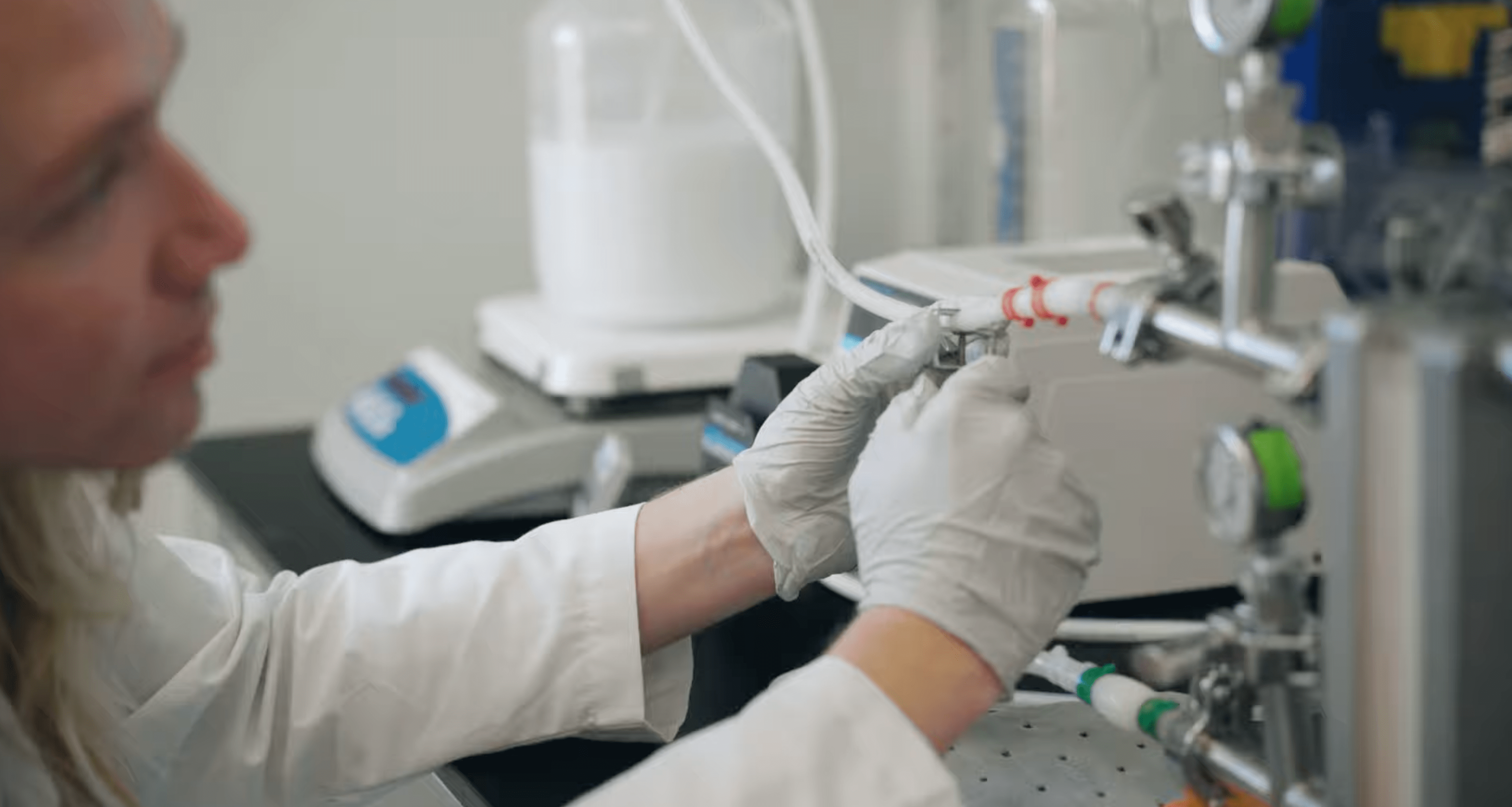
a scientist working in a lab
A Rubi engineer working with enzymes in the lab. Image: Rubi Laboratories.

Carbon dioxide derived clothes aren’t commercially available yet, but that may soon change. In 2023, Rubi entered into a pilot agreement with Walmart which said it would test the use of its carbon capture technology to explore how it could properly be used at a larger scale in the rational giant’s supply chain. Since then, 14 other comapiens including H&M have also explored the technology. Ideally, these types of partnerships should be win-win. Rubi gets to suck up the carbon dioxide and generate pulp while big brands get to a clear path towards meeting their environmental sustainability goals

Why tech-based solutions to sustainability are still a risky bet 

However all of that hypothetical harmony ultimately depends on Rubi’s ability to replicate its process reliably at scale. That’s often easier said than done. Several companies have already tried and failed to find tech-driven solutions to make textiles less environmentally taxing. Perhaps most notable was Swedish textiles recycling company Renewcell, which aimed to take old clothes and transform them into new cotton fiber. Renewcell received generous funding and opened its first factory in 2022, with partnerships from major fashion brands. And yet, just two years later, scaling issues forced it to file for bankruptcy.

“Can it work reproducibly at scale, meeting quality specs of the customer as they actually need them, meeting their timelines and deliverables?” Bolts Threads (another company applying bioengineering to fashion) CEO Dan Widmaier said in an interview with The Washington Post. “Can it be financed to that scale? Those are the things that break all these.”

Related Stories

Of course, there’s also another far less high-tech or glamorous solution to textile waste: simply buy less clothing. While it might feel fun for a brief moment to swap out wardrobes every season, that mindset is partially to blame for incentivizing fast-fashion brands to prioritize quantity over quality and to accept mass waste in the name of keeping prices low.

At the same time, it’s also likely that the ship full of clothing has already left the port. Efforts to meaningfully rein in textile waste and drive down emissions to safe levels, particularly as demand for clothing surges in more regions, will likely require a mix of frugal consumer behavior and innovative tech solutions like carbon capture. And nothing quite says “statement piece” like a top derived from carbon dioxide. 

The post Walmart and H&M are trying to turn carbon dioxide into clothes appeared first on Popular Science.

via Popular Science – New Technology, Science News, The Future Now https://www.popsci.com

March 20, 2026 at 09:36AM
The Surprising Everyday Habits Filling Your Body With Microplastics

https://www.geeksaresexy.net/?p=603236

Plastic is everywhere, but this video really puts things into perspective. It breaks down three surprisingly common ways microplastics get into your body: through what you eat and drink, the air you breathe, and even through your skin. From bottled water packed with particles to microwaving leftovers in plastic containers, it turns out exposure is basically unavoidable.

And what’s even more unsettling is that these tiny particles don’t just pass through. They can travel through your body, settle in organs, and trigger inflammation that never fully goes away.

Not exactly comforting, but it’s not all doom and gloom. It also highlights a few simple changes that can help reduce how much plastic you take in daily.

It might make you rethink a few everyday habits, starting with what’s in your kitchen right now.

Enjoying the content? Please consider supporting Geeks are Sexy!

Click This Link for the Full Post > The Surprising Everyday Habits Filling Your Body With Microplastics

via [Geeks Are Sexy] Technology News https://ift.tt/bGA96kM

March 19, 2026 at 01:40PM

Clothes really do come back in style every 20 years

https://www.popsci.com/science/clothes-style-20-year-rule/

Clothing trends come and go, but in some cases, they don’t stay away for too long. For decades, both the fashion industry and its devotees have referenced the so-called “20-year-rule,” which suggests society is liable to see certain styles return at semiregular intervals. However, without any hard data to back up the claim, that “rule” has long remained more of a hypothesis.

That’s changing, thanks to recent analysis from mathematicians at Northwestern University. After examining nearly 160 years’ worth of women’s clothing, an interdisciplinary research team confirms that fashion trends frequently resurface every 20-or-so years.

“To our knowledge, this is the first time that someone developed such an extensive and precise database of fashion measures across more than a century,” study lead author Emma Zajdela said in a recent university profile.

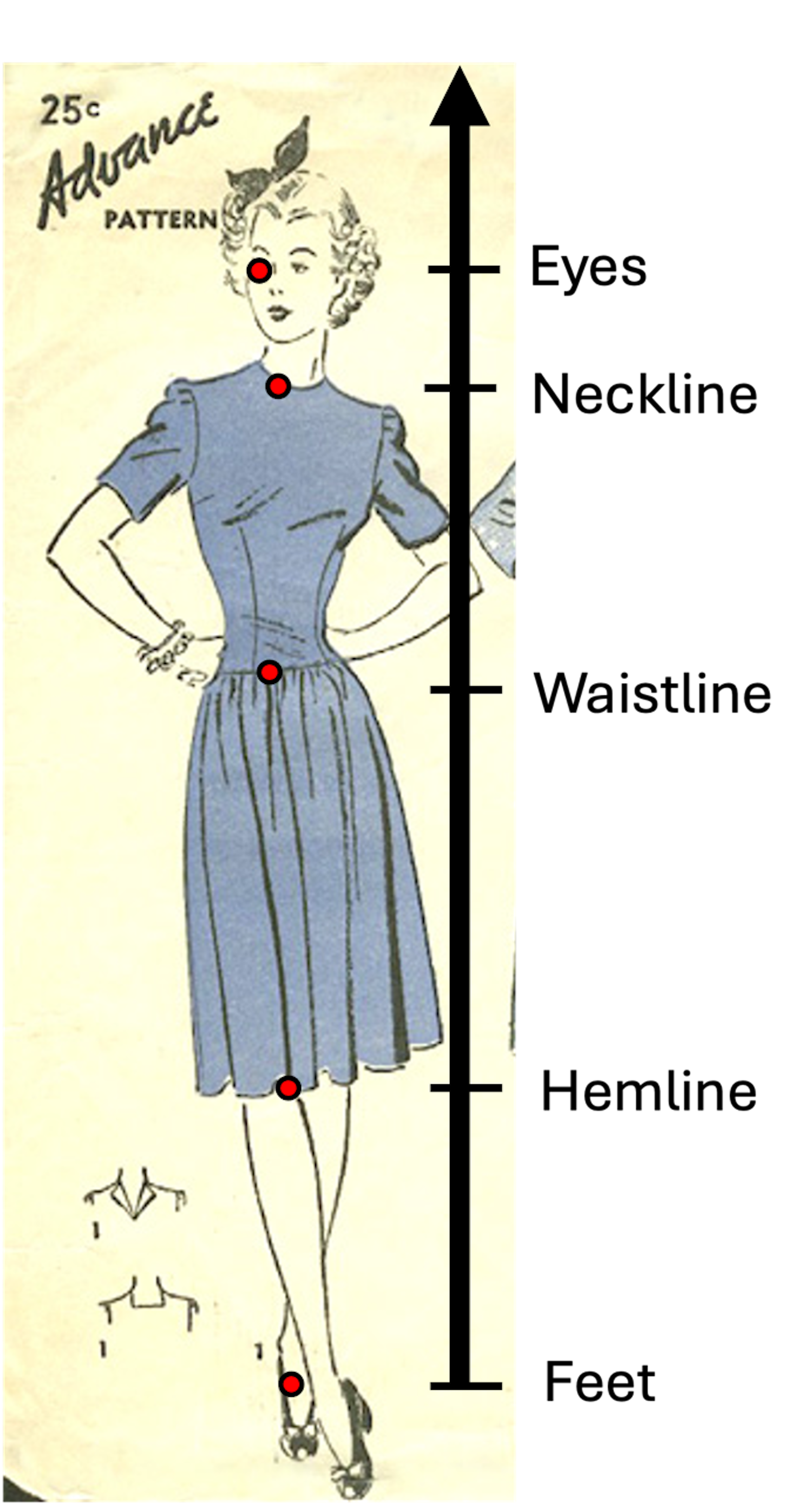
Example of how the researchers measured features like hemlines, waistlines and necklines in archival sewing patterns. Credit: Emma Zajdela / Daniel Abrams / Commercial Pattern Archive

To reach their conclusions, researchers first compiled a dataset of about 37,000 garments by combining the University of Rhode Island’s Commercial Pattern Archive with generations of runway collection images dating back to 1869. They then broke down clothing based on specific features including hemline, waistline positioning, and neckline to assess each example in measurable, numerical terms. Finally, they built a new mathematical model to analyze the push-and-pull between novel and more recognizable fashion designs. According to Zajdela and her colleagues, the evidence clearly shows that the fashion industry routinely recycles certain themes and designs around every two decades.

“Historically, the lack of data posed a barrier to explicit quantitative study of this system,” explained Zajdela, adding that they now have “some very interesting results.”

Basically, the fashion industry is constantly fluctuating between originality and tradition. Once a clothing style is too popular, designers begin changing their new apparel just enough to stand out while still remaining desirable to potential wearers.

“Over time, this constant push to be different from the recent past causes styles to swing back and forth. The system intrinsically wants to oscillate, and we see those cycles in the data,” said applied mathematician and study coauthor Daniel Abrams.

The most obvious example of this pattern is the hemline. For more than a century, skirt fashion has swayed between short and long styles. Flapper dresses with short hemlines were all the rage in the 1920s, but gave way to lengthier designs in the 1940s and 50s. By the 1960s, the trend returned back to even shorter options like the miniskirt.

However, despite this mathematical support, the 20-year-rule may not last much longer. Beginning in the 1980s, the short-long skirt dichotomy began breaking down as both options remained popular for wearers.

“In the past, there were two options—short dresses and long dresses. In more recent years, there are more options: really short dresses, floor-length dresses and midi dresses,” said Zajdela. “There is an increase in variance over time and less conformity.”

Only time will tell if the 20-year-rule remains in effect. Until then, it’s probably best to hold on to that old piece of clothing for at least a little bit longer. It’s not only good for your wardrobe—it’s good for the environment.

The post Clothes really do come back in style every 20 years appeared first on Popular Science.

via Popular Science – New Technology, Science News, The Future Now https://www.popsci.com

March 18, 2026 at 09:52AM

Logitech’s radical new mouse ditches clicks for magnets

https://www.pcworld.com/article/3077047/logitechs-radical-new-mouse-ditches-clicks-for-magnets.html

There are a lot of different gaming mice you can use, but all of them have something in common: physical switches. They’re similar to the electrical switches in keyboards and controllers. But there’s a newer option as well, supplied by Logitech—the switches in the Pro X2 Superstrike are magnetic and adjustable. In the latest PCWorld video on YouTube, Will Smith tells us why that’s important.

The Pro X2 Superstrike‘s primary left and right buttons use a magnetic sensor under each button which can measure the distance you press down. There’s no physical contact between the components. In order to simulate a more conventional “click” experience, it uses haptic feedback, just like a phone keyboard or a touchpad on more premium laptops.

Both the actuation point (how fast the click, um, clicks) and the intensity of the feedback are adjustable. Like adjustable actuation keyboards, you can also choose how long it takes the release action to trigger, or even bind separate actions to the release.

So, what’s the point of all this? Incredibly rapid clicks!

If you’re playing a shooter and using a semi-automatic weapon, wherein each click is a separate shot, the “hair trigger” adjustments you can make to the mouse absolutely make a noticeable difference in game. The mouse is also much quieter than a conventional design since it lacks a physical contact with the buttons.

“Are you actually better with this mouse?” asks Adam.

“Look… it’s impossible to tell,” answers Will.

As with all premium gaming equipment, the better you are at the actual game, the more you’ll be able to take advantage of the hardware’s capabilities. But unlike some controversial adjustable actuation keyboard features (like Snap Tap), the rapid firing enabled by the Pro X2 Superstrike isn’t widely regarded as “cheating” (at least for now).

The Pro X2 Superstrike gets all of Logitech’s best gaming mouse capabilities, including wireless charging while playing if you use the compatible PowerPlay 2 pad. It’s also got a frankly insane 44,000 DPI sensor, grip pads in the box, all that jazz. Unfortunately, it relies upon Logitech’s G gaming software to adjust all those variables, and getting it to run on Linux might be a bit of a headache.

This mouse doesn’t come cheap, though. It’s $180 at retail. For more takes on gaming hardware, be sure to subscribe to PCWorld on YouTube and check out our weekly podcast The Full Nerd.

via PCWorld https://www.pcworld.com

March 9, 2026 at 10:53AM

China Made LiDAR Cheap. Now Automakers Are Racing to Put It in Your Next Car

https://www.autoblog.com/news/china-made-lidar-cheap-now-automakers-are-racing-to-put-it-in-your-next-car

Cheaper LiDAR Makes Mass Adoption Possible

A decade ago, LiDAR was mostly limited to experimental autonomous vehicles. Early systems, such as those mounted on Waymo robotaxis, could cost as much as $50,000 per unit. These sensors were large and were often installed on the vehicle’s roof. They also required significant computing power to process the detailed data they produced. At the time, lidar was considered essential for autonomy research but far too expensive for production vehicles.

China changed that equation quickly. According to Automotive News, automakers there began installing LiDAR in production EVs and pushed suppliers to scale manufacturing. Companies such as Hesai and RoboSense increased output and drove prices down dramatically. Some compact units now cost roughly $200. Millions of sensors are produced each year. As a result, a growing share of Chinese EVs now feature LiDAR as part of their advanced driver-assistance systems.

Getty

Why Automakers Are Suddenly Embracing LiDAR

LiDAR prices are falling while vehicle computing power continues to improve. This combination is pushing Western automakers to reconsider the technology. LiDAR stands for light detection and ranging. The system uses laser pulses to create a detailed 3D map of a vehicle’s surroundings. Cameras rely heavily on lighting conditions and visual contrast. LiDAR works reliably in darkness, glare, and poor visibility. It also measures distance with high precision.

Several automakers now see LiDAR as a key step toward more advanced driver assistance and future automation. Rivian plans to introduce LiDAR on its upcoming R2 crossover. Ford Motor Company and General Motors are developing systems designed to support Level 3 automated driving later this decade. Lucid Motors already offers LiDAR as part of its driver-assistance package. Automakers see it as an added layer of redundancy alongside cameras and radar.

Rivian

Tesla’s Skepticism and the Road Ahead

One of the most prominent critics of LiDAR is Elon Musk. His company, Tesla, relies on a camera-based system for its driver-assistance technology. Musk has repeatedly argued that advanced artificial intelligence and cameras are enough to achieve autonomy. In his view, LiDAR adds unnecessary cost and complexity to the system.

Recent developments highlight the uncertainty surrounding autonomy technology. Tesla acknowledged that many vehicles may require upgrades to support future unsupervised, self-driving capability. This could affect customers who already purchased the Full Self-Driving package. The situation reflects the larger industry debate. Some companies continue to pursue camera-focused systems. Others believe that LiDAR’s falling costs and precise environmental mapping will play a major role in building safer, more capable automated vehicles.

Marc Piasecki?Getty Images

via Autoblog https://ift.tt/fbIxE2R

March 7, 2026 at 07:46AM