ChatGPT could pilot a spacecraft unexpectedly well, early tests find

https://www.space.com/space-exploration/launches-spacecraft/chatgpt-could-pilot-a-spacecraft-unexpectedly-well-early-tests-find

"You operate as an autonomous agent controlling a pursuit spacecraft."

This is the first prompt researchers used to see how well ChatGPT could pilot a spacecraft. To their amazement, the large language model (LLM) performed admirably, coming in second place in an autonomous spacecraft simulation competition.

Researchers have long been interested in developing autonomous systems for satellite control and spacecraft navigation. There are simply too many satellites for humans to manually control them in the future. And for deep-space exploration, the limitations of the speed of light mean we can’t directly control spacecraft in real time.

If we really want to expand in space, we have to let the robots make decisions for themselves.

To encourage innovation, in recent years aeronautics researchers have created the Kerbal Space Program Differential Game Challenge, a sort of playground based on the popular Kerbal Space Program video game to allow the community to design, experiment and test autonomous systems in a (somewhat) realistic environment. The challenge consists of several scenarios, like a mission to pursue and intercept a satellite and a mission to evade detection.

In a paper to be published in the Journal of Advances in Space Research, an international team of researchers described their contender: a commercially available LLM, like ChatGPT and Llama.

The researchers decided to use an LLM because traditional approaches to developing autonomous systems require many cycles of training, feedback and refinement. But the nature of the Kerbal challenge is to be as realistic as possible, which means missions that last just hours. This means it would be impractical to continually refine a model.

Get the Space.com Newsletter

Breaking space news, the latest updates on rocket launches, skywatching events and more!

But LLMs are so powerful because they’re already trained on vast amounts of text from human writing, so in the best case scenario they need only a small amount of careful prompt engineering and a few tries to get the right context for a given situation.

But how can such a model actually pilot a spacecraft?

A comparison of the relative sizes of the one-man Mercury spacecraft, the two-man Gemini spacecraft, and the three-man Apollo spacecraft. The image also has a drawing of launch vehicles (Saturn V, Titan II and Atlas-D) below. (Image credit: NASA/Davis Paul Meltzer)

The researchers developed a method for translating the given state of the spacecraft and its goal in the form of text. Then, they passed it to the LLM and asked it for recommendations of how to orient and maneuver the spacecraft. The researchers then developed a translation layer that converted the LLM’s text-based output into a functional code that could operate the simulated vehicle.

With a small series of prompts and some fine-tuning, the researchers got ChatGPT to complete many of the tests in the challenge — and it ultimately placed second in a recent competition. (First place went to a model based on different equations, according to the paper).

And all of this was done before the release of ChatGPT’s latest model, version 4. There’s still a lot of work to be done, especially when it comes to avoiding "hallucinations" (unwanted, nonsensical output), which would be especially disastrous in a real-world scenario. But it does show the power that even off-the-shelf LLMs, after digesting vast amounts of human knowledge, can be put to work in unexpected ways.

This article was originally published in LiveScience. Read the original article here.

And all of this was done before the release of ChatGPT’s latest model, version 4. There’s still a lot of work to be done, especially when it comes to avoiding "hallucinations" (unwanted, nonsensical output), which would be especially disastrous in a real-world scenario. But it does show the power that even off-the-shelf LLMs, after digesting vast amounts of human knowledge, can be put to work in unexpected ways.

This article was originally published in LiveScience. Read the original article here.

Join our Space Forums to keep talking space on the latest missions, night sky and more! And if you have a news tip, correction or comment, let us know at: community@space.com.

via Latest from Space.com https://www.space.com

July 7, 2025 at 08:08AM

What happens to your brain when you watch videos online at faster speeds than normal

https://www.geeksaresexy.net/2025/07/07/what-happens-to-your-brain-when-you-watch-videos-online-at-faster-speeds-than-normal/

‘Hare speed, please.’ Pressmaster

Marcus Pearce, Queen Mary University of London

Many of us have got into the habit of listening to podcasts, audiobooks and other online content at increased playback speeds. For younger people, it might even be the norm. One survey of students in California, for instance, showed that 89% changed the playback speed of online lectures, while there have been numerous articles in the media about how common speedy viewing has become.

It is easy to think of some advantages to watching things more quickly. It can let you consume more content in the same amount of time, or go through the same piece of content a couple of times to get the most out of it.

This could be particularly useful in an educational context, where it might free up time for consolidating knowledge, doing practice tests and so forth. Watching quickly is also potentially a good way of making sure you sustain your attention and engagement for the entire duration to avoid the mind wandering.

But what about the disadvantages? It turns out that there are one or two of those as well.

When a person is exposed to spoken information, researchers distinguish three phases of memory: encoding the information, storing it and subsequently retrieving it. At the encoding phase, it takes the brain some time to process and comprehend the incoming speech-stream. Words must be extracted and their contextual meaning retrieved from the memory in real-time.

People generally speak at a rate of about 150 words per minute, though doubling the rate to 300 or even tripling it to 450 words per minute is still within the range of what we can find intelligible. The question is more about the quality and longevity of the memories that we form.

Incoming information is stored temporarily in a memory system called working memory. This allows chunks of information to be transformed, combined and manipulated into a form that is ready for transfer to the long-term memory. Because our working memory has a limited capacity, if too much information arrives too quickly it can be exceeded. This leads to cognitive overload and loss of information.

Speedy viewing and information recall

A recent meta analysis in this area examined 24 studies of learning from lecture videos. The studies varied in their design but generally involved playing a video lecture to one group at original speed (1x) and playing the same video lecture to another group at a faster speed (1.25x, 1.5x, 2x and 2.5x).

Just like in a randomised controlled trial used to test medical treatments, participants were randomly assigned to each of the two groups. Both groups then completed an identical test after watching the video to assess their knowledge of the material. The tests either required them to recall information, used multiple choice questions to assess their recall, or both.

Playback buttons
Faster playback may not help with study. V.Studio

The meta-analysis showed that increasing playback speed had increasingly negative effects on test performance. At speeds of up to 1.5x, the cost was very small. But at 2x and above, the negative effect was moderate to large.

To put this in context, if the average score for a cohort of students was 75% with a typical variation of 20 percentage points in either direction, then increasing the playback speed to 1.5x would bring down the average person’s result by 2 percentage points. And increasing the playback speed to 2.5x would lead to an average loss of 17 percentage points.

Older people

Interestingly, one of the studies included in the meta-analysis also investigated older adults (aged 61-94) and found that they were more affected by watching content at faster speeds than younger adults (aged 18-36). This may reflect a weakening of memory capacity in otherwise healthy people, suggesting that older adults should watch at normal speed or even slower playback speeds to compensate.

However, we don’t yet know whether you can reduce the negative effects of fast playback by doing it regularly. So it could be that younger adults simply have more experience of fast playback and are therefore better able to cope with the increased cognitive load. Similarly, it means we don’t know whether younger people can mitigate the negative effects on their ability to retain information by using faster playback more often.

Another unknown is whether there are any long-term effects on mental function and brain activity from watching videos at increased playback speeds. In theory, such effects could be positive, such as a better ability to handle increased cognitive load. Or they could be negative, such as greater mental fatigue resulting from increased cognitive load, but we currently lack the scientific evidence to answer this question.

A final observation is that even if playing back content at, say, 1.5 times the normal speed doesn’t affect memory performance, there is evidence to suggest the experience is less enjoyable. That may affect people’s motivation and experience at learning things, which might make them find more excuses not to do it. On the other hand, faster playback has become popular, so maybe once people get used to it, it’s fine – hopefully we’ll understand these processes better in the years to come.The Conversation

Marcus Pearce, Reader in Cognitive Science, Queen Mary University of London

This article is republished from The Conversation under a Creative Commons license. Read the original article.

Click This Link for the Full Post > What happens to your brain when you watch videos online at faster speeds than normal

via [Geeks Are Sexy] Technology News https://ift.tt/AjnCr15

July 7, 2025 at 12:09PM

Hybrid vs EV vs Gas: Which Actually Saves You the Most Money?

https://www.autoblog.com/hybrids/ev-vs-hybrid-vs-gas-which-saves-more-money-over-10-years

In 2025, you can buy a Toyota Prius, skip the gas station for days, and still complain about the ride quality on potholes. That’s the hybrid life: part monk, part commuter ninja. And with gas prices moonwalking toward $4 again, it’s a lifestyle many Americans are still buying into—over 1.2 million hybrid sales last year alone.

But the EV crowd is yelling louder every year: “Just go all electric!” So let’s settle it — does the hybrid still make financial sense? Or is it a stepping stone past its prime?

We did the math. Real numbers. Real assumptions. No "green halo" pricing fluff.


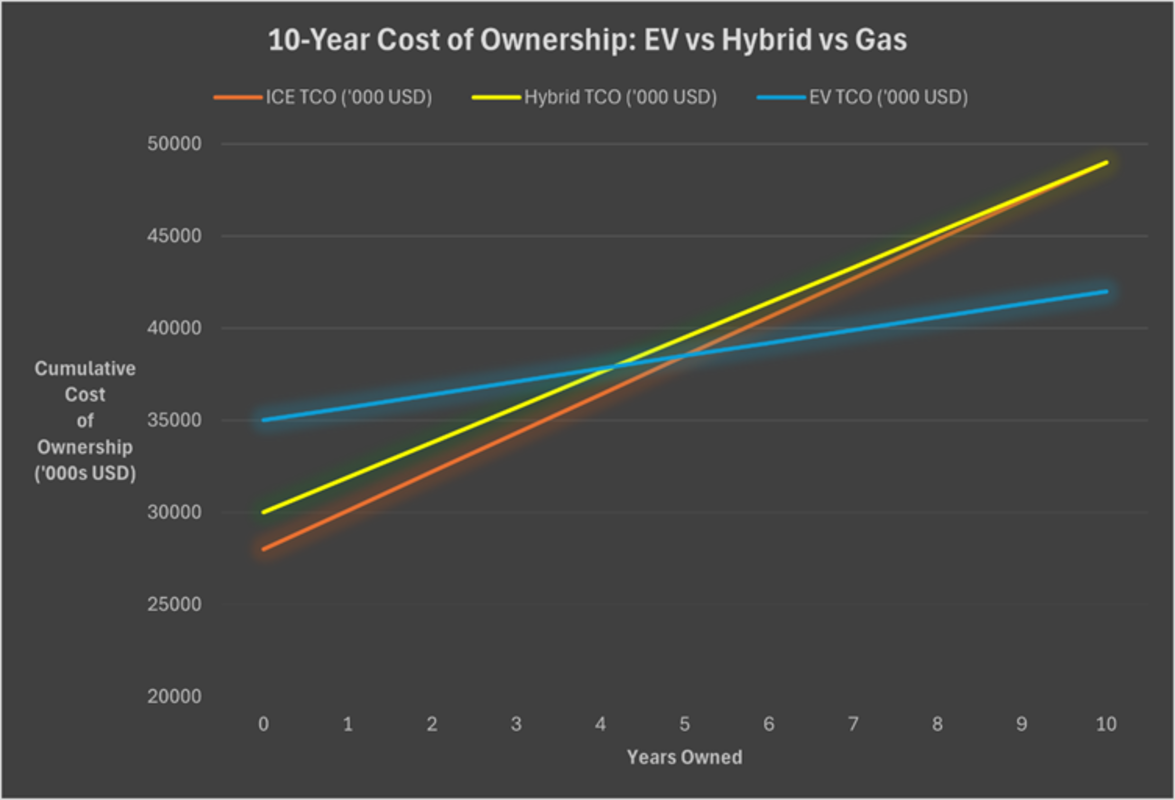
Figure 1: 10-Year Total Cost of Ownership (TCO)

Over a 10-year period, electric vehicles (EVs) can be the most cost-effective option—but only under ideal conditions like access to home charging and sufficient annual mileage. According to DOE and Argonne National Lab, hybrids remain the lowest total cost of ownership for the average American, especially for those without dedicated charging infrastructure.

Assumptions:

  • ICE: $28K purchase, $1,500/year fuel, $600/year maintenance
  • Hybrid: $30K purchase, $1,200/year fuel, $700/year maintenance
  • EV: $35K purchase, $400/year electricity, $300/year maintenance

1. The Hybrid Middle Ground Is Still Solid

The hybrid buyer still spends a little more upfront than the gas car buyer, but makes it back over time. You’re saving around $300 a year at the pump, and while maintenance isn’t zero (hello, regenerative braking sensors), it’s generally lower than ICE over the long haul. Add in federal tax credits or state perks, and hybrids remain one of the best deals on the road, especially if you’re putting in 15,000+ miles per year.

Clarification: While EVs offer lower operational costs, hybrids remain the cheapest total cost option for many average-use cases, per Argonne.

2. EVs Win on Running Costs — But Only If You Have a Garage

Here’s the truth: EVs are significantly cheaper to run — when you can charge at home. Charging at home averages $400/year in electricity, compared to $1,200 in gas for a hybrid. Plus, there’s no oil to change, no spark plugs to replace, and your brake pads last longer thanks to regen braking.

But that advantage flips quickly if you rely on public fast-charging, which can be 3x to 5x more expensive than home charging. According to DOE/Argonne, EVs relying heavily on public charging often end up more expensive than hybrids or ICE cars over 10 years.

EVs can save you about $7,000 over 10 years — but only if you charge smart and often at home.


3. Maintenance Isn’t Scary—For Any of Them

The myth that hybrids are more expensive to maintain because of “two powertrains” doesn’t hold up. Most hybrid systems are built like tanks. Inverters or battery packs rarely fail under warranty, and regenerative brakes reduce wear. Meanwhile, ICE cars need regular oil changes, timing belt swaps, and eventually, catalytic converter work.

EVs? Lowest upkeep by far. Scheduled EV maintenance at 6 cents per mile, compared to 10 cents for gas cars. However, battery replacement costs remain a wildcard for EVs beyond the warranty period, usually past year 8 or 10. That risk keeps hybrids competitive.

The Last Word

So, here’s what the numbers and studies actually tell us:

  • The hybrid still offers the lowest total cost of ownership for the average driver, especially those without home charging or lower annual mileage.
  • EVs can be more affordable, but only with access to home chargingand consistent use.
  • ICE vehicles remain the costliest long-term, due to fuel and maintenance costs.

So no, hybrids aren’t a “marketing mirage.” They’re still the smartest move for the gas-averse, chargerless majority. And EVs? They’re the future, but not everyone’s present.

The real question is this: Will the hybrid stay a stepping stone or become the sensible forever car?

via Autoblog https://ift.tt/ipKMazo

July 5, 2025 at 05:54PM