from Engadget

For everything from family to computers…
from Engadget
Filed under: Government/Legal, Safety

Today’s automobiles are more connected than ever, and the National Transportation Safety Board doesn’t seem to approve. The Detroit News reports that NTSB Chair Deborah Hersman is standing behind a recommendation to ban drivers from making hands-free phone calls that aren’t of the emergency variety.
Hersman is battling automakers head-on when it comes to distracting technologies, and there are plenty of those technologies in today’s vehicles. That includes hands-free calling made via Bluetooth, which has long been viewed as a safer alternative to grabbing a phone and calling someone the old-fashioned way. The proposed ban on hands-free calling reportedly doesn’t include OnStar, which integrates calling directly through the vehicle. Hersman reportedly went as far as to suggest that automakers make their number one priority “safety, not sales.”
While we think distracted driving is worth fighting, it’s difficult to see where banning hands-free calling is the answer. And we’re not alone. Even National Highway Traffic Safety Administrator Ray LaHood feels the NTSB recommendation goes too far. If automakers are forced to remove the tech from new vehicles, we’re thinking many drivers will simply revert back to hand-held calling.
The NTSB thinks that hand-held and hands-free are equally dangerous, but it’s difficult to argue that case, especially if integrated technology like OnStar is permitted. Once a phone is paired, what’s the difference between pressing the hands-free button and pressing the OnStar button? We’d argue that having kids in the back seat is far more distracting than hands-free calling, and we don’t see the NTSB calling for a ‘no kids in the car’ policy any time soon.
from Autoblog
Antivirus provider Trend Micro has released a research paper that links breaches against the computers of Tibetan activists and companies in Japan and India to a hacker in the Chinese underground.
An article published on Thursday in the New York Times later identified the intruder as a Chinese former graduate student who now “apparently” works for Tencent, China’s leading Internet portal company, according to online records cited by the news organization. It was one of the few times people investigating espionage-style malware attacks have put a public face on an alleged perpetrator.
from Ars Technica
In a final vote of 236 to 184, the amendment was put to rest
Filed under: Government/Legal
If you have a phone, you’ve probably been offered a (last, final, only, etc.) chance to extend your car’s warranty. Hopefully you realized an anonymous caller from an unknown number had no idea what kind of car you drive much less when your warranty expired and promptly ended the call.
Way back in 2008, several state attorneys general teamed up to hang up on the auto warranty scammers, and the next year a federal judge ordered two companies to cease the annoying, probably illegal calls.
Finally, yesterday, the Federal Trade Commission slammed the hammer down on LA-based SBN Peripherals (aka Asia Pacific Telecom, Inc.). The FTC’s report says the company made more than 2.6 billion random calls in less than 20 months. Unfortunately, 12.8 million of those calls paid off with some consumer being scammed.
For their many, many, many telephonic transgressions, the company was ordered to pay $5.3 million. The company is conveniently unable to pay that amount, of course, so the FTC is claiming more than $1 million from a Hong Kong bank account, a $357,000 lien on a house, 50% interest in a Saipan office building, interest in seven tracts of land, a 2004 Corvette, a 2005 BMW X5, a 2004 Dodge Durango, a recreational vehicle and a partridge in a pear tree. We’re betting the extended warranties on those cars is not transferable. All defendants are also ordered to never, ever again engage in telemarketing. EVER.
But if you’re still in need of an extended warranty for your car, email us with your credit card number and we’ll get right back to you. (We’re joking of course! We prefer cash.)
You can read the full FTC report here.
from Autoblog

Microsoft’s Jerry Koh and Jeff Piira gave some insight into the Windows 8 touch experience in yet another Building Windows 8 blog post yesterday. They talked specifically about the type of touch hardware that would be required for Windows 8-certified tablets – the touchscreens in Windows 8 and Windows on ARM tablets will need to recognize at least five simultaneous inputs, have good edge detection, and accurately register 95% of all touch input.
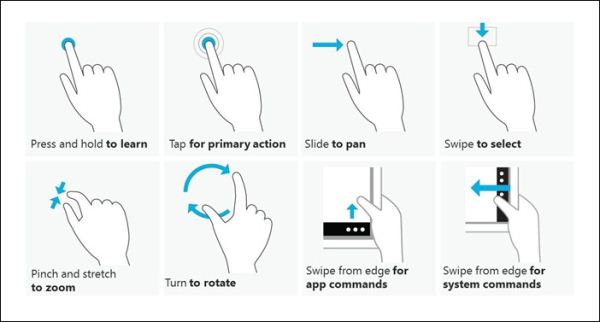
To ensure a decent experience on Windows 7 tablet hardware, the gestures needed for basic OS navigation require no more than two fingers, though tablets with limited multitouch capabilities may not be able to use apps or features that require more complex gestures. To compensate for tablet hardware with poor edge detection, Windows 8 can use a 20 pixel buffer around the screen to help register edge gestures, but the space used for the buffer cannot be used to register other touch input. Various sensitivity issues may also cause problems with individual taps, swipe to select, swipe and slide, and swipe from edge on Windows 7 tablets.
For more information, including specific Windows 7 tablets that Microsoft has used for internal testing, the full post is linked below.
Source: Building Windows 8 blog
from AnandTech
For nearly six years, a mysterious condition called colony collapse disorder (CCD) has been wreaking havoc with the honey bee population in the US and Europe. The cause of CCD remains elusive, with various fingers being pointed at mites, fungi, viruses, pesticides, and even cell phone emissions. Today, a pair of studies were published in Science that suggest that sublethal exposure to a family of common pesticides called neonicotinoids might play a contributing role in the great bee die-off.
from Ars Technica