From Engadget: Google takes one giant leap: now lets you Street View the Kennedy Space Center

Google takes one giant leap: now lets you Street View the Kennedy Space Center

Today’s a stupendous day for lovers of the one and only National Aeronautics Space Administration — nearly half as great as when we took you inside Kennedy Space Center shortly after it had opened its fascinating doors to the public. At any rate, Google announced earlier that its captivating (and sometimes troubling) Street View technology had made its way into NASA’s KSC, allowing people to check out what the compound is all about and what sort of sensational machinery lies inside. With Mountain View’s doings, you can now find your way around different spots within the Space Center, including the Launch Firing Room, Vehicle Assembly Building and, as seen above, the Space Shuttle Launch Pad. There’s a video past the break if you’re interested in a quick preview, otherwise you can give it a go yourself by clicking the more coverage link below.


from Engadget

From Engadget: ARM claims new GPU has desktop-class brains, requests OpenCL certificate to prove it

ARM claims new GPU has desktopclass brains, requests OpenCL certificate to prove it

It’s been a while since ARM announced its next generation of Mali GPUs, the T604 and T658, but in the semiconductor business silence should never be confused with inactivity. Behind the scenes, the chip designers have been working with Khronos — that great keeper of open standards — to ensure the new graphics processors are fully compliant with OpenCL and are therefore able to use their silicon for general compute tasks (AR, photo manipulation, video rendering etc.) as well as for producing pretty visuals.

Importantly, ARM isn’t settling for the Embedded Profile version of OpenCL that has been “relaxed” for mobile devices, but is instead aiming for the same Full Profile OpenCL 1.1 found in compliant laptop and desktop GPUs. A tall order for a low-power processor, perhaps, but we have a strong feeling that Khronos’s certification is just a formality at this point, and that today’s news is a harbinger of real, commercial T6xx-powered devices coming before the end of the year. Even the souped-up Mali 400 in the European Galaxy S III can only reign for so long.


from Engadget

From Ars Technica: NASA picks Boeing, Sierra Nevada, and SpaceX for Commercial Crew

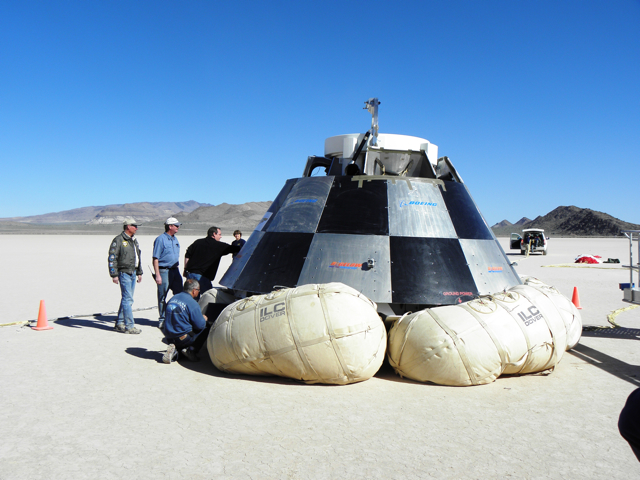
The Boeing CST-100 just after its successful drop test at Delamar Dry Lake, Nevada

NASA announced the two and a half winners of the third Commercial Crew development round this morning. The winners were SpaceX ($440M), Boeing ($460M) and Sierra Nevada Corporation ($212.5M), although those allocations are subject to Congressional approval.

Today’s awards give a huge advantage to the three companies that got them, because competitors will need to fund their own development in its entirety. On the other hand, by partnering with the competitors, NASA has managed to seed the development of five different manned space vehicles for under $1B so far, a leap forward for the evolving space passenger market. They’ve paid for it on a reward-for-progress basis, handing out pre-agreed amounts of money for each specified milestone.

SpaceX was well ahead of the other two competitors because of the unmanned Dragon, which has already berthed with the International Space Station. The company has borne the brunt of the development costs itself, putting in about $300 million of its own money in addition to about $75 million from NASA. DragonRider, the nickname for the manned Dragon spacecraft, will probably fly its first manned flight in 2015, coming down for an ocean landing with the aid of parachutes. However, SpaceX has completed the development of the SuperDraco thruster, which will serve primarily as a launch abort system but also allow the DragonRider to make powered landings on solid earth without parachutes.


from Ars Technica

From Ars Technica: Oculus Rift head-mounted display finds funding from developers

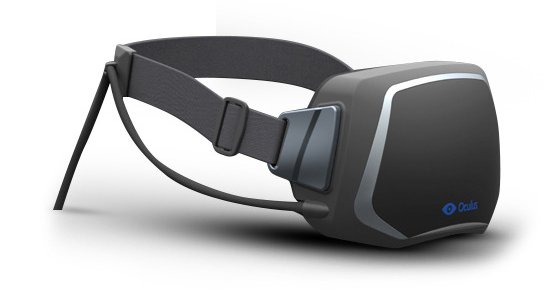
Oculus Rift

The idea of a mass-market virtual reality headset that totally immerses players in a game world died out pretty quickly in the ’90s, a time when the technology wasn’t quite up to the heady concept. Now, a hardware designer named Palmer Luckey thinks that technology has finally caught up with the dream, and seems to have done a good job convincing a lot of game designers that he’s right.

Luckey’s head-mounted display, the Oculus Rift, launched on Kickstarter today after first being previewed at E3. The device quickly surpassed it’s $300,000 funding goal (approaching $600,000 at the time of this writing), primarily by selling $300 development kits to thousands of backers. Those developers include id Software’s John Carmack, (who’ll be bringing Doom 3 BFG as the first game to support the headset), Epic Games’ Cliff Bleszinski, Unity CEO Dave Helgason and Valve president and owner Gabe Newell, who offered up supportive quotes on Rift’s potential for truly immersive virtual reality.

What makes Oculus Rift different from the failed consumer head-mounted displays of the past (and present)? The creators tout a 110-degree diagonal field of vision that eliminates the “tunnel vision” effect of some displays with smaller screens, and an “ultra low latency” head tracking system that prevents the nausea that can come when the image lags slightly behind your craning neck. The Oculus Rift SDK will support games created in both the Unreal and Unity engines, which should make it relatively easy to convert a wide variety of games to the stereoscopic headset when it’s finally ready for release.


from Ars Technica

From Ars Technica: Bad financial algorithm leads to severe stock market disarray

A stock-trading algorithm gone awry appears to have thrown American stock markets into chaos on Wednesday, following a surge of volatile trading after the opening bell. Many of the country’s biggest companies were affected, including Bank of America, Alcoa, General Electric, Berkshire Hathaway, Citigroup, and American Airlines.

Financial news sites have pinpointed the problem to Knight Capital Group. The brokerage firm’s algorithm appears to have triggered purchases and sales of millions of shares for 30 minutes.

Algorithmic trading, where stock transactions are mediated by high-speed data connections and software rather than humans, is something that’s been rapidly overtaking the industry in recent years. The infamous “flash crash” of 2010 led to a loss of 573 points on the Dow Jones Industrial Average in five minutes.

from Ars Technica