From Ars Technica: Putting the brakes on climate change with… diamonds?

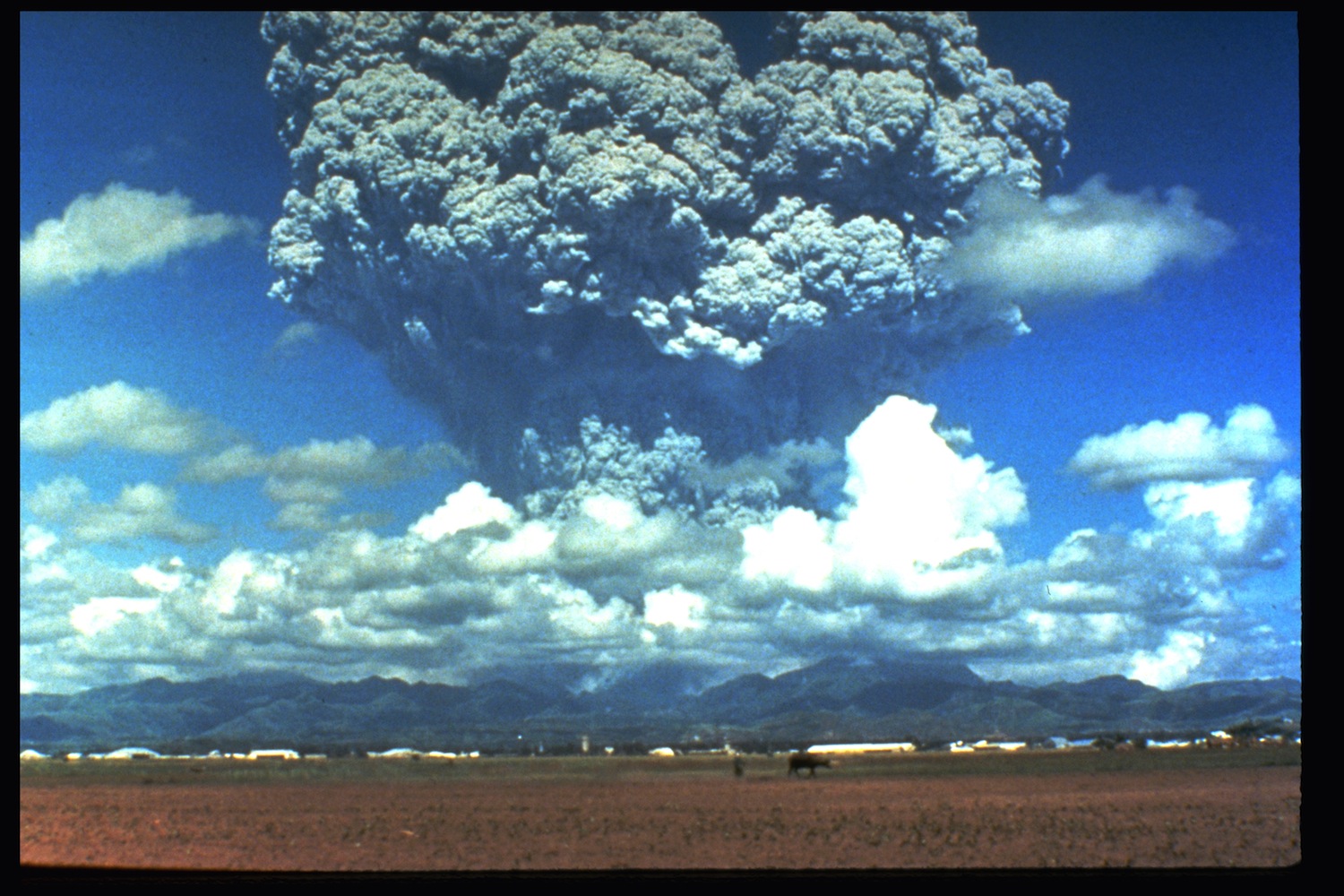
Enlarge / The planet has done its own geoengineering experiments that suggest the technique could cool the globe.

As the emissions of carbon dioxide have continued largely unabated over the past decade, a number of people have given thought to geoengineering, or changing the environment in a way that tweaks the planet’s thermostat. Although people have suggested some exotic interventions—reflecting sunlight away from the Earth with orbiting mirrors—more serious consideration is being given to pumping sulfur dioxide into the stratosphere. But a new paper in Nature Climate Change suggests that focus might be keeping us from considering even better options.

Sulfur is a major focus in part because we know it will work, since major volcanic eruptions provide a natural test of it. The sulfur released in eruptions can reach the stratosphere, where it combines with water to produce aerosol particles that reflect sunlight back to space. It’s estimated that the aerosols created in the wake of the eruption of Mount Pinatubo were large enough to drop the global temperature by half a Kelvin for two years.

Sulfur is also abundant and cheap, making the raw materials for this form of geoengineering relatively inexpensive. In fact, the whole process is expected to be so cheap that some have estimated that it might be within reach of a handful of wealthy individuals. But, even if you were committed to reflecting sunlight back to space, there are some downsides to using sulfur. The sulfur would have to be constantly replenished, and its constant presence at high altitude would trigger chemical reactions that could damage the ozone layer.

from Ars Technica

From Autoblog: Report: Fisker Flambé: Second Karma spontaneously combusts

Fisker Karma on fire

By all accounts, the Fisker Karma is one hot car. For a couple of owners though, perhaps it’s too hot.

Similar to a situation in May, when a Karma caught fire for no apparent reason in a Texas garage, another has burst into flames in a Woodside, CA parking lot. Rudy Burger was returning to his car after grocery shopping when he caught in the act of self-immolation. According to Jalopnik, he immediately called Fisker, which, in turn, advised him to call 911.

Firefighters arrived quickly and the flames were subdued before much more than just the front driver’s side was consumed. Considering that the A123 Systems‘ battery runs down the center of the car under the passenger compartment, it is possible that the pack was not responsible for the blaze. Wired got a statement from Fisker, which furthers this line of thought. It reads, in part:

Fisker understands damage was limited to the driver’s side front corner of the car, away from the lithium ion battery and electric motors. The car was not being charged at the time.

In an electric vehicle, immediate suspicion is focused on the battery and high voltage components. The location of the damage to the vehicle in this incident appears to rule out that suspicion. Fisker has not had any battery or high voltage fire incidents with any of its vehicles.

Fisker has hired “an independent fire expert to assist the investigation” and says that once the probe is complete and the cause pinpointed, it will issue a statement on the matter. Fisker’s current statement – and a video of the Karma conflagration – is posted below.


from Autoblog

From Engadget: MIT researchers develop highly agile autonomous plane

MIT researchers develop highly agile autonomous plane

If you’re flying a robot indoors, chances are it’s a quadrocopter. The ability hover and maneuver on a dime is essential to whipping around the confined spaces of a lab. Researchers have figured out a way to overcome such obstacles with a fixed-wing aircraft, using laser range finders, sensors and an Intel Atom processor to churn through all the data. To demonstrate just how accurate the on-board navigation systems are, the team of scientists took the autonomous plane to a parking garage with ceilings just 2.5 meters high. Why is that important? The vehicle has a wingspan of two meters — leaving little room for error. To see the plane in action, check out the video after the break.


from Engadget

From Engadget: Best Buy founder wants slashed prices, Apple-style customer service in $10 billion rescue plan

Best Buy founder wants slashed prices, Applestyle customer service in $10 billion rescue plan

Best Buy founder Richard Schulze is proposing a plan to turn around the ailing electronics store as part of a $10 billion buyout. He’s proposing the retailer slashes prices to compete with online rivals like Amazon, while offering Apple Store-levels of customer service. He’s concerned that the current closure and size-reduction policy will spell the end of the business, which is rumored to announce another round of closures shortly. It’s yet to be seen if his plan, which would mean running Best Buy at a loss for several years, would be accepted by the company’s management, who are meeting to discuss the proposals at the end of the month.


from Engadget

From Discover Magazine: 20 Things You Didn’t Know About… Deserts

cracked, dry desert

3  There are parts of the Atacama Desert in Chile where no rain has ever been recorded. Scientists believe portions of the region have been in an extreme desert state for 40 million years—longer than any other place on Earth.

5  If you get lost in the desert, you don’t have to urinate on your shirt and wear it on your head like Bear Grylls to avoid dying of thirst. You can suck water from the branches of some palms, such as buri and rattan.

9  The world record for crossing the Sahara by bicycle was set in 2011 by Reza Pakravan, 36, a market security analyst in London, who made the 1,084-mile journey in 13 days, 5 hours, 50 minutes, and 14 seconds. He started in Algeria, cycled south, then turned east through Niger and Chad to reach Sudan.

16  In northeastern China, a Green Great Wall of shrubs and trees now being planted may win back the edges of the Gobi Desert. The wall will eventually stretch 2,800 miles from outer Beijing through Inner Mongolia…

Image: Shutterstock

from Discover Magazine

From Engadget: NVIDIA Q2 earnings bounce back through Tegra: $119 million profit on $1.04 billion in revenue

NVIDIA logo

NVIDIA’s fiscal performance in its second quarter shows the rewards of patience in the mobile sphere. It just saw its profit double versus a glum first quarter to $119 million, even though the company only slightly edged ahead in revenue to $1.04 billion. In explaining the success, the company is quick to point to a confluence of events that all worked in favor of its bank account: a slew of Tegra 3 phones and tablets like the Transformer Pad TF300 made NVIDIA’s quarter the brightest, but it could also point to a much-expanded GeForce 600 line on the PC side and the shipments of the first phones with NVIDIA-badged Icera chips. The graphics guru expects its revenue to climb more sharply in the heat of the third quarter as well — between the cult hit Nexus 7 tablet and a role as a major partner for Windows RT, NVIDIA has at least a temporary license to print money.


from Engadget

From Ars Technica: Google Translate can now read images of text

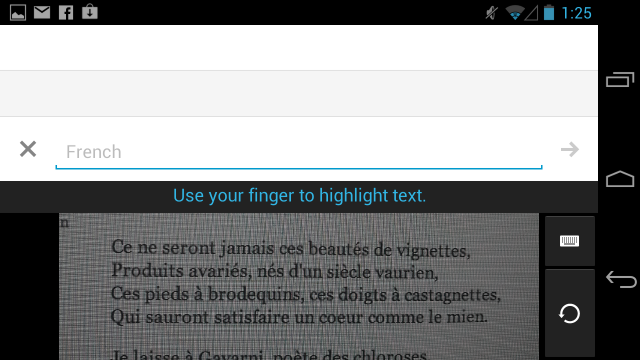
The newest version of the Google Translate app can now translate text from photos, according to Android Central. The image feature works with all languages available in Translate, and allows users to highlight the text they want to convert to another language.

In the app, users take a photo of their foreign blurb of choice, and then swipe their fingers to highlight the text in the photo that needs to be translated. Google sends the image off to its servers and gives the user back the translated phrase. It can’t auto-detect what language it’s trying to read, however—that’s your job.

The new functionality is similar to an iOS app released in December 2010 called Word Lens, which can translate text picked up by the iPhone’s camera. Word Lens could display the translated text right in the viewfinder itself, but is still restricted to only three language packs for translating to and from English (Spanish, Italian, and French), each of which cost $4.99.


from Ars Technica