From Discover Magazine: Compressed Air Is Great for Powering Workshops. Can It Help Power the World? | 80beats

power grid

Despite increasing worry about what our energy consumption is doing to the planet, we’re also increasingly tied to power-hungry electronic devices. To keep reliable, renewable energy flowing, some suggest, we must give the power grid a makeover. And one method that could change it is a breath of fresh air. Danielle Fong and her company, LightSail Energy, want to store renewable energy in tanks of compressed air. Because wind and solar can be unpredictable energy sources, the ability to save any surplus for a windless or cloudy day makes them more reliable.

Caleb Garling has written about Fong’s unusual method of storing power for Wired’s World’s Most Wired feature.

In a way, Fong is going back to the future. Compressed air tanks have been used to store energy as far back as the late 19th century. They were installed in cities across the globe, from Paris to Birmingham, England to Buenos Aires. Germany has been using the technology for the past 30 years, and a power company in Alabama opened a facility in 1991. The idea is a simple one: If you have a power source — whether it’s gas or …

from Discover Magazine

From Popular Science – New Technology, Science News, The Future Now: Video: MIT Alumni Bring Spacesuit Tech to Temperature-Regulating Dress Shirts

Apollo Dress Shirt Ministry of Supply

It happens to the best of us: you slog through the summer heat on your morning commute and wind up a messy ball of sweat by the time you make it to the sweet comfort of your air-conditioned office. Now a team of MIT grads is trying to solve that problem by borrowing temperature-control technology from NASA.

The team, Ministry of Supply, is taking donations via Kickstarter for their Apollo line of dress shirts, which use phase-change materials to absorb heat from your body to cool you off when it’s hot, then release it when things cool down. It’s similar to technology used in NASA-approved spacesuits. The shirts keep sweat and moisture off of you, and use an anti-microbial coating to keep you smelling fresh.

The shirt has been a hit on Kickstarter so far, blowing past its initial goal of $30,000. To keep the funding rolling in, the team has been offering incentives, like new colors or patterns for reaching certain goals. At last count they were at more than $178,000.

[Kickstarter via Tech Crunch]


from Popular Science – New Technology, Science News, The Future Now

From Technology Review RSS Feeds: Spray-On Batteries Could Reshape Energy Storage

Rice University researchers make the components of batteries with paints. When combined with spray-on solar cells, the technique opens up a range of possibilities for energy producing and storing devices.

Imagine spray painting the side of your house and it not only produces power from the sun, but can store the energy for later as well. A novel approach to battery design from Rice University researchers could enable that and other types of spray-on batteries.


from Technology Review RSS Feeds

From Ars Technica: Chinese hackers steal Indian Navy secrets with thumbdrive virus

According to a report from The Indian Express, China-based hackers broke into the computer systems of India’s Eastern Naval Command… where India’s first nuclear submarine is undergoing trials. Using a virus transmitted by USB thumb drives (which are banned from Indian Navy offices), the hackers were able to cache information that matched keywords and transfer it to another thumb drive when one became available. That allowed the data to be moved to Internet-connected PCs, where the virus then dumped the data and transmitted it across the Internet to servers in China.

The virus is similar to one that attacked the US military’s classified networks in 2008. Those led to a Department of Defense ban on the use of USB drives and any other writable removable media. The DOD partially lifted the ban in 2009, restricting the use of USB drives to “carefully controlled circumstances.”

The Indian Navy has not revealed the extent of the hack, or how long it went on for. The Indian Express reports that at least six officers have been charged with “procedural lapses” that allowed the hack to happen.

from Ars Technica

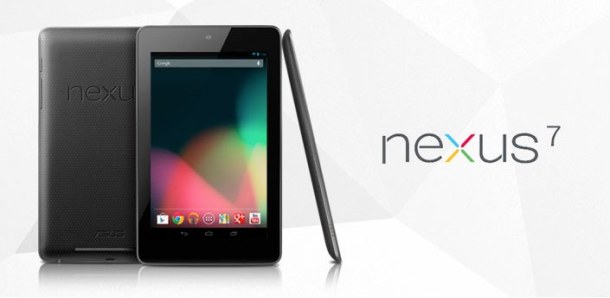
From Ars Technica: Google officially reveals $199 7″ quad-core Nexus 7 tablet with Android 4.1

Google

Google unveiled its own Nexus tablet, the Nexus 7, at the Google I/O conference Wednesday in San Francisco. The 7-inch tablet running Android 4.1 Jelly Bean will have a 1.3GHz quad-core Tegra 3 processor as well as a 1280×800 IPS display with a 178-degree viewing angle.

The tablet, which Google says is “built specifically for Google Play,” will have a 1.2-megapixel camera, 1GB of RAM, and a 4235mAh battery that will get it 8 hours of battery life “during active use” or 9 hours of video playback. The tablet weighs 340 grams, just shy of 12 ounces, and is 10.45mm thick (2.6 ounces lighter and just under a millimeter thinner than the Kindle Fire). Both 8GB and 16GB configurations will be available. Bluetooth, WiFi, and NFC all come standard, and there is no version of the tablet that can connect to a cell network.

Dan Goodin, Ars Technica

When Google showed the device, it made special note of the fact that the user’s content collection is front and center, much like on the Kindle Fire. When demonstrating the magazine viewing experience, a Google employee was able to swipe through a pile of magazines, and a “view text” link would reflow a visible article into a formation that is “optimized for reading.” The tablet will also have a “new recommendation engine” for content that will show users content tailored to their tastes.


from Ars Technica