From Ars Technica: Your very own ARM-based Ubuntu servers in the cloud… for free

Not content with dominating the world of smartphones and tablets, makers of low-power ARM chips are setting their sights on the server market. While x86 servers are still the norm, there have been hints for some time that ARM might become a presence in the data center. Another small, early step toward an ARM future was taken this week as the makers of an infrastructure-as-a-service testbed added ARM servers as a free option for developers.

The free cloud service is called TryStack. It works a lot like Amazon’s Elastic Compute Cloud, except that it runs on the open source OpenStack software, and is intended as a sandbox, not to run production code. Although OpenStack supports ARM, TryStack was initially set up to run just x86 servers, and is powered by 156 cores, 1,040GB memory, and 59.1TB of disk storage. What’s being added now is free access to HP’s Calxeda-based Redstone servers running Ubuntu Linux, ARM chipmaking startup Calxeda announced today.

In addition to HP and Calxeda, the hardware, software, and hosting is being provided by OpenStack, Canonical, Core NAP, and Rackspace. The servers use Linux containers, or LXC, a form of virtualization that improves server efficiency but allows only one operating system instance per processor core (akin to Solaris containers and FreeBSD “jails”). The shared, virtualized nature of the resources makes TryStack unsuitable for benchmarking and power measurements, but dedicated hardware access is planned for the end of this year.


from Ars Technica

From Ars Technica: NASA awards four launches to SpaceX and United Launch Alliance

In case you missed the math, SpaceX is charging $30 million LESS than ULA!  I don’t know how ULA will stay in business if SpaceX delivers…
==========================================================

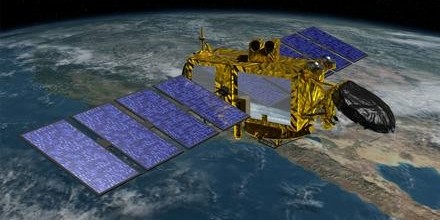
NASA’s JASON-3 Satellite maps ocean height to within a few centimeters

A lot of speculation takes place concerning what SpaceX and United Launch Alliance charge for all the various services surrounding the launch of a spacecraft. An announcement late Monday by NASA provides some more information for those who are trying to nail down the costs.

NASA announced four Earth Science satellite launch awards that included a first NASA satellite launch for the SpaceX Falcon 9 and three new launches for ULA’s venerable Delta 2. The SpaceX contract for launch and services is worth $82M; the ULA contract will be $402M for all three satellites. All four rockets will launch into polar orbits from Vandenberg Air Force Base on the coast of California.

SpaceX gets even busier

SpaceX picks up the $82M launch services contract for the Jason-3 mission. Jason-3, a NOAA satellite designed to make highly accurate measurements of ocean surface height, follows Jason-1 and 2. NASA says the mission applications include “ocean and weather forecasting, ocean wave modeling, hurricane intensification prediction, seasonal forecasting, El Nino and La Nina forecasting, and climate research”. NASA and the French Space Agency have collaborated on a series of satellites to gain more accurate measurements of what the world’s oceans are doing since 1992.


from Ars Technica

From Ars Technica: NASA partners with Microsoft to launch its first console game

NASA / Microsoft

In the past, NASA has used everything from websites and mobile apps to coverage on its own TV network to get the public excited about its space exploration efforts. But the run-up to the planned August 5 landing of the Mars rover “Curiosity” includes the organization’s first foray into the world of console game development.

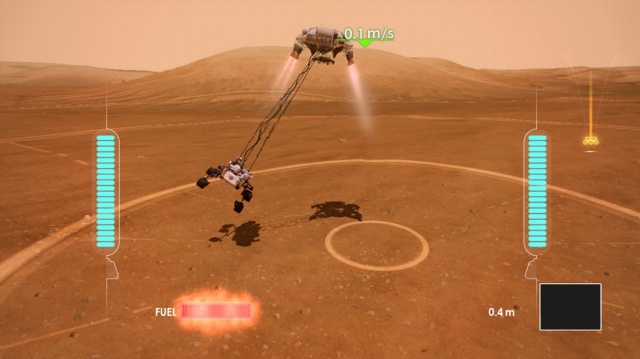
Mars Rover Landing, available this week as a free download on the Xbox 360, was inspired by “the entirely factual and amazing sequence of events to land Curiosity on Mars,” Jeff Norris told Ars (Norris is the NASA Jet Propulsion Lab manager for planning and execution systems). Using the Kinect, players help adjust the landing module’s angle as it enters the Martian atmosphere, handle timed explosive charges to discard the heat shield, and deploy a parachute before applying thrusters to gently touch the rover down on the Martian surface (that last bit is in a mini-game somewhat reminiscent of the arcade classic Lunar Lander). It’s not the most complicated game on the market, but it does a good job of showing just how many things have to go exactly right to land a robot on another planet.

In real life, that entire automated process takes place during what NASA engineers refer to as “seven minutes of terror” when the Rover is unable to communicate with Earth. While NASA had previously detailed that sequence in a dramatic video from earlier this year, the organization felt there might be better ways to get the public involved in the story.


from Ars Technica

From Engadget: DARPA fights fire with sound and electricity, hopes ‘ionic wind’ could save lives in the field

DARPA develops method of extinguishing fire with sound and electricity, hopes 'ionic wind' could save lives in the field

Fire, frenemy of humanity since time immemorial. Typical extinguishing methods have involved water, chemicals and even blankets, but DARPA wanted to see if there was another, more pragmatic way. Starting with the understanding of fire actually being a cold plasma, DARPA then explored fire’s electromagnetic and acoustic qualities, and discovered two potential ways to quell the flame, one using electrons, the other, sound. The electron technique creates an oscillating field that separates the fire and fuel dubbed “ionic wind,” the other method creates an acoustic field that increases the air velocity (thinning the the flame boundary) and causes the flames to widen and drop in temperature, dispersing the fire’s energy. The concepts have been proven, but scaling these up to real world solutions is a whole different matter. Light up the videos after the break to see them in action.

Continue reading DARPA fights fire with sound and electricity, hopes ‘ionic wind’ could save lives in the field

Filed under:


from Engadget

From Popular Science – New Technology, Science News, The Future Now: Powerful Lasers Could Be Fired Into the Clouds to Make It Rain

Laser-Induced Condensation J. Kasparian, et al.

We’re further along in using science to manually force the weather’s hand than many people suspect. In 2009, for example, the Chinese government used weather manipulation to bring a snowstorm to Beijing, and they aren’t the only nation giving it a try. But using so-called “cloud seeding” techniques as high-tech rain dances is controversial; critics say it’s both ineffective and bad for the environment. A potentially better solution — to this, as to most things! — is to fire up some lasers.

Last year, a paper published in Nature Communications showed it was possible to form water particles using lasers. That’s not the same as creating rain; the particles were about 100 times too small to be rain drops. But it’s somewhat of a proof of concept, and as a recent paper in the Journal of Physics D: Applied Physics points out, our lasers are only getting better.

The laser technique works by using photodissociation. Photons break down atmospheric compounds, which produces ozone and nitrogen oxides. That causes nitric acid particles to form, and those bind water molecules together, creating rain. A challenge for scientists will be to unravel the details of the process, but there are major benefits compared with a chemical approach, such as sending silver iodide particles into clouds. For one, it’s easier to plan experiments with lasers, since they have an on-off switch that can be toggled and tested for effectiveness. A laser-induced approach could also be less likely to cause unintended problems in the surrounding atmosphere.

We’ll see if it’s a viable approach in the coming years. You can bet if it turns out to work effectively, a lot of governments will be waiting to invest.

[PhysOrg]


from Popular Science – New Technology, Science News, The Future Now