
From Ars Technica: California universities to produce 50 open-source textbooks

California Governor Jerry Brown gave his pen a workout yesterday. In addition to signing legislation prohibiting social network snooping by employers and colleges, he also signed off on a proposal for the state to fund 50 open source digital textbooks. He signed two bills, one to create the textbooks and the other to establish a California Digital Open Source Library to host them, at a meeting with students in Sacramento.

According to a legislative summary, the textbook bill would “require the California Open Education Resources Council to determine a list of 50 lower division courses in the public postsecondary segments for which high-quality, affordable, digital open source textbooks and related materials would be developed or acquired.” The council is to solicit bids to produce these textbooks in 2013. The bill makes clear that the council has the option to use “existing high-quality digital open source textbooks and related materials” if those materials fit the requirements.

The law specifies that the textbooks must be placed under a Creative Commons license, allowing professors at universities outside of California to use the textbooks in their own classrooms. The textbooks must be encoded in XML, or “other appropriate successor format,” to facilitate re-use of the materials.

from Ars Technica
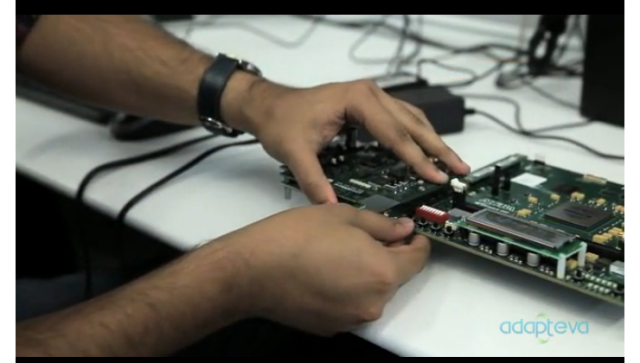
From Ars Technica: $99 Raspberry Pi-sized “supercomputer” touted in Kickstarter project

Raspberry Pi-sized board called Parallella puts supercomputing power into a $99 package.

Chipmaker Adapteva wants to make parallel computing available to everyone, but there’s a good chance you’ve never even heard the company’s name. Founded in 2008, Adapteva focuses on building low-power RISC chips, which it sells to board manufacturers, and is trying to license its intellectual property to mobile processor vendors for use in smartphones.

“We’re way down the food chain,” Adapteva CEO and founder Andreas Olofsson told Ars. But Adapteva wants to bring its technology directly to the people who would actually use it, with a Kickstarter project to raise at least $750,000, and a stretch goal of $3 million.

Adapteva calls it “Parallella: A Supercomputer For Everyone,” a 16-core board hitting 13GHz and 26 gigaflops performance, costing $99 each. If the $3 million goal is hit, Adapteva will make a $199 64-core board hitting 45GHz and 90 gigaflops. (Adapteva seems to be counting GHz on a cumulative basis, adding up all the cores.) Both include a dual-core ARM A9-based system-on-chip, with the 16- and 64-core RISC chips acting as coprocessors to speed up tasks. The Adapteva architecture hits performance of 70 gigaflops per watt, and 25GHz per watt, the company says.

from Ars Technica

From Wired Top Stories: Apple Mapocalypse Sends iOS 6 Users Into a Tizzy, Riverbank

Following the official launch of iOS 6 Wednesday, disgruntled users across the globe flocked to share their collective displeasure with Apple’s new Maps app. The seemingly premature launch of this error prone app seems an unusual move for Apple, as relying on a quality maps service has become such an integral part of our smartphone experience.

from Wired Top Stories

From Technology Review RSS Feeds: Boeing Plans to Turbocharge Fuel-Efficient Flight

With fuel prices and concerns over emissions rising, the aircraft maker is accelerating the testing of emerging technologies.

Since Boeing’s first jet airliner came to market more than five decades ago, the company has improved the fuel efficiency of its commercial planes by about 70 percent. But with growing pressure on airlines to save fuel costs and reduce greenhouse-gas emissions, the aircraft manufacturer now hopes to accelerate improvements by testing new technologies and designs at an earlier stage.


from Technology Review RSS Feeds