From Engadget: Toshiba builds scanner that can identify fruit without a barcode, yup

During our hurried supermarket sweeps, we’re aiming for the Granny Smith, yet somehow always come away with French Jonagold. That’s why we’re in awe of this new supermarket scanner from Toshiba-Tech that can identify individual species of fruit and veg from sight. Rather than a cashier keying in a produce code, a camera with optical pattern recognition technology filters out “visual noise” before identifying the genus of your apple by shape, surface pattern and coloration. It’s also able to scan labels and coupons, but so far the database only contains a handful of items. It’ll take over a year (when each thing has been harvested and scanned) to build a database necessary to make it commercially useful. Still, if you can’t bear to wait those precious seconds as your server finds the right code for lettuce, head on past the break to watch your future in action.

Continue reading Toshiba builds scanner that can identify fruit without a barcode, yup (video)


from Engadget

From Discover Magazine: Defibrillators Malfunction at Shockingly High Rates | 80beats

spacing is important
Diagram for AED electrode placement.

Touted as life-saving devices, some 1.5 million automated external defibrillators (AEDs) are around the US. AEDs are designed to be used by anyone, regardless of training, to jumpstart the heart in a case of sudden cardiac arrest. And in this life-or-death situation, a surprisingly number of the devices fail.

Between 2005 and 2009, there were 28,000 reports of AED malfunction in the US, representing 1 out of 50 devices in the country. Mark Harris at IEEE Spectrum investigates the cause of these failures. Surprisingly basic engineering errors were responsible for some of the malfunctions, such as parts that are just too imprecise for a matter of life or death:

One AED, the brand name of which the FDA would not disclose, was found to occasionally misdiagnose the heart’s electrical rhythm. It delivered some shocks that weren’t needed and failed to deliver others that were. The culprit was a resistor that could vary in resistance by up to 10 percent of its stated value. “When our engineer looked at this design, it was an instant ‘uh‑oh,’ ” says [Al Taylor of the FDA].

How could regulations on medical devices be so lax? …


from Discover Magazine

From Ars Technica: Holey chip! IBM drills holes into optical chip for terabit-per-second speed


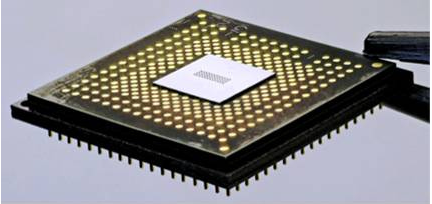
IBM researchers have built a prototype optical chip that can transfer a terabit of data per second, using an innovative design requiring 48 tiny holes drilled into a standard CMOS chip, facilitating the movement of light. Much faster and more power-efficient than today’s optics, the so-called “Holey Optochip” technology could enhance the power of supercomputers.

Optical chips, which move data with light instead of electrons, are commonly used for interconnects in today’s supercomputers and can be found in IBM systems such as Power 775 and Blue Gene. Optical technology is favored over electrical for transmitting high-bandwidth data over longer distances, which is why it’s used for telecommunications networks, said IBM Optical Links Group manager Clint Schow.

Read the rest of this article...


from Ars Technica

From Popular Science – New Technology, Science News, The Future Now: Video: Microsoft IllumiShare Lets You Play Remotely With Physical Objects

Microsoft IllumiShare Microsoft

IllumiShare, from Microsoft Research (also responsible for holodesks), is a system to allow two people to interact with various objects remotely. It gives cooperative activities like taking notes or creating documents a physicality: You’re not typing in Google Docs, you’re actually writing with ink and paper. Or playing cards with real cards, only your partner is on the other side of the world.

The IllumiShare is really just a cool implementation of a combined projector and camera. When two of them are communicating, each one records what it sees while simultaneously beaming that video to the other IllumiShare setup and projecting what it receives from its brother. Since it uses a regular camera, you can use physical objects like a pen and paper, or cards, or dice, as shown in the video below.

The drawback is that compared to a completely digital experience, you can only control the physical objects that are actually in front of you. So no, this doesn’t allow you to reach through a wrinkle in space-time to manipulate your friends’ cards. But it looks pretty seamless and probably wouldn’t even be all that expensive to make. Microsoft hasn’t implied any release date for it, though.

[via The Atlantic]

from Popular Science – New Technology, Science News, The Future Now

From Discover Magazine: Yes, Antibiotics Used on Livestock Do Breed Drug-Resistant Bacteria That Infect Humans | 80beats

pig

The rise of antibiotic-resistant bacteria has got many experts predicting a future in which currently tractable diseases, like tuberculosis, became untreatable again. The popularity of modern antibiotics, ironically, is what is leading to their downfall: antibiotics in consumer products, like soaps, as well as the excessive use of antibiotics by people who have no bacterial infections, help select for strains of bacteria that don’t respond to drugs. Factory-farmed livestock, which receive tremendous doses of antibiotics in their feed, are also a likely breeding ground for resistant bacteria that could potentially infect humans.

Proponents of factory farming have scoffed at such claims [pdf], but now, scientists have provided definitive evidence that this happens: through genetic analysis, they found that a strain of MRSA, already resistant to one family of drugs, had hopped from people to farmed pigs, acquired resistance to another antibiotic being fed to the pigs, and then leapt back into humans, taking its new resistance with it. That strain, called MRSA ST398 or CC398, is now causing 1 out of 4 cases of MRSA in some regions of the Netherlands [pdf], where it arose, and it has also been found across …


from Discover Magazine

From Engadget: Microsoft TechForum unveils three research projects (video)

TechForum is a Microsoft-sponsored shindig where the company can get together, party, and then show off its latest and greatest research projects. First up we’ve got a transparent interactive 3D display which builds on technology from Cambridge University’s HoloDesk project. Next is Holoflector, a “magic mirror” that overlays LCD projections onto your reflection. Both of these two projects rely heavily upon Kinect as more projects find the potential in the little sensor. Finally there’s Illumishare, a pair of overhead projectors / cameras that share a desktop space with a colleague when you need to look at the same thing. After the break you can see all three concepts in action and you can learn a little more about each at our source links.

[Thanks, Lokitoth]

Continue reading Microsoft TechForum unveils three research projects (video)

Microsoft TechForum unveils three research projects (video) originally appeared on Engadget on Tue, 28 Feb 2012 10:14:00 EDT. Please see our terms for use of feeds.

Permalink   |  sourceIllumishare, Holoflector, 3D Desktop  | Email this | Comments

from Engadget

From Wired Top Stories: Microsoft Kinect Games Grocery Shopping at Texas Whole Foods

The Board of Awesomeness is now lugging groceries at a Whole Foods in Texas. Last month, Chaotic Moon Labs’ Board of Awesomeness was one of the stars of CES in Las Vegas. It’s a motorized skateboard tricked out with a Samsung tablet and Microsoft’s Kinect so that it can be steered by hand gestures and voice commands. But it turns out that the Moon Lab had more on its mind than just skateboarding.

from Wired Top Stories