From Geeks are Sexy Technology News: 100T Non-Destructive Magnetic Field Achieved

Human achievement point!

Scientists at the Los Alamos National Laboratory campus of the National High Magnetic Field Laboratory have successfully produced the world’s first 100 Tesla non-destructive magnetic field. The achievement was decades in the making, involving a diverse team of scientists and engineers. The 100 Tesla mark was reached at approximately 3:30 p.m. on March 22, 2012.

[Via]

from Geeks are Sexy Technology News

From Engadget: AT&T Labs, Carnegie Mellon research haptic-feedback steering wheel for turn-by-turn directions

A force-feedback steering wheel. It’s quite literally the stuff of racing games, and AT&T labs, along with Carnegie Mellon, is researching the possibly of throwing similar tech into your real-world whip. MIT’s Technology Review recently highlighted the project, which uses 20 vibrating actuators shoved inside of a steering wheel to create a variety of patterns — a counter-clockwise sequence could indicate a left turn, for example. As you might have guessed, one of the goals is to keep drivers less distracted by the likes of visual turn-by-turn GPS navigators and more focused on the road. While it’s currently being tested with driving simulators, the results are positive so far, if a bit modest. When supplemented with typical audio / visual navigation, folks near the age of 25 kept their eyes planted on the asphalt for 3.1 percent more time than without it. Notably, the improvement wasn’t found with those over 65 in the aforementioned instance, however, supplemented with just the audio, the vibrating wheel had them focusing on the road by an increase of four percent.

According to Technology Review, this isn’t the first time haptic feedback has been tested as a driving aid, although past tests have, notably, resulted in “fewer turn errors” by those behind the wheel. Best of all, the tech is capable of sending more than just navigation cues — it could certainly be useful in a Telsa. So when can you expect to find a force-feedback steering wheel in your ride? Technology Review cites Kevin Li, an AT&T Labs researcher on the project, who says the main hurdle is making something that people will just “get,” and that it’s still “years” away from becoming a possibility. While there’s no photos of the setup just yet, a full report on the research will get release in June. Hey, there’s always Forza and Gran Turismo, at least for now — right?


from Engadget

From Popular Science – New Technology, Science News, The Future Now: Catalyst Helps Store Hydrogen In Liquid Form for Simple, Safe Future Fuel Use

Hydrogen Storage System This diagram shows the new catalyst in its protonated and deprotonated states. It converts hydrogen and CO2 gas to and from liquid formate or formic acid at ambient temperature and pressure. The gases can thereby be stored and transported as a liquid, and used later as a carbon-neutral energy source, simply by adjusting the pH. Brookhaven National Laboratory

A future powered by hydrogen fuel, whose only byproduct is water, has long been an eco-friendly dream too difficult to realize. Storing and transporting hydrogen can be difficult and dangerous, and hydrogen production methods can also produce unwanted carbon dioxide. A new catalyst promises to solve these problems, using CO2 and hydrogen to store energy in liquid form. The only thing you need to worry about is pH.

It’s the first catalyst to combine hydrogen and CO2 at room temperature and pressure, using water as the liquefying solution. As such, it could use existing fuel infrastructure built for the liquid hydrocarbons we have been using since the dawn of the combustion engine.

In basic (as in alkaline) conditions, the catalyst converts hydrogen and CO2 into formic acid, a promising hydrogen-storage fluid that is safer to handle and transport than cryogenically stored dihydrogen. If you flip the pH switch to acidic, the resulting redox reaction frees the hydrogen from its carbon bonds, allowing you to grab and use the hydrogen for use in a fuel cell.

Scientists from Brookhaven National Laboratory and the National Institute of Advanced Industrial Science and Technology (AIST) in Japan worked with iridium-based catalysts with specific types of ligands, which are clusters of atoms surrounding the central metal atom. These ligands improve the catalyst’s ability to release protons. The researchers say they drew inspiration from nature’s catalysts – enzymes – and the way they move protons and electrons around inside biological molecules.

Under the right conditions, the iridium catalyst helps hydrogen react with CO2. The research team figured out the atomic structure of the catalyst to see exactly how it promotes this reaction. It worked extremely well, they say – they converted a 1:1 mixture of dihydrogen (the form you would want to use in a hydrogen fuel cell) and CO2 to formate, a form of formic acid, at room temperature. Then they increased the pH of the solution, and were able to regenerate the H2 at high pressure. There were no unwanted byproducts like carbon monoxide, the researchers say.

The paper was published online Sunday in Nature Chemistry.

from Popular Science – New Technology, Science News, The Future Now

From Discover Magazine: Scientists Identify Molecule That Makes Men Go Bald | 80beats

spacing is important

Although male pattern baldness affects some 80% of Caucasian men by age 70, it’s remained a puzzle to scientists. Existing treatments were discovered by chance: Rogaine was originally a drug for high-blood pressure and Propecia was for prostate enlargement. In a new study, however, researchers have identified a molecule called Prostaglandin D2 (PGD2) that inhibits hair growth in men, which could provide a target for future drugs designed to treat baldness.

The first thing researchers did was find a good use for the scalp fragments, usually discarded, from men undergoing hair transplant surgery. (Well, where else do you find volunteers to get scalped?) Comparing bald and non-bald tissue from these scalp parts, they discovered that the bald scalp had ten times as much PGD2 and elevated levels of PTGDS, the enzyme that makes PGD2, compared to normal scalp. The gene for PTGDS is also expressed more when there’s lots of testosterone floating around, which may explain why baldness is so endemic to men.

Once scientists identified PGD2 as a potential culprit in baldness, trials in mice were the next step. They found that mutant mice with unusually high levels of PGD2 also had the atrophied hair follicles …


from Discover Magazine

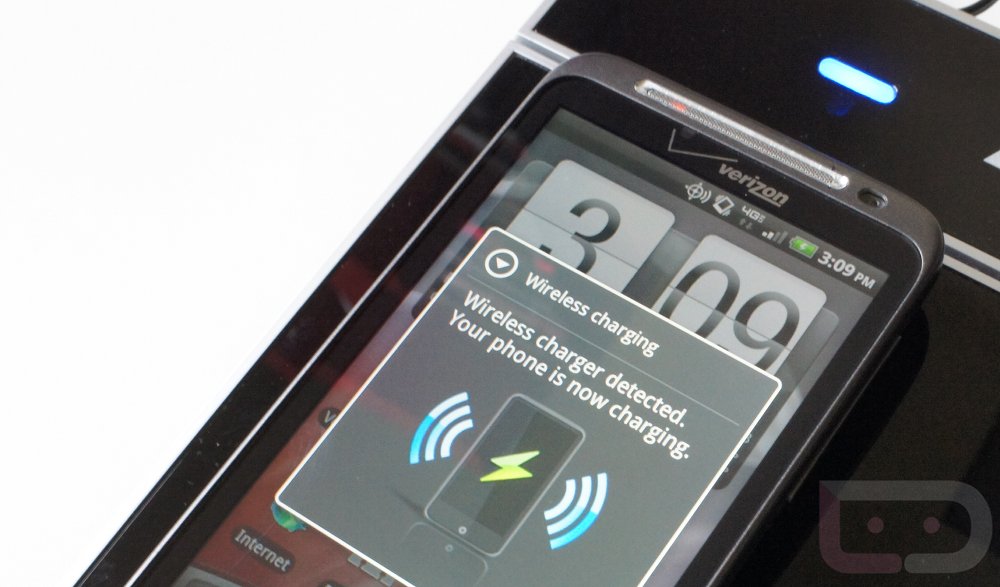
From Droid Life: Samsung Galaxy SIII to Allow for Wireless Charging Up to 2 Meters Away?

I know, I know, another Samsung Galaxy SIII rumor. What other device do we have to look forward to though? Motorola is prepping their 12th rendition of the RAZR (that will be locked) and HTC is only interested in giving Verizon their 2nd tier phones in the Incredible 4G. Our last hope for this first half of 2012, is the SGS3. And this latest rumor that involves it, would be awesome if it ends up being true.

Would you be interested in wireless charging of your Galaxy SIII? No, we aren’t just talking about the Qi or inductive charging that you are seeing in the picture above, we are talking about having a charging module of sorts on your desk and you being able to set your phone anywhere within 2 meters of it while still filling up the tank. Rumor has it that Samsung has created their own tech that will allow exactly that to happen and may have include it inside the next-gen Galaxy phone.

Here is a brief demo of similar technology from a company called Fulton:

Click here to view the embedded video.

I don’t know about you, but wireless charging is something that should have been built into phones long ago. I understand that companies need to make money and that selling a separate Qi back to a phone is the way to do it, but it’s 2012, meaning this should have become standard already. Days of searching your desk or kitchen or bedroom for a cord should have been out the door long ago.

Via:  DDaily, The Verge

from Droid Life

From Engadget: Kinect makes pact with head-mounted display, virtual reality Skyrim ensues

Kinect and head-mounted display make love, give birth to virtual-reality Skyrim

Yeah, streaming Skyrim on a Tegra 3-powered Ice Cream Sandwich tablet is nice and all, but what about folks who want a more immersive experience with their beloved time sink? One tech-savvy gamer took matters into his own hands — conjuring a bit of electronics alchemy by throwing together Sony’s HMZ-T1 head-mounted display with a Kinect sensor, a TrackIR5 for head tracking and voice recognition software. The result is an experience that allows any wannabe adventurer to press onward into Tamriel’s frozen north by marching in place while imbibing in a true, head-mounted first-person perspective. Admittedly, stomping around and flailing one’s arms may lack the elegance and playability of The Gadget Show’s $650,000 Battlefield 3 simulator, but at $1500, it’s a homegrown virtual reality experience that’s actuallywithin reach. Now go forth and explore the video after the break.

Continue reading Kinect makes pact with head-mounted display, virtual reality Skyrim ensues


from Engadget

From Popular Science – New Technology, Science News, The Future Now: GiiNii AudioBulb Review: You’ve Always Dreamed of a Speaker in Your Lightbulb

AudioBulb in Lamp Dan Nosowitz
A wireless speaker that lives inside your lampEventually, practically every conceivable pair of disparate technologies gets combined into a single package-cameras and cellphones, game consoles and e-readers, chocolate and peanut butter. The combination of speakers and lightbulbs seems like it would be one of the last ideas we’d see, but, well, the future is now. GiiNii’s on-the-nose-named AudioBulb brings these strange bedfellows together for the first time.

WHAT’S NEW

Each AudioBulb is essentially just a 10-watt-per-channel mini speaker embedded in a five-watt LED bulb (roughly the equivalent of a 60-watt incandescent). You screw the lightbulb/speaker into your regular lightbulb socket, in a lamp or light fixture or whatever, and it provides light as well as sound. The system includes a docking station/router with an iPhone/iPod dock, as well as a 3.5mm jack (also known as a headphone jack) to accommodate non-Apple music players. You place the docking station somewhere around the room, place your audio player in the docking station, and it beams music to the Audiobulb.

Of course, that hardware isn’t exactly new; anyone who wants to send music wirelessly from an iPod dock to remote speakers already has a host of options available, many with a greater signal range than the Audiobulb system’s 100-foot maximum. And LEDs aren’t exactly hard to come by. The innovation is in elegantly shoehorning two very different things into one form factor that doesn’t require expensive or unusual additional equipment. The Audiobulb, shaped like a miniature version of those hats that British police officers wear, is compatible with any standard light socket. Blimey, that’s clever.

WHAT’S GOOD

Writers are taught not to use clichés like “easy as screwing in a light bulb,” but there’s really no better way to describe how easy the setup is. Plug in the dock and the bulbs pair automatically. You can also easily create separate zones within a house using the remote, so you can send audio to different rooms.

Assuming your lamp can handle the oversized bulb (more on this below), it’s a convenient and unobtrusive option for a bedside table. You can charge your iPhone and play some music, with hardly any extra room taken.

The brightness of the bulbs can be adjusted to four different levels, regardless of the lamp they’re in. The bulbs function normally when the music is off, and they’re eco-friendly-GiiNii claims that with eight hours of use per day, they’ll last for 10 years.

WHAT’S BAD

Cramming a speaker into a light bulb comes at the cost of significant additional weight and size. The adjustable neck on one small lamp I tried was unable to support the bulb’s heft, while the harp on another one could not accommodate its 3.35-inch width. And many lamps require screwing in the bulb so that the speaker faces straight up, hardly the optimal angle for projecting music into a room. The sound is a bit hollow, though not much worse than most speakers in the same size and price range.

Using the device in multiple rooms has a downside as well-if you only have one dock and you want to move to another room, you either have to bring it with you, or choose your music and room brightness in advance. (There’s a little remote control, but it has to be pointing at the dock.) Personally, I don’t always know exactly how brightly I want to light a room until I’m in it, and I want to change the music I’m listening to relatively frequently.

THE PRICE

The dock and two bulbs sell together for $300, and additional bulbs (the system can support up to eight) cost $99 apiece. It’s pretty expensive–that’s the same price as a Sonos Play:3, a wireless music system with nicer controls and a more established ecosystem (though of course it does not plug into a lamp).

THE VERDICT

Some gear succeeds by satisfying a need that the electronic-buying public didn’t know it had. That appears to be what GiiNii is attempting to do. The company wants you to feel like you can’t live without having your music come from the same place as your light-even if it’s something that had never before occurred to you to want.

I’m not sure the Audiobulb achieves that goal. It’s unquestionably a smart idea and a fairly nifty package, but there’s a good reason beyond technological limitations why nothing like it had come to market before. I appreciate the convenience of one-remote music and light setting, but setting the two separately just isn’t that onerous. No matter what kind of lamps and stereo equipment, a couple of clicks and switch flips each time is all it takes to set the mood. Even Wilt Chamberlain would have time for that.

But for the non-audiophile who has a house with multiple rooms or zones (and doesn’t mind leaving the same music and light setting on all the time) the Audiobulb does its job well. It will never be the most necessary piece of equipment you have in your house, but it will almost certainly be among the coolest.

from Popular Science – New Technology, Science News, The Future Now