Job titles of the future: carbon accountant

https://www.technologyreview.com/2023/10/25/1081566/carbon-accountant-climate-change-jobs-future/

His official title is vice president of regulated reporting solutions. But really, Billy Scherba is a carbon accountant. At Personifi, a platform for climate management, Scherba works with companies to measure, manage, and disclose their contributions to climate change.

Carbon accountants help companies understand what data matters to their carbon footprint, how to collect that data in a consistent manner, and how to use it to calculate the greenhouse-gas emissions they’re responsible for. Many times, that means working with clients to upgrade their data infrastructure so it’s easier to see what parts of their operations emit the most. 

Billy Scherba

COURTESY PHOTO

A growing field 

A relatively new occupation, carbon accounting involves collecting a wide variety of data from an organization and using consistent measurement techniques to translate that data into a carbon emissions footprint. The calculations can be based on specific organizational activities such as business flights, kilowatt-hours from a utility bill, the kinds of fuel used to transport products, or even financial data. As organizations collect and analyze more granular data, their calculations get more precise. 

Notes on methodology

The Greenhouse Gas Protocol (GHGP), developed by the World Resources Institute and the World Business Council for Sustainable Development, is the primary methodology used for carbon accounting and is available publicly at no cost. Other, specialized carbon accounting standards do exist, but regulators from the US Securities and Exchange Commission, the European Union, Japan, and others have incorporated the GHGP into their rulings, making it the go-to accounting method for organizations publicly disclosing their carbon emissions. 

Measure. Report. Decarbonize.

Business leaders need data they can understand that highlights where their firms are having the most significant positive and negative climate impact. “Good data should be used to drive business and societal value,” says Scherba. “As we build controls and ensure this data is reliable, we have an opportunity to use it to make better climate decisions.” 

via Technology Review Feed – Tech Review Top Stories https://ift.tt/qzYGJTb

October 25, 2023 at 04:08AM

The Tale of the Rotifer That Came Back to Life after 25,000 Years in an Icy Tomb

https://www.scientificamerican.com/podcast/episode/the-tale-of-the-rotifer-that-came-back-to-life-after-25-000-years-in-an-icy-tomb/


This podcast originally aired on August 17, 2021.

Karen Hopkin: This is Scientific American’s Science, Quickly. I’m Karen Hopkin.

What has one head, one foot and one heck of an origin story? No, it’s not a strange new superhero. It’s a microscopic worm called a rotifer that was brought back to life after spending about 25,000 years locked in the arctic permafrost. Its tale is told in the journal Current Biology. [Shmakova et al., A living bdelloid rotifer from 24,000-year-old Arctic permafrost.]

Stas Malavin: So this is a long term topic for this lab.

Hopkin: Stas Malavin of the Institute of Physicochemical and Biological Problems in Social Science in Pushchino, Russia. He and his colleagues have spent decades probing the Siberian permafrost. And they’ve managed to revive a variety of interesting organisms, from a plant seed and simple bacteria to scores of more sophisticated single-celled critters.

Malavin: We have isolated around 30 or 40 strains already of unicellular eukaryotes.

Hopkin: But for some reason, people weren’t totally wowed by resurrected amoebas.

Malavin: Yeah, they don’t respect them, definitely. Rotifer is much, much better.

Hopkin: Rotifers are better—or at least more interesting—because they’re multicellular animals, with a head and a body, that can eat, crawl around and make more rotifers. And considering they’re more or less teeny tiny worms, they’re actually cute little guys.

Malavin: No, they don’t have guys. They are all females [laughs].

Hopkin: In fact, these little ladies reproduce asexually, laying eggs that hatch into the next generation of self-propagating rotifers. So they’re easy to grow in the lab, although not as easy to gather in the lowlands of Siberia.

Malavin: So this place is relatively distant. First, we go by two or three planes. Then we go by boat or by helicopter to those places.

Hopkin: Then they drill.

Malavin: One or two or more boreholes. In older times, people used the first borehole as fridge to store consequent cores in there.

Hopkin: Nowadays portable freezers help them keep their samples chilled until they get to the lab. There, Malavin and his team cut a small piece from the center of the core to prevent potential contamination with modern microbes. Then they pop it in a nice warm petri dish.

Malavin: This is called an enrichment cultivation in microbiology. Because those organisms are attached to particles, they are contorted, folded up, and we cannot see them even with microscope. So we need to wait until they reactivate from this cryptobiosis, come out from this permafrost piece, start moving, multiplying, and so on.

Hopkin: Not every sample yields success.

Malavin: Usually we see nothing. It’s relatively rare event when something alive is isolated from this cores—which is also considered an indirect proof that it’s not a contamination. Because, you know, if it was like every sample, or maybe each second sample, will yield some live organism. Here it’s about one out of 20 or even more rare.

Hopkin: And in one sample collected in 2015, the researchers found this one little rotifer. They allowed it to reproduce and conducted some DNA analyses, which showed that although their frozen rotifer is similar to modern varieties, it’s not exactly the same.

Malavin: So we consider it a new species to science.

Hopkin: And based on radiocarbon dating of other organic materials in the permafrost sample, they consider it to be between 20,000 and 30,000 years old.

Malavin: That’s approximate. But anyway, it’s two orders of magnitude or maybe three orders of magnitude more than was known for cryptobiosis in those animals.

Hopkin: So, the previous record for frozen rotifers was a decade or so. And this guy—I mean, gal—was around when woolly mammoths walked the planet.

Now, the fact that rotifers can spring to life after a thaw is not a total surprise. Entering a state of cryptobiosis allows even modern rotifers to survive seasonal changes in their local environment and more otherworldly assaults.

Malavin: They were actually sent into space, into open space, and they survived, and so on.

Hopkin: The next step is studying how rotifers can chill for millennia and still maintain their cellular integrity.

Malavin: The main mechanism, actually, is the suspension of animation, the suspension of metabolism up to almost zero or maybe zero state. So they don’t need energy, almost don’t need energy.

Hopkin: They also produce special proteins that act as antifreeze or control the formation of ice crystals: findings that could enhance the preservation of human tissues and organs.

Malavin: That’s why we are going to study proteins that help rotifers to survive in those conditions.

Hopkin: And when they figure it out …

Malavin: Maybe we cry, “Yeaaaah! We did it!” Ha. Or something like that.

Hopkin: For Scientific American’s Science, Quickly this is Karen Hopkin.

[The above text is a transcript of this podcast.]

via Scientific American https://ift.tt/nsXepua

October 25, 2023 at 08:04AM

Motorola Taking Foldable Displays to Next Level With Flexible Hardware

https://www.droid-life.com/2023/10/24/motorola-taking-foldable-displays-to-next-level-with-flexible-hardware/

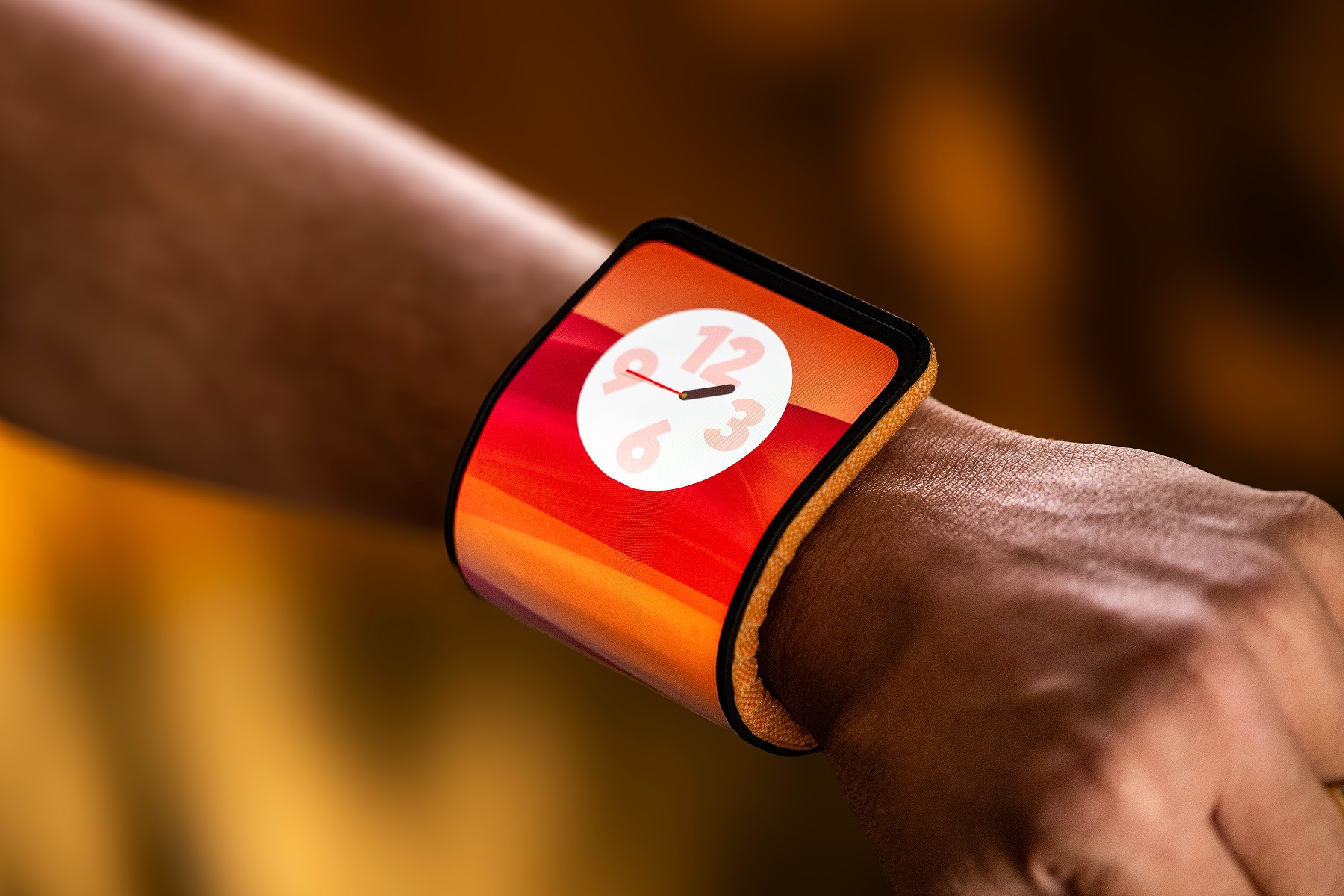
This week at Lenovo’s Tech World ‘23, Motorola introduced its Adaptive Smartphone Concept, an Android-powered device that features flexible hardware. Could this be the next step in the foldable hardware evolution?

Building on Motorola’s existing work in the foldable and rollable device space, this concept phone features a 6.9-inch FHD+ pOLED display that can be bent and shaped into varying forms. When used in an upright position, shown below, you have 4.6-inches of usable display running a “more compact form of full Android.”

Motorola even showcases the ability to fully wrap the device around your wrist which then toggles a user experience similar to the one found on the external display of the Razr+ smartphone. If it stays well wrapped, I imagine this could be very nifty when hitting the running trails.

Given the conceptual nature of the device, there’s no guarantee we’ll ever see this hit the market, but dang it, it’s still awesome. Whether you think it practical or not, companies need to show that innovation and creativity is happening. Personally, I think this looks very cool.

Thoughts?

// Motorola

Read the original post: Motorola Taking Foldable Displays to Next Level With Flexible Hardware

via Droid Life: A Droid Community Blog https://ift.tt/nJ9xLjk

October 24, 2023 at 02:19PM

‘Frasier Fantasy’ is the 90s sitcom RPG you didn’t know you needed

https://www.pcworld.com/article/2114720/frasier-fantasy-is-the-90s-sitcom-rpg-you-didnt-know-you-needed.html

The year is 1998. You clutch your Game Boy Color, focusing on your fourth run of the Elite Four in Pokemon Blue, back propped against the couch while your parents watch the season four finale of Frasier on the 32-inch “big-screen” CRT TV in your living room. It is a canon event, crystalized in your memory, as you beat your creature-catching rival while Kelsey Grammer’s eternally befuddled psychiatrist gets romantically crushed by a post-Terminator 2 Linda Hamilton.

With a questionably necessary reboot of Frasier arriving thirty years later, now’s the perfect time for an equally anachronistic Game Boy RPG for the original series. And indie developer Edward La Barbera has delivered it. Frasier Fantasy is a bite-sized RPG following the beloved radio host as he putters around Seattle, lovingly crafted in the style of the Game Boy Color.

The graphics and sound don’t just evoke the GBC, they’re actually made for the hardware — you can download and play it on one if you have the right flash cart. The rest of us can play it on an emulator, or even better, just load the entire game in a browser window (spotted by Rock Paper Shotgun).

In Frasier Fantasy, you’ll make your way across the famous locations of the show, including the geographically impossible Elliot Bay Towers apartment, the Cafe Nervosa, and the KACL radio station. Your goal: To do your radio psychiatry show, rid the apartment of your father and the real star, Eddie, and retrieve your antique grape scissors before hosting a dinner party. The game nails the strange fusion of these cultural artifacts, giving you a whirlwind tour of the show’s cast interspersed with minigames and turn-based RPG battles. Frasier can employ special moves like “Freudian Slap” or simply drone his enemies to sleep with faux-posh psych patter.

The whole game can be cleared in under an hour, and might just be worth it for the Frasier super-fan. Deep cuts, like a battle with Star Trek-obsessed coworker Noel and Niles’ never-seen wife Maris in her sensory deprivation tank, show that this is truly a labor of love. The final boss, featuring a pale, frigid monster that makes Sephiroth look like a pansy, is a particular highlight.

via PCWorld https://www.pcworld.com

October 24, 2023 at 10:55AM

Amazon’s AI-Powered Van Inspections Give It a Powerful New Data Feed

https://www.wired.com/story/amazons-ai-van-inspections-powerful-data-feed/


Amazon is splashing out on new vehicle inspectors to watch for damage or wear to its vast fleet of delivery vans—and they’re not human. The retailer is installing camera-studded inspection stations equipped with artificial intelligence-powered technology called AVI, or automated vehicle inspection, at hundreds of its distribution centers worldwide.

When a driver working out of any of the 20 delivery centers currently equipped with the tech returns their vehicle at the end of a shift, they slowly drive it through a sensor-laden archway made by startup UVeye, which has headquarters in the US and Israel.

The technology is made up of three separate high-res camera systems: One scans a vehicle’s undercarriage, another checks tire quality, and another focuses on the vehicle exterior. The data they gather is compiled into a 3D image of the vehicle and used by machine-learning software to identify whether the vehicle is damaged or needs maintenance. The algorithms should pick up every nail in a tire, fluid leak, dent on a fender, or crack in the windshield.

UVeye’s AVI technology scans an Amazon delivery van.Courtesy of UVeye

Aziz Makkiya, Amazon’s senior manager of last-mile products and services, declined to discuss company financials, but said in an interview at an Amazon event last week that the technology shaves about four minutes off what is usually a five-minute inspection process. That could add up to a lot when multiplied over Amazon’s roughly 100,000-strong global fleet. Makkiya said the technology should make the vehicles safer, in part by catching vehicle maintenance issues early. “The safety aspect is what we really care about,” he said.

Amazon says it’s been testing the automated vehicle inspection system for nearly two years, and has now rolled it out to 20 delivery stations in the US, Canada, Germany, and the UK, with the goal of installing hundreds of units in the next few years.

The automated inspections will give Amazon a new window into the operations of the independent companies known as DSPs that it contracts to make deliveries, and which lease Amazon-branded vehicles from the company. Drivers employed by DSPs are usually responsible for inspecting their own vehicles. Amazon pays for maintenance such as tires and brakes, but DSPs have to cover damage from collisions. Maya Vautier, a spokesperson for Amazon, says the inspection technology only scans the outside of vehicles and doesn’t collect data on vehicle performance or utilization.


Got a tip?

Do you work for an Amazon contractor? What do you think of the new inspection technology? Email the author at aarian_marshall@wired.com. WIRED protects the confidentiality of its sources.


Makkiya says the data can be used to inform wider company decisions. If vehicles driven on certain routes or roads show consistent patterns of damage, Amazon might let a city know that trees need cutting or potholes fixing, for example. Amazon also plans to start using automated vehicle scans to guide its vehicle purchases or provide terrain-specific feedback to manufacturers. At some point in the next year, Makkiya says, the company should be able to go to a vehicle manufacturer and say, “Hey, you’ve got a problem with the tires in this area, or the suspension of the vehicle in this area.”

The idea of using AI to inspect vans and other vehicles is not new, but the Amazon deal adds validation to a concept that has become more prominent amidst investor enthusiasm for generative AI. UVeye announced a $100 million funding round in the spring from investors including automaker GM and used vehicle retailer Carmax, which is also using the AI inspection technology. Its previous investors include Hyundai, Volvo, and Toyota.

Tractable, a London-based AI inspection company that has significant partnerships with insurers, recently raised $65 million of new investment, and another company, Monk, was acquired by online used car auction company ACV last year. In general, tech providers offer to speed up the process of evaluating vehicle damage or predicting when maintenance might be needed, a task once left to workers with experience in vehicle management and repair.

William Demaree, who directs fixed operations at the Tom Wood dealership network in Indiana, Kentucky, and Minnesota, likes the 10 UVeye units his company leases for another reason: They demonstrate to customers that they’re not getting fleeced. Every customer who comes in for a repair or trade-in at shops with the technology installed drives their vehicle through the portal, he says. “The automotive industry has a rough name sometimes,” he says.

Drivers might not always trust car dealers, but they seem more comfortable with the new, hulking, machine-learning-powered inspector. Demaree says the technology “shows that we can be more transparent with our customers.” People also like exploring images of their vehicles on the unit’s big screens, he says, and love to take photos of their vehicle’s undercarriages.

Automated inspections aren’t perfect, Demaree says. Workers occasionally have to flag that something labeled as a bump or scratch is just a normal feature of the car. The feedback is collected by UVeye to train its inspection algorithms for future vehicles. Amazon’s partnership with the company promises to provide a new flood of such feedback.

via Wired Top Stories https://www.wired.com

October 24, 2023 at 06:09AM

They Cracked the Code to a Locked USB Drive Worth $235 Million in Bitcoin. Then It Got Weird

https://www.wired.com/story/unciphered-ironkey-password-cracking-bitcoin/


At 9:30 am on a Wednesday in late September, a hacker who asked to be called Tom Smith sent me a nonsensical text message: “query voltage recurrence.”

Those three words were proof of a remarkable feat—and potentially an extremely valuable one. A few days earlier, I had randomly generated those terms, set them as the passphrase on a certain model of encrypted USB thumb drive known as an IronKey S200, and shipped the drive across the country to Smith and his teammates in the Seattle lab of a startup called Unciphered.

Unciphered’s staff in the company’s Seattle lab.

Photograph: Meron Menghistab

Smith had told me that guessing my passphrase might take several days. Guessing it at all, in fact, should have been impossible: IronKeys are designed to permanently erase their contents if someone tries just 10 incorrect password guesses. But Unciphered’s hackers had developed a secret IronKey password-cracking technique—one that they’ve still declined to fully describe to me or anyone else outside their company—that gave them essentially infinite tries. My USB stick had reached Unciphered’s lab on Tuesday, and I was somewhat surprised to see my three-word passphrase texted back to me the very next morning. With the help of a high-performance computer, Smith told me, the process had taken only 200 trillion tries.

Smith’s demonstration was not merely a hacker party trick. He and Unciphered’s team have spent close to eight months developing a capability to crack this specific, decade-old model of IronKey for a very particular reason: They believe that in a vault in a Swiss bank 5,000 miles to the east of their Seattle lab, an IronKey that’s just as vulnerable to this cracking technique holds the keys to 7,002 bitcoins, worth close to $235 million at current exchange rates.

For years, Unciphered’s hackers and many others in the crypto community have followed the story of a Swiss crypto entrepreneur living in San Francisco named Stefan Thomas, who owns this 2011-era IronKey, and who has lost the password to unlock it and access the nine-figure fortune it contains. Thomas has said in interviews that he’s already tried eight incorrect guesses, leaving only two more tries before the IronKey erases the keys stored on it and he loses access to his bitcoins forever.

via Wired Top Stories https://www.wired.com

October 24, 2023 at 05:09AM

In-space manufacturing company Varda plans to land its reentry capsules in Australia: report

https://www.space.com/varda-space-industries-australia-capsule-landings


Varda Space Industries plans to eventually land its spacecraft in Australia, but the company is still waiting on approval to bring down its already-launched first vehicle in Utah next year, according to a media report.

Varda launched its debut mission on SpaceX‘s Transporter-8 mission in June, and the capsule remains operational in space. Varda will land its future spacecraft at the Koonibba Test Range northwest of Adelaide, Australia under a newly announced agreement with Southern Launch. The first missions to use the site will land as soon as 2024, SpaceNews said in a report

But the company, which is developing systems that will allow customers to manufacture products (for example, pharmaceuticals) in orbit and bring them down to Earth, is still awaiting approval from the U.S. Federal Aviation Administration (FAA) and the Air Force to land its first spacecraft at the Utah Test and Training Range.

Related: SpaceX just landed a rocket for the 200th time (and launched 72 satellites) on epic rideshare flight (video)

“We got very, very close,” Delian Asparouhov, co-founder of Varda, said in an Oct. 20 interview with SpaceNews. The situation was related to “a coordination problem amongst three different groups that had not worked through this operation before,” he added, referring to the Utah range, the Air Force and the FAA.

California-based Varda is the first company to apply for an FAA reentry license through Part 450, a new set of regulations that were put in place to make the approval process easier. Asparouhov declined to comment on whether his company would have secured approvals faster under older FAA rules.

The spacecraft is fully operational in orbit. Asparouhov said that onboard experiments are finished, and that the FAA and Air Force have expressed no concerns about safety.

Join our Space Forums to keep talking space on the latest missions, night sky and more! And if you have a news tip, correction or comment, let us know at: community@space.com.

via Space https://www.space.com

October 24, 2023 at 09:15AM