Dental Floss Has Potential to Deliver Vaccines, Replacing Needles or Nasal Sprays

https://www.discovermagazine.com/health/dental-floss-has-potential-to-deliver-vaccines-replacing-needles-or-nasal

A new vaccine administration method doesn’t rely on needles or sprays to deliver the vaccine, but on dental floss. 

Publishing their findings in Nature Biomedical Engineering, a research team tested the vaccine-coated dental floss on animals, introducing the vaccine through the gums and other tissue in the mouth. The study results indicated that this helped produce antibodies in the mucosal surfaces of the lungs and nose. 

“[It] would be easy to administer, and it addresses concerns many people have about being vaccinated with needles,” said Harvinder Singh Gill, corresponding author of a paper on the work in a press release. “And we think this technique should be comparable in price to other vaccine delivery techniques."

Introducing Vaccines to the Body

For this study, the researchers knew they needed to focus on junctional epithelium. This refers to the tissues that line our organs and other body parts, such as the stomach, lungs, and intestines. Most of these epithelia are designed to keep foreign invaders, like viruses, bacteria, and even dirt, from entering the bloodstream. However, that’s not the case for junctional epithelium.

The deep tissues between your tooth and gums lack the same protection that other epithelia have. Because of this, junctional epithelium can release immune cells that fight bacteria.

“Because the junctional epithelium is more permeable than other epithelial tissues — and is a mucosal layer — it presents a unique opportunity for introducing vaccines to the body in a way that will stimulate enhanced antibody production across the body’s mucosal layers,” said Gill in the press release.


Read More: Olive Oil Revolutionizes COVID-19 Vaccine, CRISPR Gene Editing, and Cancer Treatments


Testing Vaccinated Dental Floss 

In the lab, researchers added a peptide flu vaccine to unwaxed dental floss and used it to floss mice’s teeth. They compared the antibody production in mice that received the vaccine via nasal spray and drops under the tongue. 

“We found that applying vaccine via the junctional epithelium produces far superior antibody response on mucosal surfaces than the current gold standard for vaccinating via the oral cavity, which involves placing vaccine under the tongue,” said Rohan Ingrole, first author of the paper and Ph.D. student under Gill at Texas Tech University, in a press release. “The flossing technique also provides comparable protection against flu virus as compared to the vaccine being given via the nasal epithelium.”

Delivering a vaccine in this manner could be revolutionary, potentially improving vaccine safety. 

“This is extremely promising, because most vaccine formulations cannot be given via the nasal epithelium — the barrier features in that mucosal surface prevent efficient uptake of the vaccine,” Gill said in a press release. “Intranasal delivery also has the potential to cause the vaccine to reach the brain, which can pose safety concerns. However, vaccination via the junctional epithelium offers no such risk.”

Delivery via Floss Pick 

Though the dental floss method proved effective, the research team knew that asking patients to hold vaccine-coated floss wasn’t practical. Instead, the team shifted towards floss picks — small, pronged applicators with a short piece of floss strung between the prongs. 

To test the effectiveness of the floss pick, the team added a fluorescent dye to it and asked 27 study participants to administer the vaccine to the junctional epithelium between the gums. 

“We found that approximately 60 percent of the dye was deposited in the gum pocket, which suggests that floss picks may be a practical vaccine delivery method to the epithelial junction,” Ingrole said in a press release. 

Gill and the research team believe that these results could soon lead to the method being moved into clinical trials, although many questions remain unanswered. Overall though, the team thinks this could be an improved vaccine delivery method. 

"In addition, we would need to know more about how or whether this approach would work for people who have gum disease or other oral infections,” Gill said in the press release.

There’s still more to learn about this method, but it could change the way we see vaccines and dental floss.

This article is not offering medical advice and should be used for informational purposes only


Read More: Vaccines, Not Supplements, Remain the Best Way to Fight Measles


Article Sources

Our writers at Discovermagazine.com use peer-reviewed studies and high-quality sources for our articles, and our editors review for scientific accuracy and editorial standards. Review the sources used below for this article:


A graduate of UW-Whitewater, Monica Cull wrote for several organizations, including one that focused on bees and the natural world, before coming to Discover Magazine. Her current work also appears on her travel blog and Common State Magazine. Her love of science came from watching PBS shows as a kid with her mom and spending too much time binging Doctor Who.

via Discover Main Feed https://ift.tt/vHblPjy

July 29, 2025 at 04:46PM

Americans Are Obsessed With Watching Short Video Dramas From China

https://www.wired.com/story/china-reel-short-dramas-video-social-media/

My partner recently confessed something to me about his screen-time habits: When he’s giggling at his phone, he’s often watching short English-language soap operas that have begun showing up on his social feeds. The plots are basic, the acting is exaggerated, and the performers are stereotypically good-looking, but the constant twists and turns keep him spellbound and wanting more.

via Wired Top Stories https://www.wired.com

July 24, 2025 at 02:07AM

Use This App to Turn Any Windows PC Into an Airplay Server

https://lifehacker.com/tech/turn-windows-pc-into-airplay-server

You’ve got a video on your iPhone and a computer across the room. Can you quickly show the video on it? If the computer in question is a Mac, yes—just use Airplay. Windows computers, sadly, don’t have this feature.

Unless, that is, you install Air Screen Mirror Receiver. This application turns any Windows computer into an Airplay-compatible host, meaning you can stream the screen of your Apple devices—both video and audio—onto your PC. Install and launch the application and you’ll see some details about your new Airplay server.

A screenshot of Air Screen Mirror Receiver, complete with the server's name, IP address, and audio settings.

Credit: Justin Pot

You can change the name, if you like, and choose which speakers you’d like to use. Now, on your Apple device, open the Control Center and tap the screen mirroring button, which looks like two overlapping rectangles. If you’re on the same wifi network as your PC you should see it as an option. Tap it and the screen will start streaming to the Air Screen Mirror Receiver. You can now play whatever video you were hoping to share.

A segment from the most recent season of Taskmaster casted from iPhone to PC

Credit: Justin Pot

Your iPhone or iPad’s display will show up inside the application’s window. I recommend using the full screen button, which essentially turns your PC into a full-blow Airplay receiver. This is perfect for watching videos—I tested this with YouTube for a while and found it worked perfectly. It’s also great for showing off photos on your phone with a group of people. It could also be useful for presentations, assuming there’s a PC already connected to the TV or projector and you’ve got the presentation handy on your phone.

The application works for free, though there is a watermark applied for 30-seconds every five minutes. You can remove this watermark for $4, if it annoys you—it’s also a good way to support the developer. I’ve been looking for a tool like this for a while and this seems to be the best affordable option.

via Lifehacker https://ift.tt/ivaTxQs

July 24, 2025 at 08:51AM

Breakthrough Hydrogen Fuel Production Uses 3 Unlikely Ingredients

https://www.autoblog.com/news/breakthrough-hydrogen-fuel-production-uses-3-unlikely-ingredients

Engineering experts get ‘in the ballpark’ of green hydrogen

Researchers at the Massachusetts Institute of Technology (MIT) have found a way to produce hydrogen gas with a smaller carbon footprint by combining recycled soda cans with seawater and caffeine. Most current methods for hydrogen fuel production are less eco-friendly due to their reliance on fossil fuels, but MIT’s study found that its alternative manufacturing process could be applied at an industrial scale.

The team of researchers calculated the carbon emissions associated with sourcing and processing aluminum, reacting it with seawater for hydrogen production, and transporting it to fuel stations. They found that for every kilogram of hydrogen produced, the process would generate 1.45 kilograms of carbon dioxide over its entire life cycle, 9.55 kilograms fewer than traditional fossil-fuel-based methods. One kilogram of hydrogen can take a hydrogen fuel cell car 37 to 62 miles on average, and the team calculated the cost of their fuel production method as $9 per kilogram.

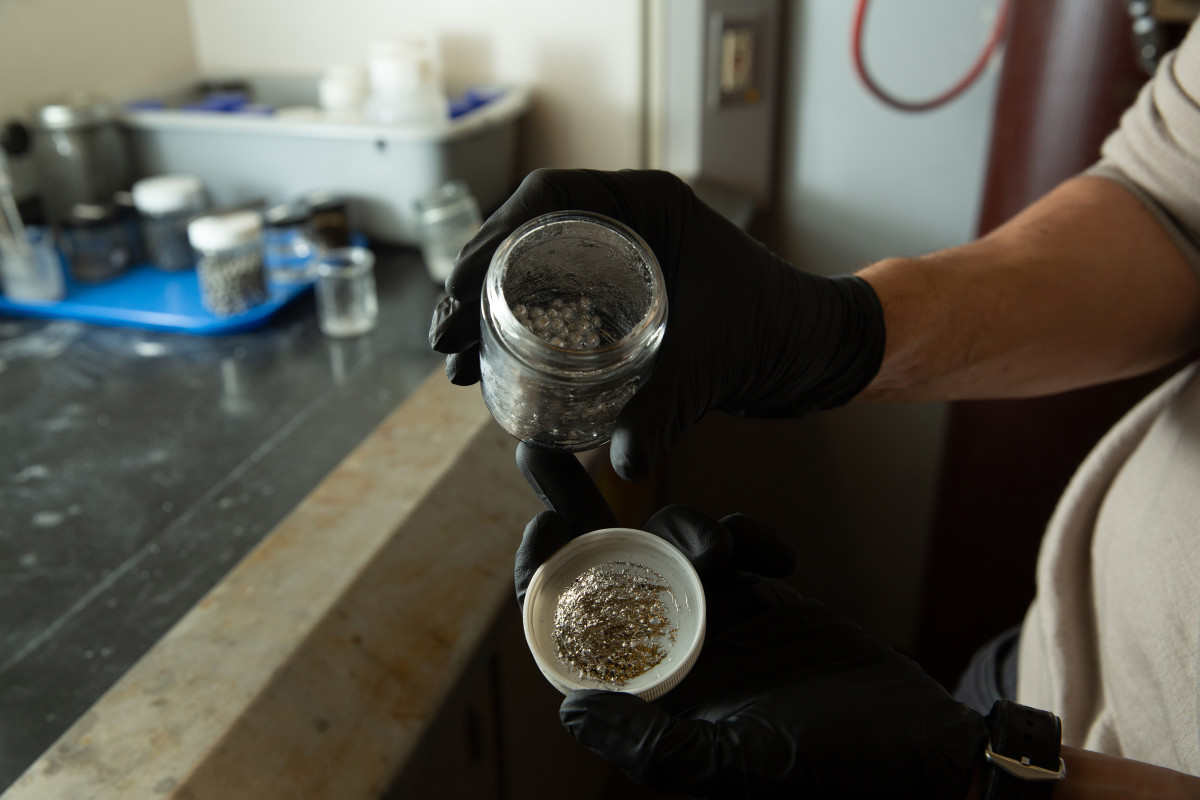
The new process starts with pellets of recycled aluminum (in jar) that react with seawater to produce pure hydrogen. The team found that if scaled up, the process could generate “green” hydrogen with a low-carbon footprint.

Tony Pulsone? MIT MechE

The study’s assessments centered on using recycled aluminum, as it saves a significant amount of emissions compared to mining for aluminum. Salt in seawater proved valuable due to its ability to sustainably precipitate gallium-indium, a rare-metal alloy that effectively removes aluminum’s protective oxide layer, exposing pure metal that produces hydrogen when combined with seawater. The researchers were unable to source gallium-indium from regular water, as oxygen causes aluminum to instantly form a shield-like layer that won’t readily cause a reaction, which caffeine helped speed up.

Dr. Aly Kombargi, a recent MIT mechanical engineering graduate who was the study’s lead author, said in a release from the university: “We’re in the ballpark of green hydrogen. One of the main benefits of using aluminum is the energy density per unit volume. With a very small amount of aluminum fuel, you can conceivably supply much of the power for a hydrogen-fueled vehicle.”

What this hydrogen production method could look like at scale

Regarding commercial-scale production, these MIT researchers outlined the process as starting with scrap aluminum from a recycling center, shredding that aluminum into pellets, and treating it with gallium-indium, then transporting the pellets as aluminum fuel instead of moving hydrogen, which can be volatile. The ideal fuel station would be near a seawater source, and these researchers are exploring underwater production applications. The team was able to make life cycle assessments for their hydrogen manufacturing method using Earthster, a software tool pulling data from a vast repository of products and processes.

Their extensive assessments included primary aluminum mined from the earth versus recycled aluminum, while also evaluating different aluminum and hydrogen transportation methods. The researchers found that once its process using recycled aluminum was complete, it left behind boehmite, an aluminum-based byproduct used in semiconductor and electronic production, which could be sold to manufacturers, further reducing costs, Tech Explorist reports.

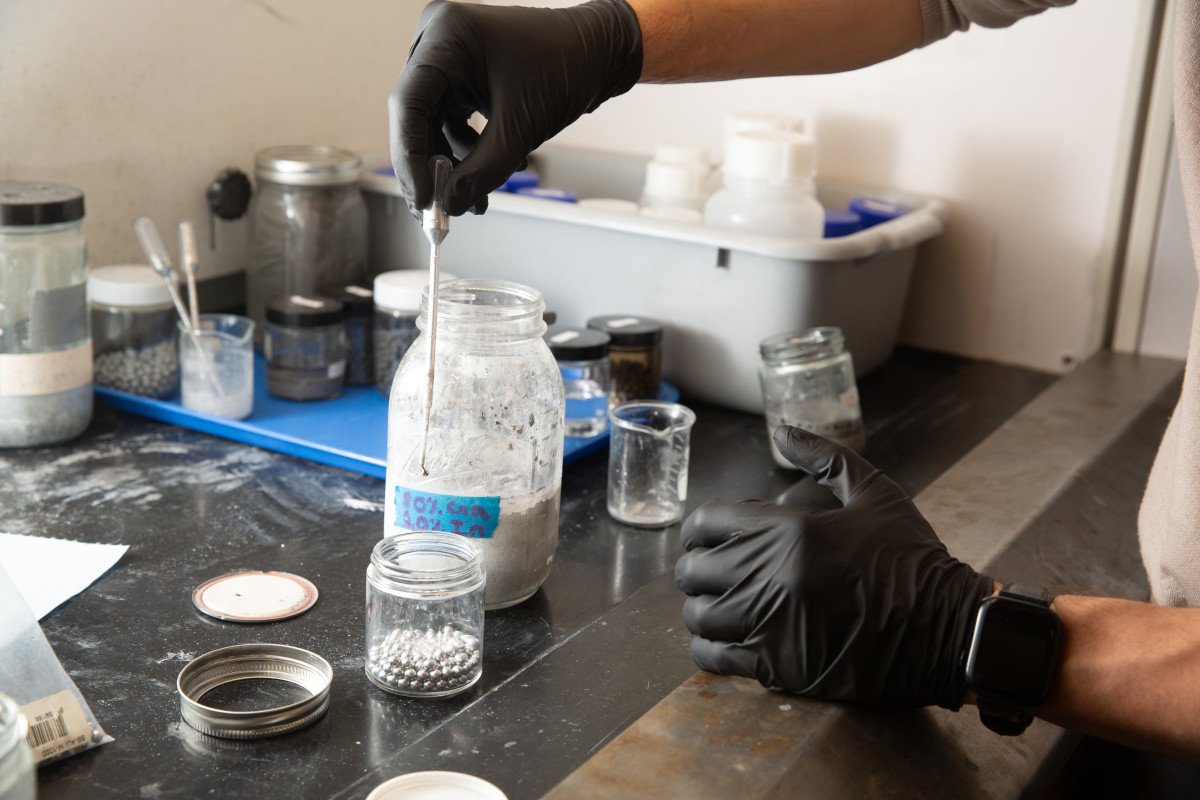
A researcher demonstrates “activating” aluminum by dipping an aluminum pellet in a mixture of gallium-indium.

Tony Pulsone

Final thoughts

Kombargi’s team discovered how recycled aluminum pretreated with a gallium-indium alloy and seawater could facilitate hydrogen fuel production in 2024, but during conferences, the researchers were frequently asked about the method’s carbon footprint and cost. Subsequently, extensive trials allowed the team to determine that for every kilogram of hydrogen produced, the process would generate 1.45 kilograms of carbon dioxide over its entire life cycle, 9.55 kilograms fewer than traditional fossil-fuel-based methods. The process’s cost of $9 per kilogram is comparable to the price of hydrogen generated with other green technologies such as wind and solar energy, creating a complementary solution.

via Autoblog https://ift.tt/H7WAMLq

July 23, 2025 at 04:09PM

GM’s Super Cruise Hands-Free System Just Got Even Better

https://www.autoblog.com/news/gms-super-cruise-hands-free-system-even-better

Super Cruise keeps pace with Ford’s BlueCruise and Tesla’s Autopilot

Super Cruise is one of the leading hands-free driver-assistance systems in the industry. It may not outperform Tesla’s Autopilot or Ford’s BlueCruise in every way, but it’s good enough to make long journeys a lot less fatiguing. 

The great thing about these systems is that they’re always being improved. Last year, Super Cruise expanded to include about 750,000 miles of compatible roads in the United States and Canada. Now, GM is about to roll out a few new features for the system for 2026 model year vehicles.

Two Key New Functions Added


View the 3 images of this gallery on the
original article

As part of GM’s second-quarter earnings report, the company also detailed the upcoming changes to Super Cruise. 

Firstly, the system will now offer integration with Google Maps. Super Cruise has relied on pre-mapped roads to operate until now. Google Maps integration should further improve the system when drivers are navigating to their next destination. This addition makes sense, given that many GM vehicles already feature Google built-in, seamlessly linking up to Google Maps.

The other new feature is the ability of Super Cruise to automatically switch to hands-free mode when transitioning to a compatible road. This function should result in one less step for the driver and more people switching to hands-free driving more often.

These new functions add to existing Super Cruise features like automatic lane changes and the ability to use the system while towing.

Super Cruise Availability Still Increasing

General Motors Super Cruise

Cadillac

By the end of June, there were over 500,000 vehicles on the road equipped with Super Cruise. This is a year-on-year increase of over 100%, and by the end of 2025, GM expects to double the number of cars that have the hands-free system.

Of Super Cruise’s customers, over 60% are active monthly users, with over 200,000 monthly active users in the second quarter of this year.

While initially available on more expensive GM vehicles, Super Cruise has gradually filtered down to more affordable models such as the Chevrolet Equinox EV, Chevrolet Blazer EV, and Cadillac CT4. 

As 2026 models are now starting to roll out, owners can soon start enjoying the refinements made to Super Cruise.

via Autoblog https://ift.tt/H7WAMLq

July 23, 2025 at 10:50AM

After 90 Days on a Vibration Plate, My Legs Feel the Same, but My Brain Feels Amazing

https://lifehacker.com/health/how-i-feel-after-90-days-on-a-vibration-plate

We may earn a commission from links on this page.

From 1969 to 2025, the idea of vibrating your way to fitness just won’t go away. Whatever shape they take, vibration plates are a relentless wellness trend, with influencers claiming they’ll transform your body with minimal effort.

Both Lifehacker’s senior health editor Beth Skwarecki and I have previously busted those myths. While your muscles do contract during the vibrating experience, these aren’t the same type of contractions that build substantial strength or burn meaningful calories. After all, if something sounds too good to be true on social media, it probably is. But does that mean it’s completely without merit?

Given all this context, I still gave my vibration plate a shot. I wasn’t expecting to get a new set of legs, but I wanted to see what these devices actually do when used consistently in real-world conditions.

My 90-day vibration experiment

I used this $109.99 (currently $98.99) vibration plate from Merach, a popular brand on the TikTok Shop.

My approach was deliberately simple and sustainable. Every day for 90 days, I committed to 10 minutes on the vibration plate. I kept myself engaged with light squats, calf raises, or simply standing in different positions while the machine did its thing. Most evenings, I’d park myself on the plate while watching TV, listening to music, or simply zoning out at the end of a long day. It became a ritual—a small pocket of time that was entirely mine.

The beauty of this routine wasn’t in its intensity but in its consistency. Ten minutes felt manageable even on the busiest days. Sometimes I’d be actively moving, other times I’d just stand there and let the vibrations wash over me like a full-body massage. There was something oddly meditative about surrendering to the mechanical rhythm.

The unexpected brain benefits

After three months, my legs look and feel exactly the same. As expected. My strength hadn’t dramatically improved, and I wasn’t suddenly running faster or jumping higher. But the most interesting effect wasn’t physical at all.

I loved the way the vibration plate cleared my head. Maybe it was placebo, or perhaps more about the ritual than the vibrating itself, but I found this device tickled my brain in an amazing way—and I’m not alone. Scrolling through comments on vibration plate videos or Reddit threads, tons of people share this sentiment, particularly when it comes to their ADHD symptoms.

I have ADHD myself, and those 10 minutes became a reset button for my scattered thoughts. Whether I’d had a stressful day at work or felt overwhelmed by endless tasks, stepping onto that vibrating platform seemed to shake loose the mental static. My racing mind would slow down, and I’d feel a little more more centered and focused.

What the science says

Since this was all wildly anecdotal and subjective, I wanted to understand if there was any research backing this up. A small study from 2014 found promising effects of whole body vibration on attention in both healthy individuals and adults with ADHD. More research is needed, but their theories suggest that the sensory input from vibration might help regulate an overactive mind, similar to how fidget tools can help people with ADHD concentrate.

I’d love to see more research about the effects of vibration plates specifically on people with ADHD and other attention disorders. For now, all I know is that it felt like it calmed my mind in ways I hadn’t expected. The vibration plate didn’t transform my physique, but the gentle shaking sure was like a fidget spinner for my brain.

The bottom line

The wellness industry loves to oversell simple solutions, and vibration plates are no exception. Still, I sincerely enjoy my vibration plate as a recovery tool and relaxation device (rather than a fitness game-changer). It’s become part of my wind-down routine, like bedtime reading or yoga. The physical benefits might be minimal, but the mental ones are noteworthy enough for me.

If you’re considering a vibration plate, adjust your expectations accordingly. Don’t expect miraculous muscle gains or dramatic weight loss. But if you’re looking for a unique way to decompress, manage stress, or quiet a busy mind, these devices might offer unexpected value.

via Lifehacker https://ift.tt/tPaEAkU

July 22, 2025 at 01:13PM

You Don’t Want to Know Where Scientists Just Found 27 Million Tons of Plastic

https://gizmodo.com/you-dont-want-to-know-where-scientists-just-found-27-million-tons-of-plastic-2000632563

Despite the hundreds of millions of metric tons of plastic floating in our oceans—not to mention the microplastics in our saliva, blood, breast milk, and semen—researchers have been unable to account for all the plastic ever produced. A new study has just tracked down a large portion of it.

Researchers from the Royal Netherlands Institute for Sea Research (NIOZ) and Utrecht University claim to be the first to provide a real estimate of ocean-polluting nanoplastics. Their research indicates that the North Atlantic Ocean alone hosts 27 million tons of floating plastic particles less than 1 micrometer (?m) in size.

“Plastic pollution of the marine realm is widespread, with most scientific attention given to macroplastics and microplastics. By contrast, ocean nanoplastics (<1??m) remain largely unquantified, leaving gaps in our understanding of the mass budget of this plastic size class,” they explained in a study published earlier this month in the journal Nature. “Our findings suggest that nanoplastics comprise the dominant fraction of marine plastic pollution.”

To reach these conclusions, Utrecht graduate student and study co-author Sophie ten Hietbrink collected water samples from 12 locations while working aboard a research vessel traveling from the Azores to the continental shelf of Europe. She filtered the samples of anything larger than one micrometer and conducted a molecular analysis on what was left behind. The team then extrapolated its results to the entire North Atlantic Ocean.

27 million tons is “a shocking amount,” Ten Hietbrink said in a NIOZ statement. “But with this we do have an important answer to the paradox of the missing plastic.” Namely, that a large part of it is floating in our oceans, invisible to the naked eye.

Unfortunately, there are a number of ways nanoparticles can end up in the oceans. While some likely arrive via rivers, others fall out of the sky with rain or on their own as “dry deposition.” (Yes, we’ve even found plastic pollution in the sky). Nanoparticles can also form when large pieces of plastic already in the ocean are broken down by waves and/or sunlight, according to the researchers. The question now is how this pollution is impacting the world and its creatures—including us.

“It is already known that nanoplastics can penetrate deep into our bodies. They are even found in brain tissue. Now that we know they are so ubiquitous in the oceans, it’s also obvious that they penetrate the entire ecosystem; from bacteria and other microorganisms to fish and top predators like humans,” said Helge Niemann, a geochemist at NIOZ and another co-author of the study. “How that pollution affects the ecosystem needs further investigation.”

The missing plastic paradox, however, is not completely solved, because not all plastics were represented in the samples. The team didn’t find polyethylene or polypropylene, for example.

“It may well be that those were masked by other molecules in the study. We also want to know if nanoplastics are as abundant in the other oceans. It is to be feared that they do, but that remains to be proven,” Niemann added. “The nanoplastics that are there, can never be cleaned up. So an important message from this research is that we should at least prevent the further pollution of our environment with plastics.”

via Gizmodo https://gizmodo.com/

July 22, 2025 at 11:00AM