
Find Free Movies (Legally) With WikiFlix, a Database of Films in the Public Domain

https://lifehacker.com/tech/find-free-movies-legally-with-wikiflix-a-database-of-films-in-the-public

I love movies, and especially when I can watch them for free: And while streaming the latest Hollywood blockbusters might come at a price (at least for those wanting to stay on the right side of the law), there’s an ever-growing collection of older films that you can get at online without paying a dime.

The site WikiFlix (as spotted by the fine folks at Gizmodo) lists movies available to stream that are now in the public domain. The way that copyright works in the U.S. basically means that copyright expires on films after a period of 95 years—so with every year that passes, a batch of new flicks become available to view by anyone, free of charge.

If you’re looking for something classic for your next movie night, it’s well worth a look.

WikiFlix site
There are plenty of categories to choose from.
Credit: Lifehacker

WikiFlix is straightforward to use, right from the homepage. It tracks films added to sites such as Wikimedia Commons, YouTube, and the Internet Archive, and whenever you click through on a movie, you can also see where it has come from. When you’ve made your pick, it streams right in your browser window.

The home page is split up into categories that you can browse through—including female directions, animations, and biographical films, the last time I checked—and there’s also a search button up in the top right corner if you know what you’re looking for. Next to the search button is an account button, which enables you to sign up for a MediaWiki account if you want to be able to contribute to the site too.

Hover over the main WikiFlix heading at the top of the page and a quick link to Movies by year pops up. This is a useful way of finding the most recent flicks added to WikiFlix, and digging back into the archive—not all of the movies here are in the public domain because their copyright has expired, and you will find more recent titles too.

Click through on any thumbnail to get more information about each movie. You can typically get information on the director, cast, and running time, and a plot summary is included too. Some of the entries come with trailers (although you can also search for these separately on sites like YouTube).

WikiFlix site
Each movie comes with a cast list.
Credit: Lifehacker

Start streaming a movie, and the usual playback controls appear, though the interface does depend to some extent on the site that’s hosting the movie. For films hosted on YouTube, for example, you can typically adjust the playback quality and speed. Some movies come with subtitles too.

Obviously a site like this is going to skew towards older, classic movies, but there’s plenty to explore here: Metropolis, It’s a Wonderful Life, All Quiet on the Western Front, Nosferatu, Charlie Chaplin comedy The Gold Rush, and lots more.

Free movie repositories aren’t quite as rare online as you might think. We’ve written before about the best free and legal streaming services for movies and TV, featuring ad-supported streaming platforms such as Tubi and PlutoTV. Again, the emphasis is on older films, but there’s a huge amount on offer at no charge.

via Lifehacker https://ift.tt/ipeoTqM

January 13, 2026 at 08:25AM
Alphabet’s Wing Adds 150 Walmart Stores to Drone Delivery Program

https://gizmodo.com/alphabets-wing-adds-150-walmart-stores-to-drone-delivery-program-2000709294

Delivery services show few signs of losing interest among Americans. While they often include significant surcharges over in-person shopping, it also means not having to press a button to get a case unlocked for deodorant or detergent. And Wing and Walmart have been able to capitalize on a drone delivery service in two regions so far, and the companies are looking to cover a wider part of the U.S.

Wing, an Alphabet-owned company, said on Sunday that it will boost its drone delivery service to Houston starting on Thursday, with planned expansions in Orlando, Tampa, and Charlotte in the coming weeks, making the option available to customers at 150 Walmart locations. By 2027, the company said it would add locations in cities such as Los Angeles, Miami, St. Louis, and Cincinnati, bringing the total store count to 270.

Six Walmart Supercenters in the Atlanta area added drone delivery last month in the holiday shopping season, Wing said. Dallas-Fort Worth Metroplex was the first region to engage in the Wing-Walmart partnership in August 2023.

“We’ve spent years building our technology to ensure that when you realize you’re out of eggs or need over-the-counter medicine, the solution is just a few taps away, seamlessly integrated into existing store operations,” Wing CEO Adam Woodworth said in Sunday’s news release. “We believe even the smallest package deserves the speed and reliability of a great delivery service. Working with Walmart has allowed us to prove that delivering these critical, everyday items in minutes makes a significant difference for families.”

Wing claimed on Sunday that the top 25% of customers ordered three times a week through the Walmart app. In the Atlanta locations, for example, it offers delivery within 5 minutes of order fulfillment on items such as produce, dairy, non-perishable groceries, household products, over-the-counter medicine, and children’s toys.

Last year, Wendy’s partnered with Wing for a drone delivery program in Virginia. Wing has also previously partnered with PepsiCo during last year’s Super Bowl.

via Gizmodo https://gizmodo.com/

January 12, 2026 at 02:14PM

Scientists Watched Viruses Attack Bacteria in Space. Things Got Weird

https://gizmodo.com/scientists-watched-viruses-attack-bacteria-in-space-things-got-weird-2000709619

The International Space Station (ISS) is one of the most unique environments where life has ever existed, out in the low orbit of Earth. And research out today finds that bacteriophages—the viruses that prey on bacteria—can behave quite peculiarly in space.

Scientists studied how phages interacted with Escherichia coli bacteria aboard the ISS and compared them to pairs grown on Earth. The space-dwelling phages took longer to infect their hosts, while both the bacteria and viruses developed unusual mutations in response to each other and the microgravity conditions of the ISS, they found. The findings also suggest that phages in space could develop mutations useful to humans back home.

“Microbes continue to evolve under microgravity, and they do so in ways that are not always predictable from Earth-based experiments,” senior study author Vatsan Raman, a biomolecular and cellular engineer at the University of Wisconsin–Madison, told Gizmodo.

Phages in space

Studies have documented that many microbes and other tiny living things can thrive aboard the ISS, including the microorganisms left behind by touring astronauts. But according to Raman, there’s been relatively little research examining how these space microbes interact with each other, especially phages and the bacteria they infect to make more of themselves.

“Most microbial evolution experiments implicitly assume Earth-like physical conditions, but spaceflight changes fundamental aspects of the environment—how fluids mix, how cells encounter one another, and how physical forces shape cellular physiology,” he explained. “Phage infection depends critically on transport, encounter rates, and host physiology, all of which could plausibly change in space. We wanted to test whether microgravity simply slows these processes down, or whether it pushes phages and bacteria along different evolutionary paths altogether.”

They focused on a particular kind of phage that loves to munch on E. coli, known as T7.

The ISS phages were slower to infect their prey at first, likely because fluids don’t mix the same way under microgravity conditions, according to Raman. But once infection occurred, both the phages and bacteria rapidly adapted and often very differently from their Earth counterparts. The bacteria evolved in ways that seemed to boost their defenses against phage infection and enhance their survivability in space, while the phages evolved to more easily infect E. coli. What’s more, some of the genetic changes seen in the space phages were unlike anything seen on Earth.

“The main takeaway is that microgravity doesn’t just delay phage infection—it reshapes how phages and bacteria evolve together,” Raman said. “We observed mutations appearing in unexpected genes, including ones that are poorly characterized in standard laboratory settings.”

The team’s findings were published Tuesday in PLOS Biology.

What this means

The findings obviously have implications for space travel, especially longer-duration missions. The microbes living aboard the ISS and other space stations in the future aren’t just static tourists, and it’s certainly possible they could evolve in ways that have a real impact on the health of astronauts and the environment in general, Raman says.

That scary possibility aside, space phages could also help humanity. The team’s experiments on Earth found that several of the changes seen aboard the ISS made the phages better at attacking T7-resistant strains of E. coli that cause urinary tract infections in people.

Phages are already being developed as an alternative treatment for drug-resistant infections. And while it would be impractical to routinely run these sorts of experiments on the ISS, learning exactly how microgravity can shape the evolution of these microbes could allow scientists like Raman to apply those lessons to studies conducted on Earth.

“I hope this work encourages researchers to think of space not just as a place to reproduce Earth experiments, but as a fundamentally different physical environment that can uncover new biology—insights that ultimately circle back to improve research and applications here on Earth,” he said.

Looking ahead, the researchers now hope to better understand the specific genes and mutations in T7 phages that emerged under microgravity, particularly the ones not easily created in a standard lab. They also hope that similar studies in the future will reveal how space can change the biology of more complex microbial communities or medically relevant bacteria.

via Gizmodo https://gizmodo.com/

January 13, 2026 at 01:01PM

Verizon Convinces FCC to Kill Its 60-Day Phone Unlocking Rule and That’s Bad

https://www.droid-life.com/2026/01/13/verizon-convinces-fcc-to-kill-its-60-day-phone-unlocking-rule-and-thats-bad/

Verizon no longer has to automatically unlock your phone after 60 days and their new unlock policy could be anything, thanks to a new waiver by the FCC.

During the height of its struggles to keep postpaid customers around in May of 2025, Verizon asked the FCC to get rid of a requirement that forced them to unlock phones after being on their network for 60 days. This 60-day unlock, which was the shortest in the industry, had become some sort of a burden on Verizon because, well, mostly because they just didn’t think it was fair that no one else had this same requirement.

Last year, they sent a filing to the current FCC, which is as anti-consumer and anti-free speech as it gets, complaining that they couldn’t compete with proper subsidies on phones, that eliminating this rule was the perfect example of a rule that should be eliminated by all of the deregulation and government cutting going on, and that this rule was “propping up international criminal organizations that profit from fraud, including device trafficking of subsidized devices from the United States.”

The rule they are talking about is the one that Verizon had to commit to back in 2008 after buying a bunch of spectrum. The rule was later extended in 2021 after they bought Tracfone. The rule from the FCC forced Verizon to automatically unlock devices after 60 days, whether or not a customer had paid off their phone or fulfilled contract requirements.

This week, the FCC ruled on their filing (here) and has given a waiver to Verizon, releasing them from the 60-day unlock policy they were previously enforcing.

In the note from the FCC, they essentially admitted that they were waiving Verizon from this requirement because they want Verizon to have the same unlocking freedom as the other carriers in the US. They then attempted to add to the story with talk typically reserved for online conspiracy theorists and extremists who don’t believe in reality. Just read this quote from FCC Chairman Brendan Carr and tell me if any of this sounds believable:

“Sophisticated criminal networks have exploited the FCC’s handset unlocking policies to carry out criminal acts—including transnational handset trafficking schemes and facilitating broader criminal enterprises like drug running and human smuggling. By waiving a regulation that incentivized bad actors to target one particular carrier’s handsets for theft, we now have a uniform industry standard that can help stem the flow of handsets into the black market.”

Bro, get off Twitter.

Anyways, the thing you need to know is that the FCC is cool with Verizon now being under the CTIA Consumer Code for Wireless Service and deciding on an unlock policy from that. Unfortunately for you, the consumer, the CTIA’s unlocking policy sucks. Specifically, their postpaid unlocking policy just gives the power to the carrier to decide whatever the hell they want.

Here’s what it states on postpaid (which is the type of plan you’d pay for at Verizon and receive a device payment plan or discount on a phone):

Postpaid Unlocking Policy. Carriers upon request will unlock mobile wireless devices or provide the necessary information to unlock devices for their customers and former customers in good standing and individual owners of eligible devices after the fulfillment of the applicable postpaid service contract, device financing plan, or payment of an applicable early termination fee.

In short, that policy simply states that carriers will unlock as long as you are “in good standing” and that your contract is fulfilled. In other words, Verizon could easily go from a 60-day unlock policy to a 3-year policy, since they now lock customers in on 3-year device payment plan contracts.

Oh, the FCC also said this is all to “benefit consumers.” Someone tell me how it does because they didn’t.

Read the original post: Verizon Convinces FCC to Kill Its 60-Day Phone Unlocking Rule and That’s Bad

via Droid Life: A Droid Community Blog https://ift.tt/HQaigmJ

January 13, 2026 at 01:04PM

Utah Becomes First State to Let AI Prescribe Medication

https://gizmodo.com/utah-becomes-first-state-to-let-ai-prescribe-medication-2000706729

The doctor won’t see you now.

Utah has launched a first-in-the-nation pilot program that will allow an AI system to renew 190 commonly prescribed medications for patients with chronic conditions.

Some medications with the potential for abuse, like pain management and ADHD drugs, are excluded, according to Politico. The program will initially cost $4 per renewal but will eventually be either covered by insurance or offered at an annual fee.

Utah is undertaking the program with Doctronic, a health-tech startup that launched in 2023. Doctronic already offers AI medical tools designed to automate some of the work typically performed by physicians, including a chatbot that provides free medical consultations and generates follow-up notes for physicians as needed.

At the heart of Doctronic’s work is removing barriers to healthcare access, cutting down costs, and easing the burden on healthcare workers, and AI can certainly do that, at least to some extent. Artificial intelligence tools are increasingly used by healthcare professionals around the country, with a recent OpenAI report claiming that 46% of American nurses use them weekly. The report also claims that 7-in-10 healthcare-related conversations with AI chatbots happen outside of normal clinic hours.

Per Politico, the decisions made by Doctronic’s AI system matched those of human clinicians 99.2% of the time, and the system will be held to the same level of responsibility as a doctor would be for any claims of malpractice.

But AI is far from a perfect technology, and mistakes can prove to be fatal in healthcare contexts. The AI could fail to catch certain drug interactions or other patient red flags, leading to disastrous consequences for patients. AI systems are also prone to being gamed, including shockingly via poetry, and that can create a dangerous loophole that can be abused by patients struggling with addiction.

There is also the issue of biases. According to a recent Financial Times report, some medical AI tools tend to downplay the concerns of women and stereotype some races and ethnicities while making their diagnoses.

While Utah is so far the only state offering the AI renewals, Doctronic is reportedly in discussion to expand the practice to Texas, Arizona, and Missouri, and is weighing a path to nationwide approval.

The legality of it all is interesting. States broadly get to set their own rules on how medicine can be practiced within their borders, and an AI that independently renews prescriptions would technically be governed under that category.

But AI-enhanced medical devices fall squarely under the regulatory authority of the Food and Drug Administration, which itself is going through a reevaluation of how it regulates AI deployment in health.

via Gizmodo https://gizmodo.com/

January 7, 2026 at 09:54AM

Starless ‘Cloud-9’ Is an Entirely New Astrophysical Object

https://www.scientificamerican.com/article/starless-cloud-9-is-an-entirely-new-astrophysical-object/

January 5, 2026

3 min read

Google LogoAdd Us On GoogleAdd SciAm

Starless ‘Failed Galaxy’ Is First of Its Kind Ever Seen

Scientists have found the best evidence yet for long-predicted “failed galaxies”

By Jenna Ahart edited by Lee Billings

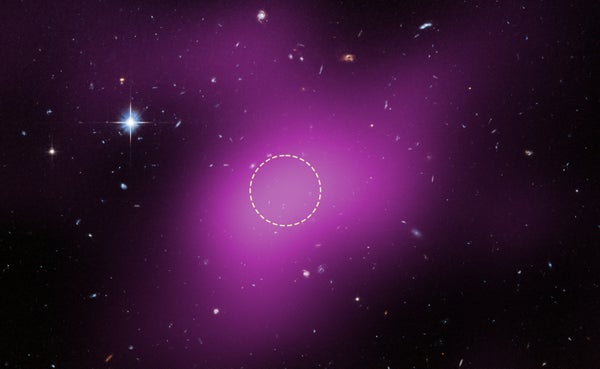
A diffuse purple blob of gas against the depths of intergalactic space, with a dashed circular annotation denoting the blob's central, most gas-dense region.

The “failed galaxy” Cloud-9, a dark matter-dominated blob of hydrogen gas some 14 million light-years from Earth. The diffuse magenta represents radio data from the ground-based Very Large Array (VLA) that shows the presence of the gas. The dashed circle marks the peak of radio emission, which is where researchers focused their search for stars. Follow-up observations by the Hubble Space Telescope found no stars within the cloud. The few objects that appear within its boundaries are background galaxies.

NASA, ESA, VLA, Gagandeep Anand (STScI), Alejandro Benitez-Llambay (University of Milano-Bicocca) (science); Joseph DePasquale (STScI) (image processing)

A potential new type of celestial object has all the makings of a normal small galaxy. It’s rich with the same hydrogen gas that births suns and planets, and it lies within a halo of dark matter, the same invisible stuff that holds galaxies together. Yet it’s missing one key component of glittering galaxies like our own Milky Way: stars.

Nicknamed Cloud-9, the gas cloud is technically the best-yet example of a RELHIC, or Reionization-Limited H I Cloud. The “H I” stands for Cloud-9’s bounty of neutral hydrogen, and “RELHIC” refers to what astronomers believe the object to be: a primordial fossil—or relic—from the universe’s early epochs that, for some reason, never managed to form stars or become a full-fledged galaxy. That makes Cloud-9 a “failed galaxy,” said Rachael Beaton, an astronomer at the Space Telescope Science Institute, during a January 5 press conference at the American Astronomical Society’s 247th meeting in Phoenix, Ariz.

Based on their understanding of dark matter’s behavior and the hierarchical process of galaxy formation, astronomers have long predicted that such starless objects should exist throughout the cosmos. But until recently, RELHICs had been notoriously difficult to spot.


On supporting science journalism

If you’re enjoying this article, consider supporting our award-winning journalism by subscribing. By purchasing a subscription you are helping to ensure the future of impactful stories about the discoveries and ideas shaping our world today.


The results—presented by Beaton at the meeting and published in the Astrophysical Journal Letters last November—bolster the case that we’ve finally found one of these elusive phantom galaxies. Cloud-9 first burst onto the astronomy scene in 2023, when the Five-Hundred-Meter Aperture Spherical Radio Telescope in China’s province of Guizhou discovered a nearly 5,000-light-year-wide spherical cloud of hydrogen gas about 14 million light-years from Earth that appeared to be a faint dwarf galaxy, albeit bereft of visible stars. More in-depth studies on the cloud showed that it contains about a million solar masses of hydrogen and some five billion solar masses of dark matter, but researchers couldn’t confirm it to be truly starless. Perhaps, instead, it was indeed a strange sort of dwarf galaxy that was sparsely populated with very old and dim stars.

So Beaton and her colleagues peered once again at the object through the keen gaze of the Hubble Space Telescope. And in all of Hubble’s observations, she said, it found hints of just one star within Cloud-9. It could be that other stars simply went by undetected, but based on further simulations, the team found that the cloud probably couldn’t host more than some 3,000 solar masses worth of stars—a meager smattering that would preclude the object being a dwarf galaxy. This new result not only makes Cloud-9 the foremost REHLIC candidate in astronomers’ catalogs but also a milestone for verifying the common prediction that “not every dark matter halo will have a galaxy in it,” Beaton said.

While the fresh information from Hubble “certainly eliminates the possibility that [Cloud-9] is a dwarf galaxy,” there’s still much left to learn about this peculiar object, says Kristine Spekkens, an astronomer at Queen’s University in Ontario, who was not involved with the work. For instance, she says, Cloud-9 doesn’t have quite as smooth a shape as astronomers would expect. Better mapping of its gas distribution could provide more insights into how exactly it formed and evolved over cosmic time.

Still, it will be difficult to definitively confirm that Cloud-9 is in fact a RELHIC so long as it remains in a league completely of its own, says Ethan Nadler, an astronomer at the University of California, San Diego, who didn’t take part in the Hubble observations. While dubbing the cloud officially “starless” will be challenging, finding similar objects may help researchers shed some light on this dark area of astronomy.

It’s Time to Stand Up for Science

If you enjoyed this article, I’d like to ask for your support. Scientific American has served as an advocate for science and industry for 180 years, and right now may be the most critical moment in that two-century history.

I’ve been a Scientific American subscriber since I was 12 years old, and it helped shape the way I look at the world. SciAm always educates and delights me, and inspires a sense of awe for our vast, beautiful universe. I hope it does that for you, too.

If you subscribe to Scientific American, you help ensure that our coverage is centered on meaningful research and discovery; that we have the resources to report on the decisions that threaten labs across the U.S.; and that we support both budding and working scientists at a time when the value of science itself too often goes unrecognized.

In return, you get essential news, captivating podcasts, brilliant infographics, can’t-miss newsletters, must-watch videos, challenging games, and the science world’s best writing and reporting. You can even gift someone a subscription.

There has never been a more important time for us to stand up and show why science matters. I hope you’ll support us in that mission.

via Scientific American https://ift.tt/K3Wglcf

January 7, 2026 at 06:53AM

Improved Safety, Durability, and Power: A Carbon-Based Battery Materials Breakthrough

https://www.techbriefs.com/component/content/article/54437-improved-safety-durability-and-power-a-carbon-based-battery-materials-breakthrough

This research demonstrates a new way to make carbon-based battery materials much safer, longer lasting, and more powerful by fundamentally redesigning how fullerene molecules are connected. Today’s lithium-ion batteries rely mainly on graphite, which limits fast-charging speed and poses safety risks due to lithium plating. These research findings mean progress toward safer electric vehicles, longer-lasting consumer electronics, and more reliable renewable-energy storage.

via NASA Tech Briefs https://ift.tt/tPcY4Om

January 6, 2026 at 08:55AM