
Sierra Space wants to drop cargo from orbit to anywhere on Earth in 90 minutes

https://www.space.com/sierra-space-ghost-cargo-from-orbit-90-minutes

COLORADO SPRINGS, Co ?— Sierra Space unveiled a radical new concept for on-demand cargo delivery from Earth orbit. The company aims to land critical supplies anywhere on the planet within 90 minutes of when it was requested.

Sierra Space says the concept could enable soldiers on the battlefield or in remote areas to acquire much-needed supplies on quicker timescales, as they’d be far from traditional infrastructure used to transport goods on the ground. The Ghost orbital delivery platform could also aid first responders in disaster-stricken areas and bolster humanitarian efforts. 

While several commercial launch providers, such as SpaceX and Rocket Lab, in addition to the U.S. military have been discussing using rockets to send cargo rapidly around the Earth, Sierra Space’s Ghost concept could allow payloads to land in areas without dedicated launch or landing facilities. It would be particularly useful for smaller payloads, therefore opening up radical new possibilities for civilian supply chains on top of military demands.

Related: Sierra Space unveils Dream Chaser space plane ahead of 1st flight to ISS (video)

A Sierra Space Ghost test article at Space Florida’s Launch and Landing Facility (LLF) in Florida. (Image credit: Sierra Space)

According to a Sierra Space statement announcing the Ghost concept, the system would involve loading pre-determined supplies such as survival kits, an inflatable boat, rations and weaponry onto different "units." There units would then be launched into orbit. 

The Ghost platform could then wait up to five years in orbit before any pre-loaded supplies are called down to Earth. Once materials must be delivered, first, a de-orbit motor would slow the satellite down enough for Earth’s gravity to begin pulling it  towards the planet’s surface. The system’s thermal shield would meanwhile protect the payload from the upcoming intense heat of reentry. 

Once safely within Earth’s atmosphere, the thermal shell would be discarded and the system’s soft-shell, umbrella-like parafoil would open. A steerable rudder on the parafoil can help guide the Ghost’s payload to within 300 feet (100 m) of its targeted landing spot, Sierra Space says.

Breaking space news, the latest updates on rocket launches, skywatching events and more!

Sierra Space’s new "Axelerator technology" incubator helped the team develop a prototype of the Ghost system in just 90 days, according to the company’s statement.

In-flight photographs taken aboard a Sierra Space Ghost test article during the company’s February 2024 testing campaign. (Image credit: Sierra Space)

Space.com spoke with Sierra Space’s Erik Daehler, Vice President of Orbital Missions & Services, at Space Symposium to learn more about the new Ghost system. Daehler said that while the Ghost system can be scaled to different sizes, between 550 pounds and 1,750 pounds (250 kilograms and 750 kilograms) is the "sweet spot" in terms of cost versus the amount of returnable payload.

Each unit currently costs somewhere in the "tens of millions" of dollars to build, but Daehler said Sierra Space is working to bring that cost down to "single-digit millions."

A concept of operations showing the Sierra Space Ghost system as it unfolds its soft-material decelerator and reenters Earth’s atmosphere. (Image credit: Sierra Space)

When asked if the Ghost concept could be scaled up until its large enough to return something as massive as a module of the International Space Station (ISS), Daehler said a similar concept could possibly be used, but it would need to use slightly different design principles.

"As you think about cool things like an ISS segment, you can scale things designed in a similar way," Daehler said. "But you might look at a different structural way to build it nicely. So instead of doing a rigid structure like we did, which is super easy to build, you might do something inflatable."

"We think it’d be really cool to bring back something of our heritage like that," he continued. "We originally started designing this because our cargo modules were designed to burn up for our NASA missions to bring back trash. We’d like to eventually reuse them. So, we’re looking at that scalability; how do we bring back something much larger?"

A Sierra Space Ghost test article undergoing testing at Space Florida’s Launch and Landing Facility (LLF) in Florida. (Image credit: Sierra Space)

A test article of the Sierra Space Ghost delivery system was on display here at the 39th annual Space Symposium in Colorado Springs. The bottom of the test article was scuffed from having been test-dropped at Space Florida’s historic Launch and Landing Facility (LLF) in Florida, where NASA’s space shuttles once landed.

A Sierra Space Ghost prototype on display at Space Symposium in Colorado Springs, Colorado on April 10, 2024. (Image credit: Future/Brett Tingley)

During a testing campaign in February 2024, seven different test articles were dropped ?from a Sikorsky S-76 helicopter —? some with the system’s attached parachute, others with only the system’s soft-shell decelerator, and still others involving "terminal" drops of the cargo payload alone ?—? from altitudes between 2,000 feet (610 meters) and 4,000 feet (1,220 meters).

A Sierra Space Ghost prototype on display at Space Symposium in Colorado Springs, Colorado on April 10, 2024. (Image credit: Future/Brett Tingley)

Similar resupply concepts have been discussed for years, except those involving point-to-point rocket launches with reusable systems like SpaceX’s massive Starship vehicle. Just this year, the U.S. Air Force allocated $4 million in research funding to its Rocket Cargo Vanguard, or "Point-to-Point Delivery (P2PD)" program as it is now known. It’s a program that’s "focused on utilizing vehicles that traverse from or through space to transport DoD materiel anywhere around the world within tactically responsive timelines," according to Breaking Defense.

However, such a system would likely not be able to land anywhere it wants, as large rockets currently need dedicated landing infrastructure. A much smaller, more tactical concept like the Sierra Space Ghost system could enable pinpoint deliveries to austere, remote or contested areas without the need for landing pads.

Sierra Space has not yet announced a date by which it hopes to have the system in operation, but the company is moving forward with a testing program to further develop the Ghost concept and determine what infrastructure, communications systems and other architecture will be needed to turn it into a reality.

via Space https://www.space.com

April 12, 2024 at 07:08AM
The Humane AI Pin is the solution to none of technology’s problems

https://www.engadget.com/the-humane-ai-pin-is-the-solution-to-none-of-technologys-problems-120002469.html?src=rss

I’ve found myself at a loss for words when trying to explain the Humane AI Pin to my friends. The best description so far is that it’s a combination of a wearable Siri button with a camera and built-in projector that beams onto your palm. But each time I start explaining that, I get so caught up in pointing out its problems that I never really get to fully detail what the AI Pin can do. Or is meant to do, anyway.

Yet, words are crucial to the Humane AI experience. Your primary mode of interacting with the pin is through voice, accompanied by touch and gestures. Without speaking, your options are severely limited. The company describes the device as your “second brain,” but the combination of holding out my hand to see the projected screen, waving it around to navigate the interface and tapping my chest and waiting for an answer all just made me look really stupid. When I remember that I was actually eager to spend $700 of my own money to get a Humane AI Pin, not to mention shell out the required $24 a month for the AI and the company’s 4G service riding on T-Mobile’s network, I feel even sillier.

What is the Humane AI Pin?

In the company’s own words, the Humane AI Pin is the “first wearable device and software platform built to harness the full power of artificial intelligence.” If that doesn’t clear it up, well, I can’t blame you.

There are basically two parts to the device: the Pin and its magnetic attachment. The Pin is the main piece, which houses a touch-sensitive panel on its face, with a projector, camera, mic and speakers lining its top edge. It’s about the same size as an Apple Watch Ultra 2, both measuring about 44mm (1.73 inches) across. The Humane wearable is slightly squatter, though, with its 47.5mm (1.87 inches) height compared to the Watch Ultra’s 49mm (1.92 inches). It’s also half the weight of Apple’s smartwatch, at 34.2 grams (1.2 ounces).

via Engadget http://www.engadget.com

April 11, 2024 at 07:09AM

Drones that charge on power lines may not be the best idea

https://www.engadget.com/drones-that-charge-on-power-lines-may-not-be-the-best-idea-163942109.html

Battery life has long been a key limiting factor in drone use. Although there are commercial models that can stay aloft for 45 minutes or longer on a single charge, being able to keep drones in the air for longer would be helpful for many purposes. Researchers at the University of Southern Denmark have been working on that issue for several years by developing drones that can recharge directly from power lines.

This time around, the scientists attached a gripper system to a Tarot 650 Sport drone, which they customized with a electric quadcopter propulsion system, an autopilot module and other components. When the drone’s systems detect that the battery is running low, the device employs its camera and millimeter-wave radar system to pinpoint the closest power line, as New Atlas notes.

The drone then flies up to the power line from underneath, using a pair of inward-sloping arms to guide the cable into the gripper. An inductive charger pulls current from the power line. When the battery is full, the gripper opens and the drone continues on its way.

At the outset, the idea is for drones that inspect power lines to use this charging system. The researchers first showed off a self-charging drone that tops up its battery from power lines in 2022. This time around, they improved the gripper system and demonstrated a real-world use case for the tech.

In a paper they’re presenting at next month’s IEEE International Conference on Robotics and Automation, the team described the project as "to the best of our knowledge, a first-in-the-world system with the ability to sustain operation throughout many inspection/charging cycles powered by energy harvesting from power lines in a real outdoor environment." In arguably the most successful test, the drone stayed aloft for over two hours through five cycles of power line inspection and charging.

Drones have been used for years to monitor and inspect power lines. They’re particularly useful in remote areas, such as mountain tops, where examining power lines manually is a tough ask. Still, it’s hard not to feel a little uneasy about drones clamping onto power lines. If anything goes wrong and a drone somehow ends up damaging a power line, an entire region could lose electricity. Charging pads for drone exist and may be a safer option, but they’d require extra space for infrastructure.

This article originally appeared on Engadget at https://ift.tt/9JHbu7P

via Engadget http://www.engadget.com

April 8, 2024 at 11:45AM

Viagra Could Be a Potent Weapon Against Alzheimer’s Disease

https://gizmodo.com/viagra-sildenafil-prevent-alzheimers-disease-risk-1851374440

New research is the latest to suggest that sildenafil—the active ingredient in popular erectile dysfunction drug Viagra—might help fend off Alzheimer’s disease. The study found that people taking sildenafil were noticeably less likely to develop Alzheimer’s than similar patients not taking it. The results do not yet prove that the little blue pill is effective against the neurological disorder, however, and clinical trials will be needed to know for sure, the researchers say.

Giancarlo Esposito on Having His Own Action Figures

The study, published in the Journal of Alzheimer’s Disease, was led by scientists from the Cleveland Clinic. In 2021, the same team published a paper finding evidence in the lab and from insurance claims data that sildenafil could prevent or delay the onset of Alzheimer’s in older people—perhaps reducing risk by as much as 69%. Some researchers have questioned whether the study’s design was truly able to show a clear link between reduced Alzheimer’s and sildenafil use, however. The very next year, another study that examined Medicare data failed to find such a connection.

This debate isn’t over, though. This February, a third research team studied healthcare data from the UK and found a significant, if smaller, reduced risk of Alzheimer’s associated with sildenafil. And now the authors of the original study say they’ve uncovered more evidence to support the hypothesis.

This time around, the team analyzed claims data from two large patient databases. They compared patients taking sildenafil with patients taking one of four drugs commonly used to treat pulmonary hypertension, a type of high blood pressure affecting the lungs. While sildenafil is best known as an erectile dysfunction aid, it’s also approved and commonly used for this condition as well.

The team once again found that the patients on sildenafil were less likely to later be diagnosed with Alzheimer’s than the comparison groups, with a reduced risk ranging from 30% to 54%. They also conducted more lab experiments, testing sildenafil on neurons grown from the stem cells of Alzheimer’s patients. They found that the drug seemed to promote the growth of neurites (the projections that neurons use to communicate with each other) and reduced the accumulation of a potentially toxic form of tau protein (one of the two proteins thought responsible for causing Alzheimer’s)—a potential clue as to how sildenafil might actually lower Alzheimer’s risk.

“Our findings provide further weight to re-purposing this existing FDA-approved drug as a novel treatment for Alzheimer’s, which is in great need of new therapies,” said senior author Feixiong Cheng in a statement from the Cleveland Clinic.

The scientists are quick to caution that their research can’t show conclusively that sildenafil can prevent or delay Alzheimer’s. But they and other scientists say there’s been enough encouraging data collected to at least merit a larger-scale and more definitive test of this hypothesis.

“We believe our findings provide the evidence needed for clinical trials to further examine the potential effectiveness of sildenafil in patients with Alzheimer’s disease,” said Cheng.

via Gizmodo https://gizmodo.com

April 4, 2024 at 11:57AM

New Kind of Fusion Reactor Built at Princeton

https://gizmodo.com/fusion-reactor-princeton-muse-experiment-magnets-plasma-1851387646

A team of physicists and engineers at Princeton University built a twisting fusion reactor known as a stellarator that uses permanent magnets, showcasing a potentially cost-effective way of building the powerful machines. Their experiment, called MUSE, relies on 3D-printed and off-the-shelf parts.

Giancarlo Esposito on Having His Own Action Figures

Nuclear fusion, the reaction that powers stars like our Sun, produces huge amounts of energy by merging atoms (not to be confused with nuclear fission, which produces less energy by splitting atoms). Nuclear fission is the reaction at the core of modern nuclear reactors that power electric grids; scientists have yet to crack the code on nuclear fusion as an energy source. Even once that long-sought goal is reached, scaling the technology and making it commercially viable is its own beast.

Stellarators are cruller-shaped devices that contain high-temperature plasmas, which can bed tuned to foster the conditions for fusion reactions. They are similar to tokamaks, doughnut-shaped devices that run fusion reactions. Tokamaks rely on solenoids, which are magnets that carry electric current. MUSE is different.

“Using permanent magnets is a completely new way to design stellarators,” said Tony Qian, a physicist at Princeton University and lead author of two papers published in the Journal of Plasma Physics and Nuclear Fusion that describe the design of the MUSE experiment. “This technique allows us to test new plasma confinement ideas quickly and build new devices easily.”

Permanent magnets don’t need electric current to generate their magnet fields and can be purchased off-the-shelf. The MUSE experiment stuck such magnets onto a 3-D printed shell.

“I realized that even if they were situated alongside other magnets, rare-earth permanent magnets could generate and maintain the magnetic fields necessary to confine the plasma so fusion reactions can occur,” Michael Zarnstorff, a research scientist at the university’s Plasma Physics Laboratory and principal investigator of the MUSE project, in a press release. “That’s the property that makes this technique work.”

Last year, scientists at the Department of Energy’s Lawrence Livermore National Laboratory (LLNL) achieved breakeven in a fusion reaction; that is, the reaction produced more energy than it took to power it. However, that accolade neglects to account for the “wall power” necessary to induce the reaction. In other words, there’s still a long, long road ahead.

The LLNL breakthrough was done by shining powerful lasers at a pellet of atoms, a different process than the plasma-based fusion reactions that occur in tokamaks and stellarators. Little tweaks to the devices, like the implementation of permanent magnets in MUSE or an upgraded tungsten diverter in the KSTAR tokamak, make it easier for scientists to replicate the experimental setups and perform experiments at high temperatures for longer.

Taken together, these innovations will allow scientists to do more with the plasmas at their fingertips, and maybe—just maybe—reach the vaunted goal of usable and scalable fusion energy.

via Gizmodo https://gizmodo.com

April 5, 2024 at 05:21AM

Google’s Find My Device Network Launches Next Week

https://www.droid-life.com/2024/04/04/googles-find-my-device-network-launches-next-week/

At last year’s Google I/O, the company announced a new and improved Find My Device network, one powered by the world of Android devices. It’s an extremely powerful tool that many people seem very excited about, but one that has also been slightly delayed. Well, nearly a year after the announcement, it appears that Google has set the date.

In a message hitting select user inboxes, Google specifically notes that the network will be turned on in just three days, technically making its launch April 7 (Sunday). However, we’re all assuming it will take place on Monday, April 8.

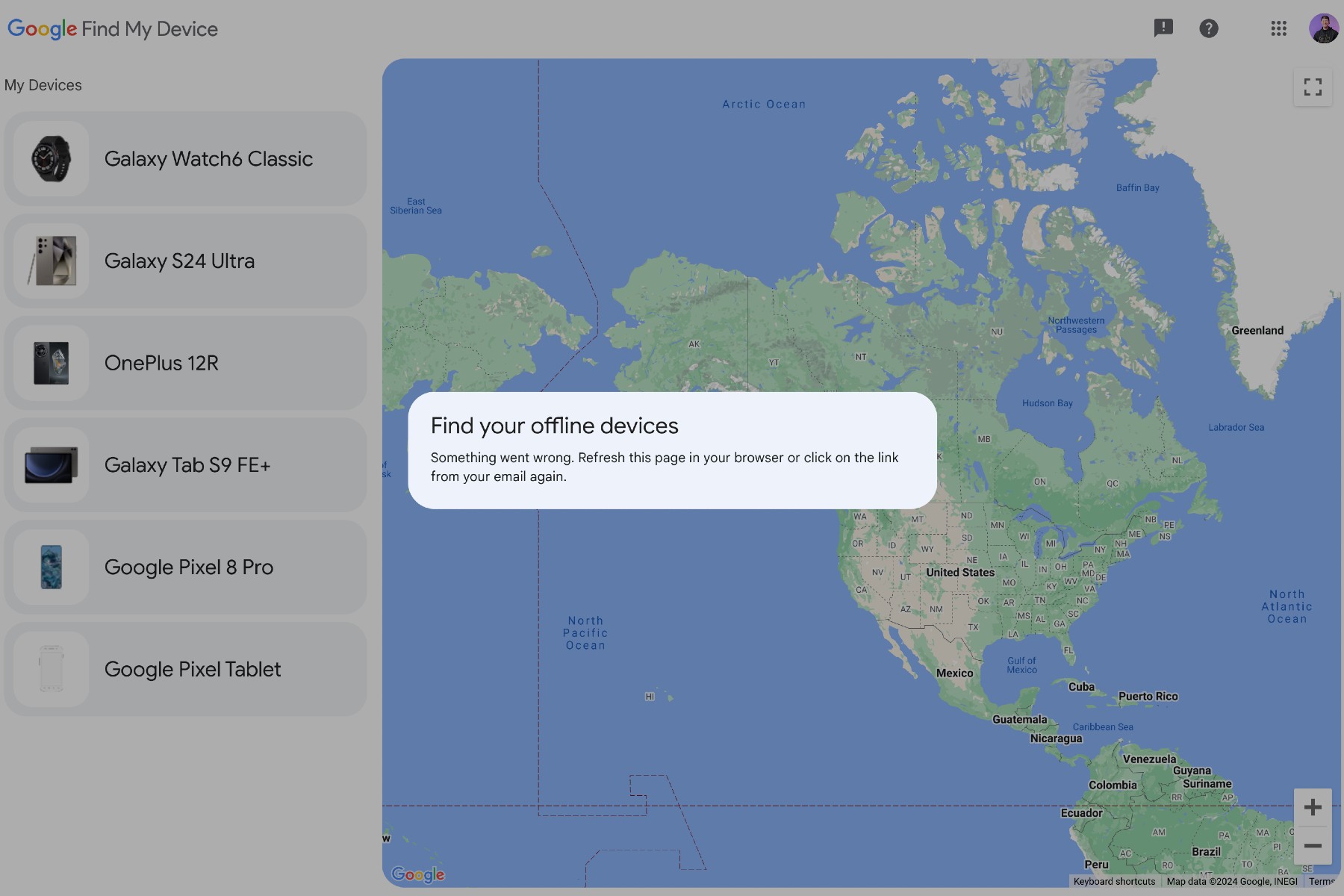
link included in the email that went out to users allows users to opt out of the network capabilities early. Sadly, this link appears to be account-based, as the above image is all that I was met with. Nothing special to be seen yet.

One of the big advantages of the latest Find My Device network will be the support for finding powered down devices, though, they’ll need to support the hardware required. We believe the Pixel 9 will launch with this feature, but it should also come to older Pixel devices as well once they are all running Android 15.

If you’re one of the people who has been waiting for this new network, it looks like we’re merely days away. Get excited.

// 9to5Google

Read the original post: Google’s Find My Device Network Launches Next Week

via Droid Life: A Droid Community Blog https://ift.tt/9lf8JXh

April 4, 2024 at 11:44AM

Android 15 Might Introduce Satellite-based Emergency Messaging

https://lifehacker.com/tech/satellite-messaging-reportedly-coming-to-google-messages-in-android-15

Google might be working on a beta version of its Google Messages app that supports satellite messaging, following in the footsteps of Apple, which already has a similar feature.

Within the beta version of Google Messages, version 20240329_01_RC00, 9to5Google pointed toward the following strings of text that indicate a forthcoming emergency messaging feature:

  • "To send and receive, stay outside with a clear view of the sky"

  • "Satellite messaging may take longer and can’t include photos & videos"

  • "You can message with anyone, including emergency services"

Apple’s version of satellite messaging, called Emergency SOS via satellite, lets you text emergency services or roadside assistance when you don’t have cellular or wifi coverage or can’t dial 911. It seems like Google’s implementation may work similarly to Apple’s.

The one thing that makes Google’s version of satellite messaging distinct, if the above strings do actually pan out, is that it seems like you can message other people in your contacts, not just emergency services. In theory, in an emergency, you could send a message via satellite to emergency services and also to your friends and family, so they know what’s going on.

We’ll learn more about this potential new feature in the coming months as Android 15 will most likely be released in the fall, sometime around the Google Pixel 9 series launch.

via Lifehacker https://ift.tt/dTWe1qs

April 3, 2024 at 05:47PM