A nerdy father of two, a husband of a beautiful and understanding wife, an engineer who loves anime and tinkering with PCs and games, but most of all, loves God.
A purchase at an urban Vietnamese fish market turned out to be a whole new species of giant isopod–with a bit of a dark side. The foot-long crustacean has been named Bathynomus vaderi and sports a head that resembles the iconic helmet of Darth Vader from the Star Wars. It is the first giant sea bug discovered in Vietnamese waters and is described in a study published January 14 in the journal ZooKeys.
Isopods are related to pillbugs seen on land and scientists estimate that there are about 10,000 species. Giant isopods of the genus Bathynomus can grow over 11 inches long, with the largest (Bathynomusgiganteus) believed to be almost 20 inches long. They are called b? bi?n or “sea bugs” in Vietnamese.
Nguyen Thanh Son holding a giant specimen of another species of giant isopod found in Vietnam (Bathynomus jamesi) that weighed 2.62 kg [5.7 pounds] from a seafood market in Hanoi, October 2024. CREDIT: Peter Ng.
In March 2022, a team from Hanoi University purchased four giant isopod individuals from a market in Quy Nh?n City. To identify these large crustaceans, the team in Hanoi collaborated with scientists from the National University of Singapore, the National Research and Innovation Agency Indonesia, and the Vietnam National University. By early 2023, the team realized that these giant isopods belonged to a species that had not been described by scientists.
Bathynomus vaderi is considered a supergiant isopod, reaching about 12.7 inches long and weighing over 2.2 pounds. Like other giant isopods, B. vaderi is a carnivore and is known to eat crab, shrimp, fish, sponges, squid, and munch on whale carcasses. So far, it has only been found near the Spratly Islands in Vietnam by fishers trawling for isopods. The team believes that additional research will confirm its presence in other parts of the South China Sea.
Giant isopods are also considered an expensive delicacy in Vietnam and other parts of Asia. Previously, they had only been sold as a bycatch project at low prices by local fishermen. Since 2017, media attention has put some spotlight on this strange seafood, with some claiming it’s even tastier than lobster. Their popularity has led to them being commercially fished by trawlers operating in various deep-water parts of the East Sea–the Vietnamese part of the South China Sea–and offshore of provinces in southcentral coastal Vietnam. They are often sold alive in markets in major cities and some restaurants will advertise the sale of these so-called “sea bugs.”
The discovery of this strange species also highlights just how little we know about the deep-sea. According to the team, a species this large remaining hidden for so long indicates that a lot of work must be done to fully understand what lives in Southeast Asia’s waters. A better understanding can help inform fisheries policies, as the potential for exploration for oil, gas, and minerals in the deep ocean continues to grow.
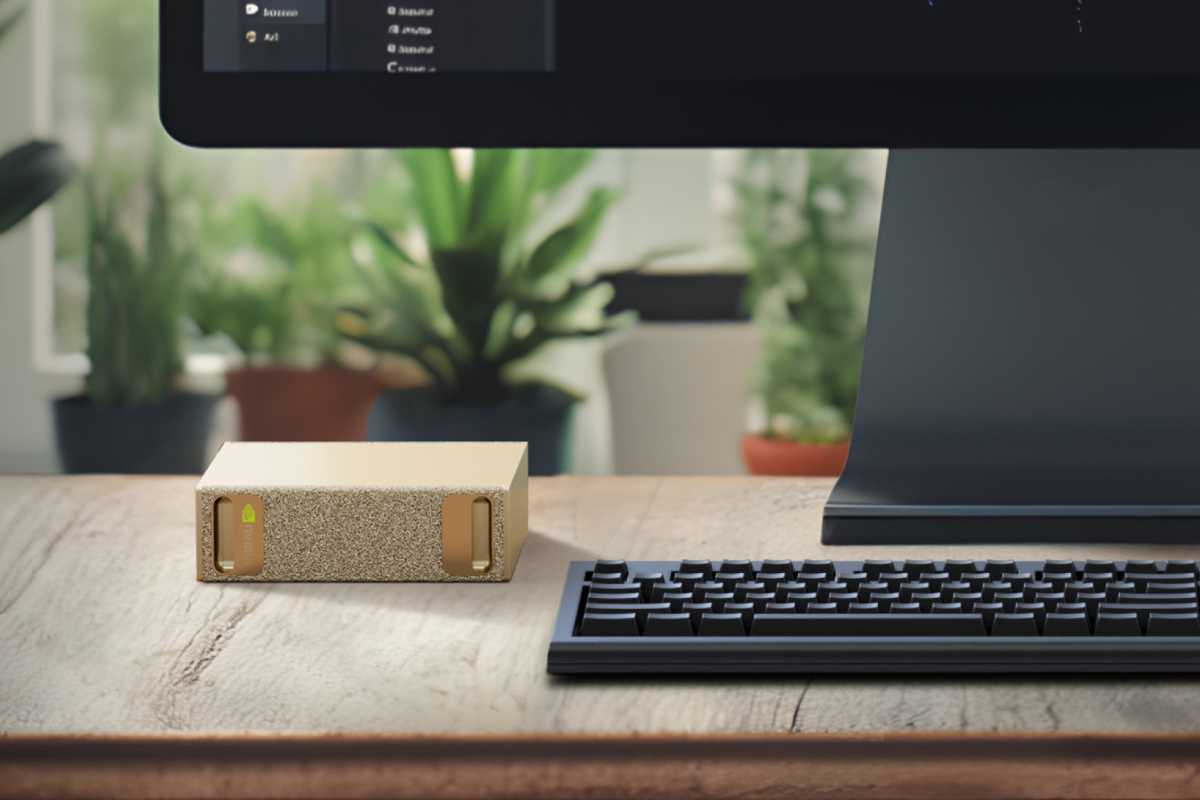
When I first saw that photo of Nvidia’s new Project Digits mini PC unveiled at CES 2025, I couldn’t help but notice the Apple influence — minimalist, sleek, next to a monitor that looks like Apple’s Studio Display.
Apple’s latest Mac Mini is revolutionary in many ways, delivering the company’s impressive M4 silicon in an efficient, affordable package. Windows PCs haven’t yet been able to reach the same level of design beauty and overall balanced unit.
Could Nvidia’s new Mac Mini-like small-form-factor AI supercomputer usher in a major disruption for Windows PCs? Let’s dive into Project Digits, what it is, and what it brings to the table for the future.
Project Digits: What it is and what it isn’t
It’s a little unfair to compare the Mac Mini and Nvidia’s Project Digits, mainly because they target vastly different users and markets. After all, the Mac Mini is for home users who just want to do some web browsing, media streaming, and maybe light content creation or gaming. And on the side, you have Apple Intelligence for AI in that ecosystem.
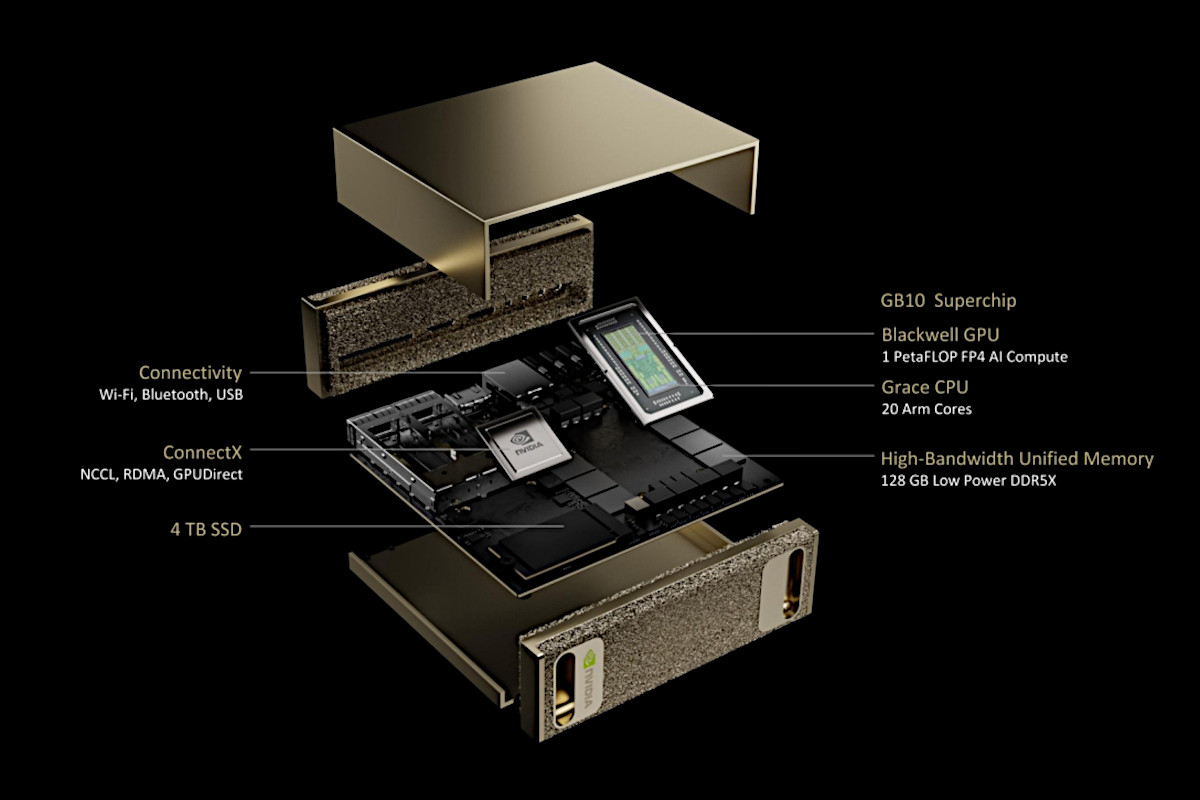
But then you have Project Digits, a powerhouse mini PC infused with the power of Nvidia’s Grace Blackwell GB10 Superchip. The idea here is to pack an AI supercomputer into a small chassis that’s usable by scientists, students, and AI researchers in a very focused manner. That’s reflected in its price: A whopping $3,000 that proves it’s meant to be more of a professional-level device. It launches around May 2025.
Project Digits runs on the GB10 Superchip, meant to run large language models (LLMs) with up to 200 billion parameters. If you connect two of them, they can together handle up to 405 billion parameters. It’s perfect for AI researchers and inference models.
The internal components in Nvidia’s Project Digits.
Nvidia
Yet while the built-in GPU is fine-tuned for AI with 128GB of unified memory, there’s no reason why Nvidia couldn’t adapt it for use in a Windows-like gaming PC in the future. Even now, Project Digits is already much more powerful than any traditional PC or laptop, with 1 petaflop of power. (For comparison, modern high-end gaming PCs only reach up to 10 teraflops — the equivalent of 0.01 petaflops.)
Mac Mini users could use their systems for some AI work, but most are just using them as personal computers for mundane, personal tasks. Imagine if Nvidia tuned Project Digits in that direction? As is, Project Digits is an enthusiast- and professional-level product, but what if Nvidia honed it to become like the Mac Mini? A consumer-grade PC with unprecedented power that’s even more revolutionary than the M4 Mac Mini.
Nvidia CEO Jensen Huang believes AI will go mainstream and make its way into virtually every industry and facet of human life. If he’s right about that, a small yet powerful AI supercomputer could be a game-changer, much like the smartphone was for everyday life. (I wouldn’t doubt Jensen Huang, who’s been a near-unparalleled visionary thus far.)
That’s it. That tiny thing is Nvidia’s Project Digits mini PC.
Nvidia
This means Nvidia would want its AI to have more personal applications for everyday consumers, not just for research or data center purposes. For now, Project Digits gives those who would normally be working in such environments the ability to bring their work home, and that’s one step closer to bringing AI into the personal home space.
Nvidia already meddles in the consumer market, of course. Just look at their GeForce RTX GPUs, which are the company’s DNA — and AI came after developing those graphics chips for gamers. So while Nvidia makes bank on data centers and AI, these applications aren’t the be-all and end-all for the company. Gaming remains important, and there remain plenty of other consumer markets — like this — that Nvidia could explore.
Project Digits could be a looming threat
Nvidia’s Project Digits mini supercomputer runs on Linux, not Windows. A strange choice, perhaps, considering that Nvidia is already intimately familiar with Windows drivers for its GPUs.
Could this be a sign that Nvidia wants to move away from Windows, at least in some capacity? Could it even mean that Nvidia wants to develop their own operating system, one that’s based on Unix (much like Linux and macOS are) and not Windows? This would be an Apple-like endeavor, paving the way for Nvidia to have complete control over their entire portfolio by way of in-house solutions.
In short, Microsoft should be terrified of SteamOS. It works well enough without Windows and it’s slowly converting Windows gamers over. The Steam Deck has been the big showcase for SteamOS for a while now, but with Valve opening it up to all kinds of other manufacturers, we’re undoubtedly going to see a big shift in years to come.
Now, to be clear, Nvidia has made no indication that they plan to do anything like this. All of this is speculation. But it would certainly make some sense for Nvidia to start forging their own path, detached from Windows and all its baggage. Nvidia has the capital and influence to make it happen, and they could easily argue that their AI and hardware are so bespoke that they need bespoke software solutions. In that case, Microsoft would have something greater than SteamOS to fear.
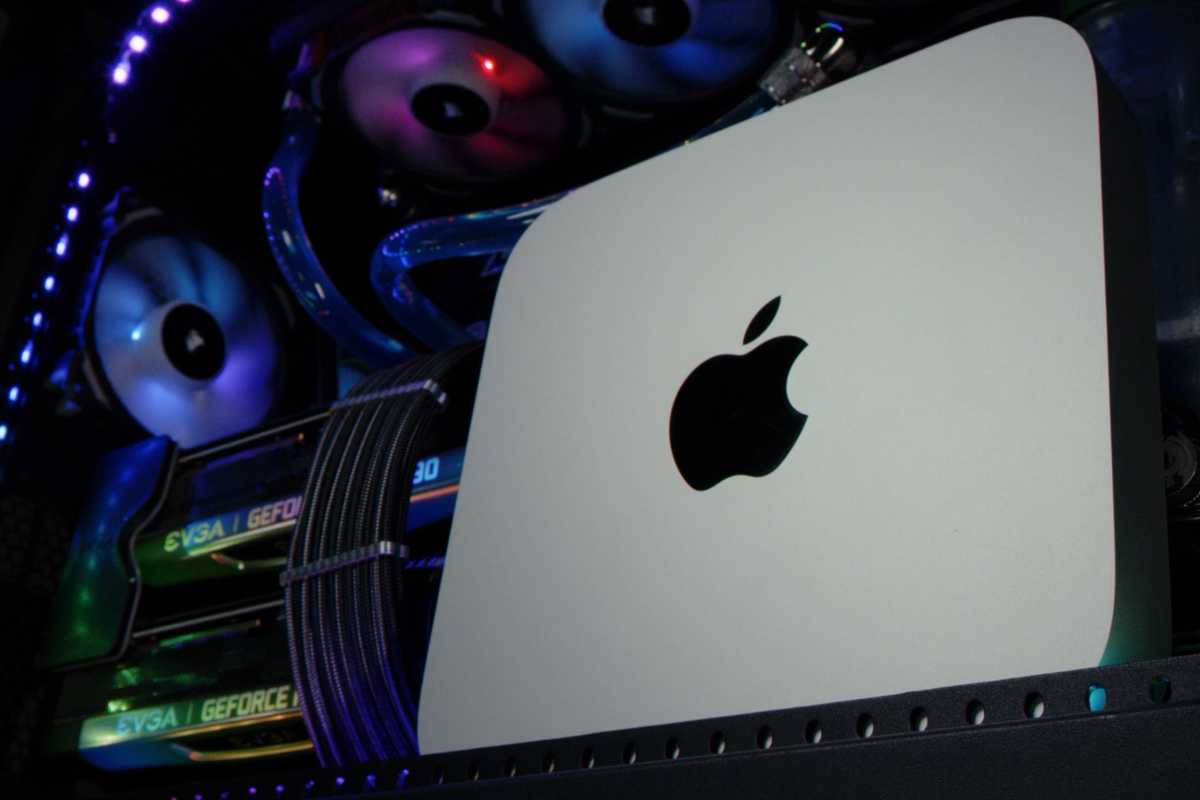
Mac Mini and Nvidia GeForce RTX GPUs. Will these worlds ever collide to form a Nvidia mini PC that offers the best of everything?
Thiago Trevisan / IDG
Indeed, I can see a possible near-future where Nvidia doesn’t just sell GPUs but entire mini PCs to their board partners. How does a superpowered Asus ROG Strix Project Digits mini PC sound? It could have a GPU, CPU, and NPU all packed into one tiny unit — and that would certainly feel like Apple’s silicon and tight integration of hardware.
But you never know. The future could be boring. Nvidia may well stick with Windows PCs and take the easier, simpler, well-trodden path. It’s not like they couldn’t do big things here, as Windows PCs need the power and tight integration that Nvidia’s hardware brings to the table. Rumors suggest Nvidia is working on an Arm-powered PC chip now that Qualcomm’s long-leaked Arm Windows exclusivity agreement has ended.
Imagine a small Windows PC the size of a Mac Mini but running on a superpowered chip that delivers RTX-grade graphics and next-gen AI performance. This is an area where even Apple hasn’t yet caught up to Nvidia, and a solid execution of such an idea would sway consumer markets to new form factors and possibilities.
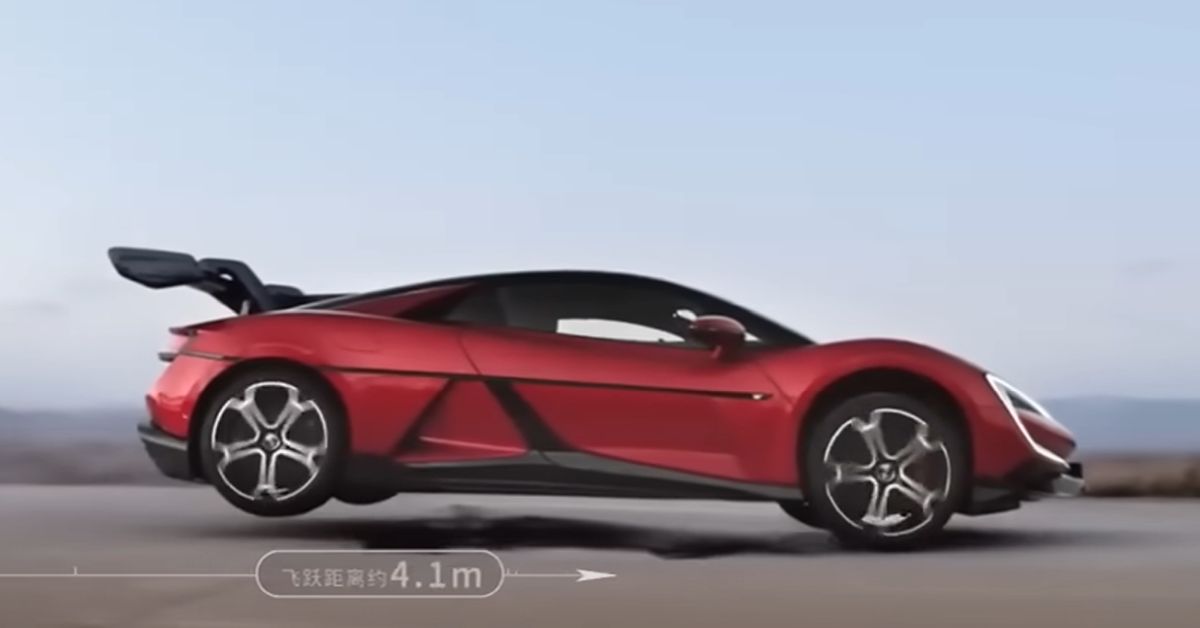
The Yangwang U9 is here, and it’s not just a self-driving supercar—it’s a superhero. This all-electric speed demon from BYD can hit 244 mph, making it China’s fastest production car. But forget speed for a second. The U9 can jump. Yes, jump.
In a video from CarNewsChina, this car hops over potholes, skips past caltrops, and finishes with a colorful leap through a rainbow of chalk powder, like it’s auditioning for a Fast & Furious/Mario Kart crossover. The secret? BYD’s DiSus-X Intelligent Body Control System, which lets the U9 dance, drive on three wheels, and perform stunts that scream, “Who needs practicality when you have flair?”
If this is the future of cars, sign us up—for the popcorn, at least.
As autonomous driving technology heats up, one name is emerging as the frontrunner: Nvidia. The California-based semiconductor giant is rapidly building partnerships and unveiling advanced tech that could give it the edge over competitors.
Tesla may be the name most people associate with self-driving cars, but Nvidia seems poised to challenge that dominance. At CES this week, CEO Jensen Huang announced a slew of new collaborations and tech innovations, including a groundbreaking approach to generative training data. These moves could make Nvidia the go-to company for anyone building autonomous vehicles.
For years, Nvidia has been a trusted partner for automakers developing self-driving software. At CES, the company doubled down on that role with new deals involving Toyota, Aurora, and Continental. These partnerships showcase Nvidia’s ability to power everything from driver-assistance systems to fully autonomous vehicles.
Take Toyota, for example. The automaker plans to use Nvidia’s DRIVE AGX Orin platform in its next-generation models to dramatically improve features like lane-keeping and adaptive cruise control while laying the groundwork for more advanced autonomy down the line. Then there’s Uber, which announced its partnership with Nvidia to develop self-driving tech using Nvidia’s AI systems and Uber’s massive pool of driving data. It’s a natural pairing that could accelerate the rollout of autonomous ride-hailing vehicles.
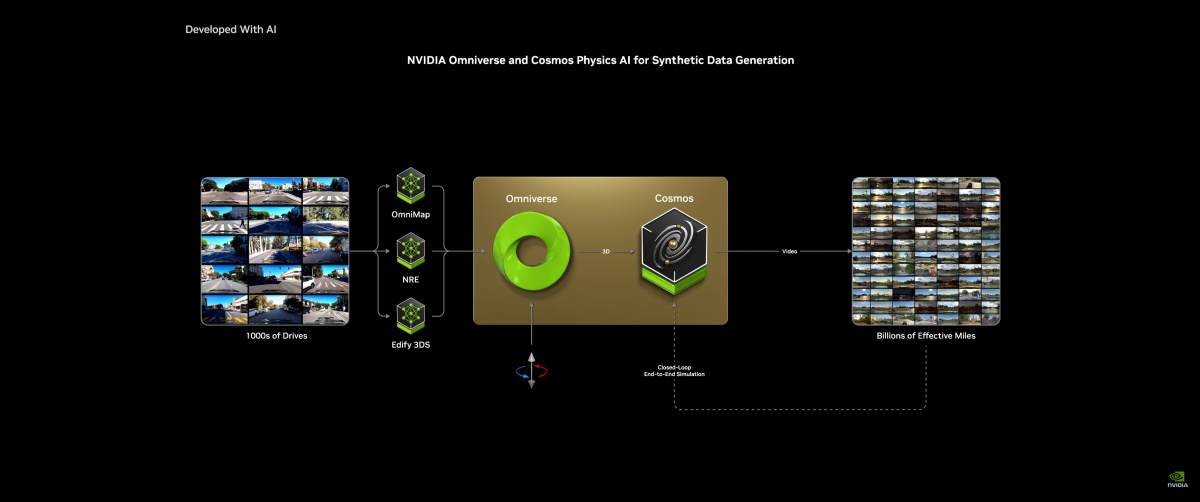
One of Nvidia’s standout innovations this year is its generative physical AI platform, Cosmos. Unlike Tesla, which relies on its fleet of real-world vehicles to gather data for training AI models, Nvidia’s Cosmos can create realistic, physics-based data in a virtual environment. This approach is a game-changer for automakers that don’t have millions of cars on the road collecting data.
Nvidia Omniverse and Cosmos physics AI for synthetic data integration
Nvidia
Here’s how it works: Cosmos uses a small sample of real-world data to generate massive amounts of synthetic driving scenarios. This simulated data can then be used to train AI systems on tasks like obstacle avoidance or merging into traffic. For companies new to the autonomous driving game, this levels the playing field and allows them to develop competitive systems without waiting years to collect enough real-world driving data.
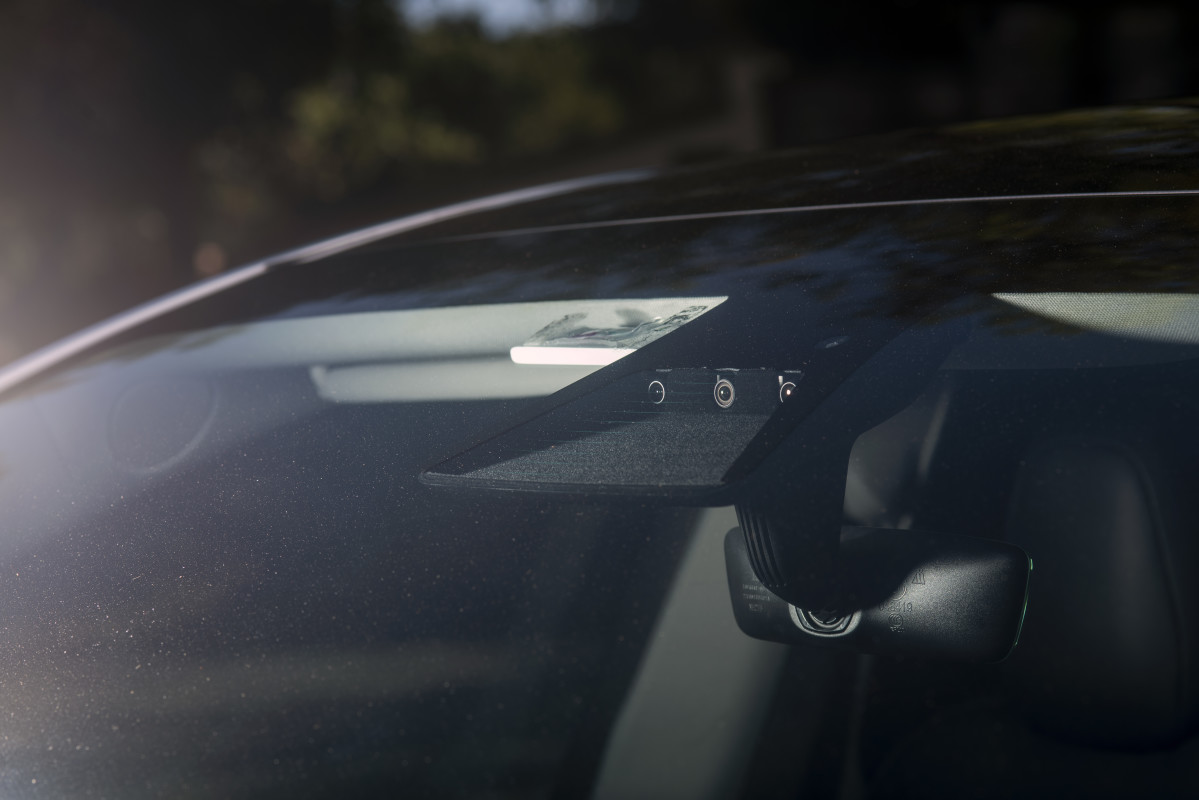
Tesla has built its self-driving tech around its own fleet, using data from millions of customer vehicles to refine its AI. It’s a powerful approach, but it has its limits. Tesla’s system relies heavily on cameras and avoids using lidar or radar, which some experts argue makes it less versatile in poor visibility conditions.
Tesla Model Y, equipped with FSD system. Three front facing cameras under windshield near rear view mirror.
Nvidia, by contrast, takes a multi-sensor approach. Its platforms integrate data from cameras, lidar, and radar to create a more comprehensive view of the road. This could make Nvidia-powered systems better at handling tricky scenarios, like driving in heavy rain or dense fog. And while Tesla’s fleet-first strategy locks its tech into its own vehicles, Nvidia’s open platforms can be adopted by any automaker—a key reason so many companies are partnering with them.
What makes Nvidia’s offering so appealing is the breadth of its ecosystem. The company doesn’t just make chips for in-car computers; it provides tools for every stage of autonomous vehicle development. Automakers can simulate millions of miles of driving in Nvidia’s Omniverse platform, then use the company’s DRIVE AGX Orin units to process real-time data on the road.
This one-stop-shop approach simplifies the process for automakers, who might otherwise have to cobble together solutions from multiple vendors. With Nvidia’s cloud-based training systems, companies can update their AI models remotely, ensuring vehicles stay ahead of the curve as technology evolves.
Synthetic data with real fallbacks
Despite its advantages, Nvidia isn’t without challenges. While generative data is incredibly promising, it still needs validation in the real world to prove its reliability. Tesla’s data, collected from actual driving scenarios, has an inherent credibility that synthetic data doesn’t yet match. Nvidia will need to demonstrate that its virtual training models can produce results that are just as safe and effective as real-world data.
Additionally, the autonomous driving market is fiercely competitive. While Nvidia has made significant inroads, it’s up against established players like Tesla and new entrants with deep pockets and bold ambitions.
Nvidia’s growing list of partners—including Mercedes-Benz, Volvo, and BYD—suggests that the company is well-positioned to dominate the autonomous driving market. The fact that even Chinese automakers like BYD, who have become increasingly independent in their vehicle development, still use Nvidia’s tech is a testament to the company’s reach. Analysts estimate Nvidia’s automotive business could hit $5 billion in revenue by 2026, driven by increasing adoption of its platforms across the industry.
Final thoughts
For now, the battle for autonomous driving supremacy is shaping up to be a two-horse race between Tesla and Nvidia. Tesla’s head start in data collection and brand recognition makes it a formidable competitor. However, Nvidia’s scalable, sensor-agnostic approach could make it the preferred choice for automakers looking to get autonomous vehicles on the road quickly and effectively.
Whether Nvidia can maintain its momentum remains to be seen but with its innovative tech and growing influence, the company is setting the pace for the future of self-driving cars.
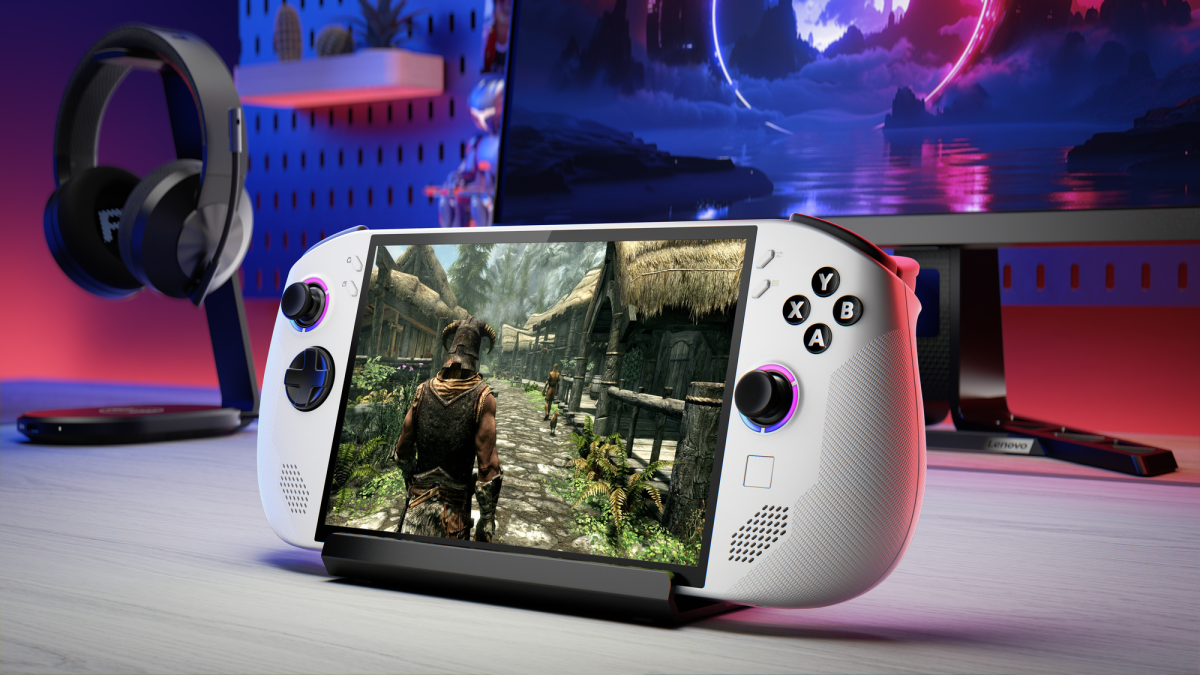
It’s official: Valve’s SteamOS will be available on more platforms soon, and the first handheld PC gaming device to adopt the operating system will be the new Lenovo Legion Go S. At CES 2025, it was revealed that the slim Lenovo unit will run on the Linux-based OS–, the same one used on Valve’s Steam Deck.
Lenovo Legion Go S
The big draw here is that SteamOS is more intuitive to use and better suited for smaller screens when compared to its Windows 11 counterparts. While you are losing out on the flexibility of being able to load games from multiple storefronts, SteamOS makes up for it by being quick and easy to use thanks to its design. Essentially, if you’re looking for a pick-up-and-play handheld gaming PC that isn’t a chore to use and you don’t mind sticking to Steam, these new Lenovo devices could be perfect for you.
As for the new Lenovo model, the Legion Go S looks like it’ll be a direct competitor to the Steam Deck thanks to several hardware changes. Most notable is that it won’t offer Switch-like removable controllers, but it will keep the small trackpad found underneath the face buttons. These handhelds will be flexing some impressive power thanks to the new AMD Z2 Go chip. These will also be equipped with a 120Hz variable-refresh-rate display and customizable levers on the rear.
Did you get enough about Qualcomm’s Snapdragon X chips in 2024? To start off 2025, the chipmaker known for finally bringing ARM to PC—and usable this time—now aims to carve a niche in the cheap laptop or mini-PC market. The new Snapdragon X platform isn’t plus and it isn’t elite, although if you want to get your mother a ARM-based small PC for nothing but browsing and streaming, this could be your first CPU of choice..
The current staple of Oryon-based Snapdragon X Elite and X Plus chips include an 8-core variant. The Snapdragon X has the same number of cores, though it’s dialed back to 3 GHz clock speeds on the same 4nm processor node and a 30 MB cache. It has a 135 mb/s memory bandwidth but maintains the same 45 TOPS neural processor as the other Snapdragon PC CPUs.
Does the NPU really matter so much when its made for a PC that has a limited amount of onboard RAM? Likely not. The Snapdragon X is more meant to compete against other, low-end CPUs like the Intel Core Ultra 5 120U from early last year. Qualcomm claims its new chip is capable of close to 60% better benchmarks in Geekbench 6 and Cinebench 2024, though for a low-end PC the most important thing is how it handles browsing tasks with better power efficiency. Qualcomm claimed it should get 157% better power efficiency at ISO power than the last-gen Intel chip.
Intel just released new CPUs for both its Lunar Lake and Arrow Lake lineup, including a new U line. Without benchmark comparisons, all we have to go off is the company’s specs. Otherwise, the Snapdragon X supports Bluetooth 5.4 and WiFi 7. Devices with this chip should be able to support 4K HDR video capture and HiFi audio.
There should be several OEMs debuting new Snapdragon X-based PCs during this year’s CES. Lenovo is first out the gate with two mini-PCs, the ThinkCentre neo 50q QC and Lenovo IdeaCentre Mini x (1L, 10). Both include the Snapdragon X Plus, though the IdeaCentre is geared more toward creatives looking for a Mac mini alternative.
For as long as humans have suffered at the hands of the storms they have dreamed of controlling the weather. The United States, like all great empires lost to hubris, has long sought to manipulate the skies to its own ends. A new Federal report has revealed America sucks at it.
The report comes from the Government Accountability Office (GAO), a nonpartisan watchdog group that investigates the U.S. government. It’s narrowly focused on “cloud seeding,” the practice of adding silver iodide crystals to clouds to make them bust and give up that sweet sweet rain. As droughts hit the western states on a routine basis, many local governments are attempting to use cloud seeding to bring the rains.
It’s not working well. The GAO conceded there’s some validity to cloud seeding, but that it’s almost impossible to measure its effectiveness. “Cloud seeding may increase water availability and result in economic, environmental, and human health benefits. In the studies GAO reviewed, estimates of the additional precipitation ranged from 0 to 20 percent,” the report said. “However, it is difficult to evaluate the effects of cloud seeding due to limitations of effectiveness research.”
The idea of seeding clouds with something to make them rain started in the late 19th century but wasn’t studied and perfected until after World War II. “Scientists demonstrated the basis of cloud seeding in the 1940s when they observed in the laboratory that water present in clouds could be artificially induced to create ice crystals using dry ice or silver iodide crystals,” the GAO said in its report. “Extensive federal funding of research and development, including field experimentation, followed this discovery. For example, in fiscal year 1978, total federal funding for weather modification was approximately $68 million, in 2024 dollars.”
Scientists could never quite prove it worked. Or, if it did, how effective the seeding was. In the 1980s, the federal government slashed cloud seeding funds. These days, most cloud seeding schemes are local affairs. According to the GAO, nine states (California, Colorado, Idaho, Nevada, New Mexico, North Dakota, Texas, Utah, and Wyoming) are seeding the clouds.
Methods and specifics of seeding differ greatly between countries and even states. It can be done from an aircraft flying above or through a cloud system, or from a large cannon on the ground that pumps particulates into the air. It’s often done with silver iodide, but sodium chloride, dry ice, liquid propane, and other salts are used too.
The GAO report is a list of the limitations of the tech. Utah alone is dumping $12 million a year into seeding the clouds without too much to show for it. It’s hard to estimate how much it would have rained without cloud seeding, so there’s not a great way to make a control group for any study. It’s also hard to know how much the seeding affected rainfall in a specific area. Many previous studies of seed-based rainfall showed results that weren’t statistically significant.
“While one study found an average increase in precipitation of 3 percent across 118 randomized cases, this effect was not statistically distinguishable from zero,” the GAO said. “One study reported an average precipitation increase of 3 percent between 1977 and 2018 across nine cases, but the statistical results could not conclusively determine an effect from cloud seeding in seven of the cases.”
The GAO also noted that no one knows what pumping silver iodine crystals and other particulates into the clouds to generate rain does to flora and fauna on the ground. More water in dry areas is, generally, better. But changing the water levels in delicate and complicated ecosystems can have unintended consequences. “One stakeholder said it is not clear if cloud seeding could improve fish outcomes through higher water levels and lower water temperatures, and it is uncertain how increased soil moisture from cloud seeding might translate into healthier, less dry forests with reduced susceptibility to wildfires.”
Silver iodine appears non-toxic in small doses, but the science is far from settled. “Silver iodide is nearly insoluble in water,” the report said. “However, when it dissolves it releases a small number of silver ions. In high enough quantities, silver ions—a known antimicrobial substance—could have harmful effects on beneficial bacteria in the environment and water resources.”
The GAO also called out another problem with cloud seeding programs: conspiracy theories. Government weather control has long been a feature of conspiracy theories. It’s a popular topic for Alex Jones and gained prominence this year after Georgia GOP rep Marjorie Taylor Greene spread it around following Hurricane Helene.
This has led some lawmakers to view cloud seeding as a threat. Tennessee lawmakers passed a bill in April that banned all forms of cloud seeding in the state. In interviews with media, the Tennessee lawmakers said they’d taken the action to prevent chemtrails in the skies. A ban on cloud seeding will do nothing to prevent chemtrails, which are just the plumes of condensation and exhaust aircraft leave in their wake.