Hurricane forecasters are losing 3 key satellites ahead of peak storm season ? a meteorologist explains why it matters

https://www.space.com/astronomy/earth/hurricane-forecasters-are-losing-3-key-satellites-ahead-of-peak-storm-season-a-meteorologist-explains-why-it-matters

This article was originally published at The Conversation. The publication contributed the article to Space.com’s Expert Voices: Op-Ed & Insights.

About 600 miles off the west coast of Africa, large clusters of thunderstorms begin organizing into tropical storms every hurricane season. They aren’t yet in range of Hurricane Hunter flights, so forecasters at the National Hurricane Center rely on weather satellites to peer down on these storms and beam back information about their location, structure and intensity.

The satellite data helps meteorologists create weather forecasts that keep planes and ships safe and prepare countries for a potential hurricane landfall.

Now, meteorologists are about to lose access to three of those satellites.

On June 25, 2025, the Trump administration issued a service change notice announcing that the Defense Meteorological Satellite Program, DMSP, and the Navy’s Fleet Numerical Meteorology and Oceanography Center would terminate data collection, processing and distribution of all DMSP data no later than June 30. The data termination was postponed until July 31 following a request from the head of NASA’s Earth Science Division.

I am a meteorologist who studies lightning in hurricanes and helps train other meteorologists to monitor and forecast tropical cyclones. Here is how meteorologists use the DMSP data and why they are concerned about it going dark.

Looking inside the clouds

At its most basic, a weather satellite is a high-resolution digital camera in space that takes pictures of clouds in the atmosphere.

Get the Space.com Newsletter

Breaking space news, the latest updates on rocket launches, skywatching events and more!

These are the satellite images you see on most TV weather broadcasts. They let meteorologists see the location and some details of a hurricane’s structure, but only during daylight hours.

Meteorologists can use infrared satellite data, similar to a thermal imaging camera, at all hours of the day to find the coldest cloud-top temperatures, highlighting areas where the highest wind speeds and rainfall rates are found.

But while visible and infrared satellite imagery are valuable tools for hurricane forecasters, they provide only a basic picture of the storm. It’s like a doctor diagnosing a patient after a visual exam and checking their temperature.

An infographic showing all the weather satellites orbiting Earth in 2016. (Image credit: NOAASatellites via Wikimedia Commons)

For more accurate diagnoses, meteorologists rely on the DMSP satellites.

The three satellites orbit Earth 14 times per day with special sensor microwave imager/sounder instruments, or SSMIS. These let meteorologists look inside the clouds, similar to how an MRI in a hospital looks inside a human body. With these instruments, meteorologists can pinpoint the storm’s low-pressure center and identify signs of intensification.

Precisely locating the center of a hurricane improves forecasts of the storm’s future track. This lets meteorologists produce more accurate hurricane watches, warnings and evacuations.

Hurricane track forecasts have improved by up to 75% since 1990. However, forecasting rapid intensification is still difficult, so the ability of DMPS data to identify signs of intensification is important.

About 80% of major hurricanes – those with wind speeds of at least 111 mph (179 kilometers per hour) –rapidly intensify at some point, ramping up the risks they pose to people and property on land. Finding out when storms are about to undergo intensification allows meteorologists to warn the public about these dangerous hurricanes.

Where are the defense satellites going?

NOAA’s Office of Satellite and Product Operations described the reason for turning off the flow of data as a need to mitigate “a significant cybersecurity risk.”

The three satellites have already operated for longer than planned.

The DMSP satellites were launched between 1999 and 2009 and were designed to last for five years. They have now been operating for more than 15 years. The United States Space Force recently concluded that the DMSP satellites would reach the end of their lives between 2023 and 2026, so the data would likely have gone dark soon.

A graphic of the GOES-I, the first US weather satellite in space. Originally called GOES-8 until its successful launch on April 13, 1994 when it became operational. (Image credit: NOAA Photo Library via Wikimedia Commons)

Are there replacements for the DMSP satellites?

Three other satellites in orbit – NOAA-20, NOAA-21 and Suomi NPP – have a microwave instrument known as the advanced technology microwave sounder.

The advanced technology microwave sounder, or ATMS, can provide data similar to the special sensor microwave imager/sounder, or SSMIS, but at a lower resolution. It provides a more washed-out view that is less useful than the SSMIS for pinpointing a storm’s location or estimating its intensity.

The U.S. Space Force began using data from a new defense meteorology satellite, ML-1A, in late April 2025.

ML-1A is a microwave satellite that will help replace some of the DMSP satellites’ capabilities. However, the government hasn’t announced whether the ML-1A data will be available to forecasters, including those at the National Hurricane Center.

Why are satellite replacements last minute?

Satellite programs are planned over many years, even decades, and are very expensive. The current geostationary satellite program launched its first satellite in 2016 with plans to operate until 2038. Development of the planned successor for GOES-R began in 2019.

Similarly, plans for replacing the DMSP satellites have been underway since the early 2000s.

Delays in developing the satellite instruments and funding cuts caused the National Polar-orbiting Operational Environmental Satellite System and Defense Weather Satellite System to be canceled in 2010 and 2012 before any of their satellites could be launched.

The 2026 NOAA budget request includes an increase in funding for the next-generation geostationary satellite program, so it can be restructured to reuse spare parts from existing geostationary satellites. The budget also terminates contracts for ocean color, atmospheric composition and advanced lightning mapper instruments.

A photo of a severe storm over Chicago taken by the GOES East NOAA satellite. (Image credit: NOAA)

A busy season remains

The 2025 Atlantic hurricane season, which runs from June 1 to Nov. 30, is forecast to be above average, with six to 10 hurricanes. The most active part of the season runs from the middle of August to the middle of October, after the DMSP satellite data is set to be turned off.

Hurricane forecasters will continue to use all available tools, including satellite, radar, weather balloon and dropsonde data, to monitor the tropics and issue hurricane forecasts. But the loss of satellite data, along with other cuts to data, funding and staffing, could ultimately put more lives at risk.

This article is republished from The Conversation under a Creative Commons license. Read the original article.

via Latest from Space.com https://www.space.com

July 27, 2025 at 07:04AM

Sam Altman Is Right: AI-Powered Crypto Scams Are Exploding

https://gizmodo.com/sam-altman-is-right-ai-powered-crypto-scams-are-exploding-2000635802

Finally, a profession that has managed to successfully integrate artificial intelligence into its workflow: Crypto scammers. According to a report from blockchain intelligence firm TRM Labs, crypto scams are up 456% over the last year, due in large part to the ability to produce deepfake audio and video clips with artificial intelligence tools—making good on OpenAI CEO Sam Altman’s recent prediction/warning that a fraud crisis is just around the corner.

There’s no doubt the fraud situation is getting bad. The FBI said it received about 150,000 fraud complaints related to cryptocurrency scams in 2024, with people reporting having lost over $3.9 billion in total. Globally, that figure skyrockets to $10.7 billion according to TRM Labs data. You can go ahead and round those figures way up, too. Speaking to the New York Post, Ari Redbord, the Global Head of Policy at TRM Labs, said that only about 15% of victims actually report these crimes.

These scams are a leveling up of the so-called pig butchering attacks that have become popular in recent years because they don’t just take advantage of people via text. AI now allows scammers to create realistic-looking and sounding audio and video that can trick a person into thinking they are talking to someone real—potentially even a loved one or familiar face. TRM Labs warned that as AI models gain agentic abilities that allow them to interface with things like email and other apps, the process of scamming is going to get automated and a lot more prevalent.

Last week, Sam Altman started ringing the alarm bells on the same problem—though he’s not just worried about scammers taking advantage, but rather the entirety of our existing security apparatus getting defeated. While speaking at a banking regulatory conference, Altman said that AI has already “fully defeated” most authentication services that humans rely on to verify their identity and access their sensitive accounts.

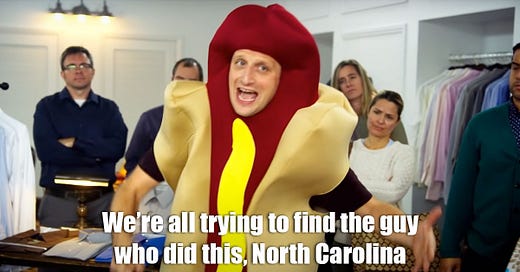
“Society has to deal with this problem more generally,” Altman said, presumably while dressed in a hot dog suit and shouting, “We’re all trying to find the guy who did this.” To that end, Altman’s own company announced earlier this month that it was releasing a ChatGPT Agent that could effectively interact with a computer the same way a human can, switching between apps and completing multi-step tasks that require doing things like logging into different accounts and making decisions.

Altman’s warning of a scam apocalypse seems to have shades of the general warnings that AI execs have been offering about the potential risk of artificial general intelligence, ie, “This could be really bad, but we are absolutely not going to stop.”

via Gizmodo https://gizmodo.com/

July 28, 2025 at 03:42PM

Google adds Video Overviews to NotebookLM

https://www.engadget.com/ai/google-adds-video-overviews-to-notebooklm-181524866.html?src=rss

NotebookLM, the Google research tool that gained notoriety for its AI-generated podcasts, is introducing a feature called Video Overviews. As the name suggests, this tool automatically creates videos on requested topics and pulls data from a user’s uploaded images, diagrams, quotes and documents.

It’s rolling out right now, but there are some caveats. These overviews are only available in English, though Google says more languages are on the way. Also, the tool doesn’t make videos in a conventional sense. It creates slideshows with narration.

Despite this limitation, the company says the feature is "uniquely effective for explaining data, demonstrating processes and making abstract concepts more tangible." Google also says it’ll be expanding the toolset in the future, so it won’t always be just a slideshow machine.

Video Overviews do currently offer some handy playback options. There’s the ability to skip back and forth by 10 seconds and adjust the playback speed. The company is also updating NotebookLM’s Studio tab. It’s getting a visual refresh, which rolls out "over the next few weeks" to all users.

Google has certainly been busy iterating on the platform these past few months. It released an official NotebookLM app back in May and began offering curated "featured notebooks" earlier this month. This lets users experiment with the platform with pre-approved topics like William Shakespeare, so newbies won’t have to actually upload anything. Audio-only overviews are also now available in over 50 languages

This article originally appeared on Engadget at https://ift.tt/N14RWaK

via Engadget http://www.engadget.com

July 29, 2025 at 01:24PM

Dental Floss Has Potential to Deliver Vaccines, Replacing Needles or Nasal Sprays

https://www.discovermagazine.com/health/dental-floss-has-potential-to-deliver-vaccines-replacing-needles-or-nasal

A new vaccine administration method doesn’t rely on needles or sprays to deliver the vaccine, but on dental floss. 

Publishing their findings in Nature Biomedical Engineering, a research team tested the vaccine-coated dental floss on animals, introducing the vaccine through the gums and other tissue in the mouth. The study results indicated that this helped produce antibodies in the mucosal surfaces of the lungs and nose. 

“[It] would be easy to administer, and it addresses concerns many people have about being vaccinated with needles,” said Harvinder Singh Gill, corresponding author of a paper on the work in a press release. “And we think this technique should be comparable in price to other vaccine delivery techniques."

Introducing Vaccines to the Body

For this study, the researchers knew they needed to focus on junctional epithelium. This refers to the tissues that line our organs and other body parts, such as the stomach, lungs, and intestines. Most of these epithelia are designed to keep foreign invaders, like viruses, bacteria, and even dirt, from entering the bloodstream. However, that’s not the case for junctional epithelium.

The deep tissues between your tooth and gums lack the same protection that other epithelia have. Because of this, junctional epithelium can release immune cells that fight bacteria.

“Because the junctional epithelium is more permeable than other epithelial tissues — and is a mucosal layer — it presents a unique opportunity for introducing vaccines to the body in a way that will stimulate enhanced antibody production across the body’s mucosal layers,” said Gill in the press release.


Read More: Olive Oil Revolutionizes COVID-19 Vaccine, CRISPR Gene Editing, and Cancer Treatments


Testing Vaccinated Dental Floss 

In the lab, researchers added a peptide flu vaccine to unwaxed dental floss and used it to floss mice’s teeth. They compared the antibody production in mice that received the vaccine via nasal spray and drops under the tongue. 

“We found that applying vaccine via the junctional epithelium produces far superior antibody response on mucosal surfaces than the current gold standard for vaccinating via the oral cavity, which involves placing vaccine under the tongue,” said Rohan Ingrole, first author of the paper and Ph.D. student under Gill at Texas Tech University, in a press release. “The flossing technique also provides comparable protection against flu virus as compared to the vaccine being given via the nasal epithelium.”

Delivering a vaccine in this manner could be revolutionary, potentially improving vaccine safety. 

“This is extremely promising, because most vaccine formulations cannot be given via the nasal epithelium — the barrier features in that mucosal surface prevent efficient uptake of the vaccine,” Gill said in a press release. “Intranasal delivery also has the potential to cause the vaccine to reach the brain, which can pose safety concerns. However, vaccination via the junctional epithelium offers no such risk.”

Delivery via Floss Pick 

Though the dental floss method proved effective, the research team knew that asking patients to hold vaccine-coated floss wasn’t practical. Instead, the team shifted towards floss picks — small, pronged applicators with a short piece of floss strung between the prongs. 

To test the effectiveness of the floss pick, the team added a fluorescent dye to it and asked 27 study participants to administer the vaccine to the junctional epithelium between the gums. 

“We found that approximately 60 percent of the dye was deposited in the gum pocket, which suggests that floss picks may be a practical vaccine delivery method to the epithelial junction,” Ingrole said in a press release. 

Gill and the research team believe that these results could soon lead to the method being moved into clinical trials, although many questions remain unanswered. Overall though, the team thinks this could be an improved vaccine delivery method. 

"In addition, we would need to know more about how or whether this approach would work for people who have gum disease or other oral infections,” Gill said in the press release.

There’s still more to learn about this method, but it could change the way we see vaccines and dental floss.

This article is not offering medical advice and should be used for informational purposes only


Read More: Vaccines, Not Supplements, Remain the Best Way to Fight Measles


Article Sources

Our writers at Discovermagazine.com use peer-reviewed studies and high-quality sources for our articles, and our editors review for scientific accuracy and editorial standards. Review the sources used below for this article:


A graduate of UW-Whitewater, Monica Cull wrote for several organizations, including one that focused on bees and the natural world, before coming to Discover Magazine. Her current work also appears on her travel blog and Common State Magazine. Her love of science came from watching PBS shows as a kid with her mom and spending too much time binging Doctor Who.

via Discover Main Feed https://ift.tt/vHblPjy

July 29, 2025 at 04:46PM

Americans Are Obsessed With Watching Short Video Dramas From China

https://www.wired.com/story/china-reel-short-dramas-video-social-media/

My partner recently confessed something to me about his screen-time habits: When he’s giggling at his phone, he’s often watching short English-language soap operas that have begun showing up on his social feeds. The plots are basic, the acting is exaggerated, and the performers are stereotypically good-looking, but the constant twists and turns keep him spellbound and wanting more.

via Wired Top Stories https://www.wired.com

July 24, 2025 at 02:07AM

Use This App to Turn Any Windows PC Into an Airplay Server

https://lifehacker.com/tech/turn-windows-pc-into-airplay-server

You’ve got a video on your iPhone and a computer across the room. Can you quickly show the video on it? If the computer in question is a Mac, yes—just use Airplay. Windows computers, sadly, don’t have this feature.

Unless, that is, you install Air Screen Mirror Receiver. This application turns any Windows computer into an Airplay-compatible host, meaning you can stream the screen of your Apple devices—both video and audio—onto your PC. Install and launch the application and you’ll see some details about your new Airplay server.

A screenshot of Air Screen Mirror Receiver, complete with the server's name, IP address, and audio settings.

Credit: Justin Pot

You can change the name, if you like, and choose which speakers you’d like to use. Now, on your Apple device, open the Control Center and tap the screen mirroring button, which looks like two overlapping rectangles. If you’re on the same wifi network as your PC you should see it as an option. Tap it and the screen will start streaming to the Air Screen Mirror Receiver. You can now play whatever video you were hoping to share.

A segment from the most recent season of Taskmaster casted from iPhone to PC

Credit: Justin Pot

Your iPhone or iPad’s display will show up inside the application’s window. I recommend using the full screen button, which essentially turns your PC into a full-blow Airplay receiver. This is perfect for watching videos—I tested this with YouTube for a while and found it worked perfectly. It’s also great for showing off photos on your phone with a group of people. It could also be useful for presentations, assuming there’s a PC already connected to the TV or projector and you’ve got the presentation handy on your phone.

The application works for free, though there is a watermark applied for 30-seconds every five minutes. You can remove this watermark for $4, if it annoys you—it’s also a good way to support the developer. I’ve been looking for a tool like this for a while and this seems to be the best affordable option.

via Lifehacker https://ift.tt/ivaTxQs

July 24, 2025 at 08:51AM

Breakthrough Hydrogen Fuel Production Uses 3 Unlikely Ingredients

https://www.autoblog.com/news/breakthrough-hydrogen-fuel-production-uses-3-unlikely-ingredients

Engineering experts get ‘in the ballpark’ of green hydrogen

Researchers at the Massachusetts Institute of Technology (MIT) have found a way to produce hydrogen gas with a smaller carbon footprint by combining recycled soda cans with seawater and caffeine. Most current methods for hydrogen fuel production are less eco-friendly due to their reliance on fossil fuels, but MIT’s study found that its alternative manufacturing process could be applied at an industrial scale.

The team of researchers calculated the carbon emissions associated with sourcing and processing aluminum, reacting it with seawater for hydrogen production, and transporting it to fuel stations. They found that for every kilogram of hydrogen produced, the process would generate 1.45 kilograms of carbon dioxide over its entire life cycle, 9.55 kilograms fewer than traditional fossil-fuel-based methods. One kilogram of hydrogen can take a hydrogen fuel cell car 37 to 62 miles on average, and the team calculated the cost of their fuel production method as $9 per kilogram.

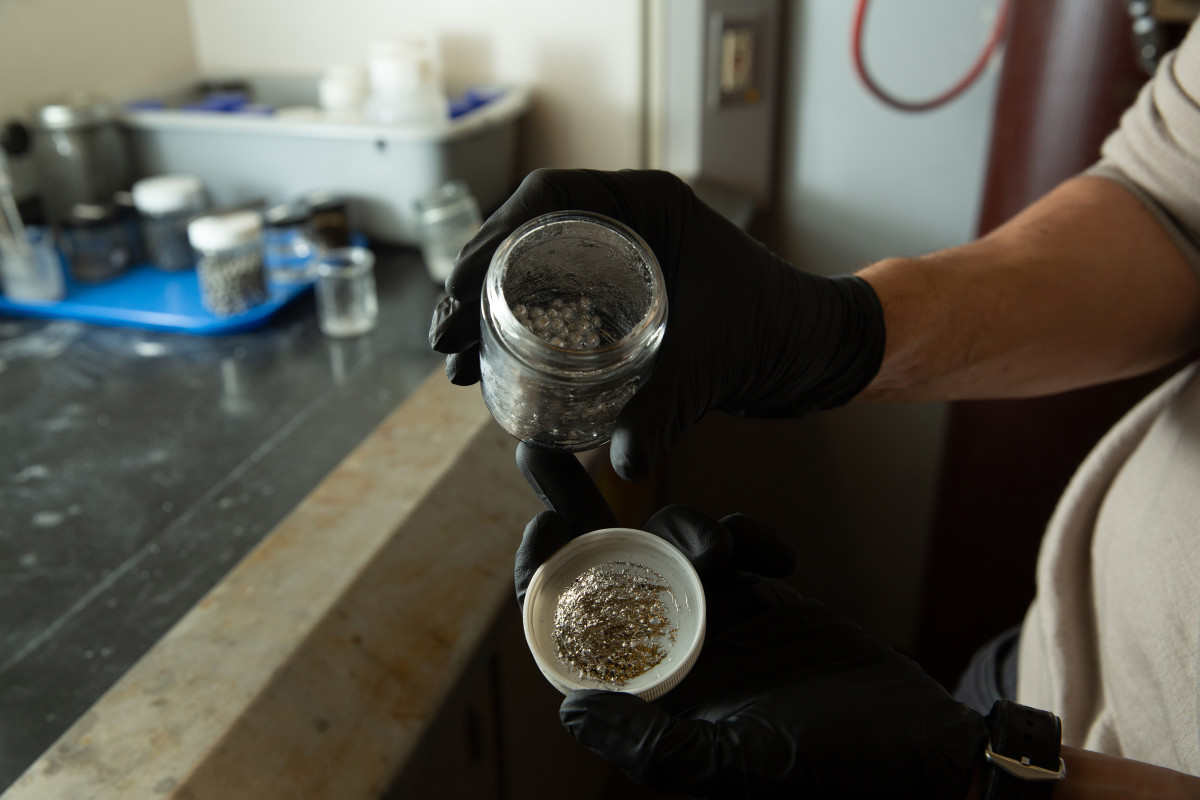
The new process starts with pellets of recycled aluminum (in jar) that react with seawater to produce pure hydrogen. The team found that if scaled up, the process could generate “green” hydrogen with a low-carbon footprint.

Tony Pulsone? MIT MechE

The study’s assessments centered on using recycled aluminum, as it saves a significant amount of emissions compared to mining for aluminum. Salt in seawater proved valuable due to its ability to sustainably precipitate gallium-indium, a rare-metal alloy that effectively removes aluminum’s protective oxide layer, exposing pure metal that produces hydrogen when combined with seawater. The researchers were unable to source gallium-indium from regular water, as oxygen causes aluminum to instantly form a shield-like layer that won’t readily cause a reaction, which caffeine helped speed up.

Dr. Aly Kombargi, a recent MIT mechanical engineering graduate who was the study’s lead author, said in a release from the university: “We’re in the ballpark of green hydrogen. One of the main benefits of using aluminum is the energy density per unit volume. With a very small amount of aluminum fuel, you can conceivably supply much of the power for a hydrogen-fueled vehicle.”

What this hydrogen production method could look like at scale

Regarding commercial-scale production, these MIT researchers outlined the process as starting with scrap aluminum from a recycling center, shredding that aluminum into pellets, and treating it with gallium-indium, then transporting the pellets as aluminum fuel instead of moving hydrogen, which can be volatile. The ideal fuel station would be near a seawater source, and these researchers are exploring underwater production applications. The team was able to make life cycle assessments for their hydrogen manufacturing method using Earthster, a software tool pulling data from a vast repository of products and processes.

Their extensive assessments included primary aluminum mined from the earth versus recycled aluminum, while also evaluating different aluminum and hydrogen transportation methods. The researchers found that once its process using recycled aluminum was complete, it left behind boehmite, an aluminum-based byproduct used in semiconductor and electronic production, which could be sold to manufacturers, further reducing costs, Tech Explorist reports.

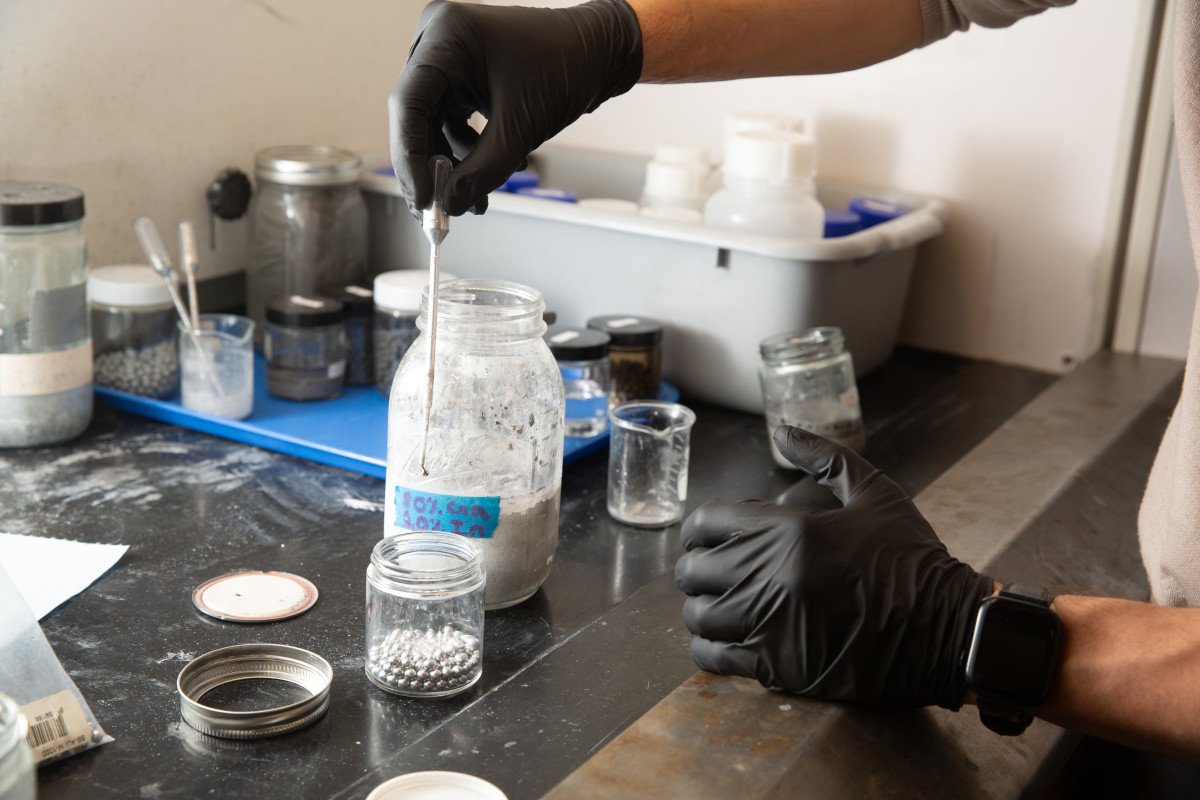
A researcher demonstrates “activating” aluminum by dipping an aluminum pellet in a mixture of gallium-indium.

Tony Pulsone

Final thoughts

Kombargi’s team discovered how recycled aluminum pretreated with a gallium-indium alloy and seawater could facilitate hydrogen fuel production in 2024, but during conferences, the researchers were frequently asked about the method’s carbon footprint and cost. Subsequently, extensive trials allowed the team to determine that for every kilogram of hydrogen produced, the process would generate 1.45 kilograms of carbon dioxide over its entire life cycle, 9.55 kilograms fewer than traditional fossil-fuel-based methods. The process’s cost of $9 per kilogram is comparable to the price of hydrogen generated with other green technologies such as wind and solar energy, creating a complementary solution.

via Autoblog https://ift.tt/H7WAMLq

July 23, 2025 at 04:09PM