Verizon Convinces FCC to Kill Its 60-Day Phone Unlocking Rule and That’s Bad

https://www.droid-life.com/2026/01/13/verizon-convinces-fcc-to-kill-its-60-day-phone-unlocking-rule-and-thats-bad/

Verizon no longer has to automatically unlock your phone after 60 days and their new unlock policy could be anything, thanks to a new waiver by the FCC.

During the height of its struggles to keep postpaid customers around in May of 2025, Verizon asked the FCC to get rid of a requirement that forced them to unlock phones after being on their network for 60 days. This 60-day unlock, which was the shortest in the industry, had become some sort of a burden on Verizon because, well, mostly because they just didn’t think it was fair that no one else had this same requirement.

Last year, they sent a filing to the current FCC, which is as anti-consumer and anti-free speech as it gets, complaining that they couldn’t compete with proper subsidies on phones, that eliminating this rule was the perfect example of a rule that should be eliminated by all of the deregulation and government cutting going on, and that this rule was “propping up international criminal organizations that profit from fraud, including device trafficking of subsidized devices from the United States.”

The rule they are talking about is the one that Verizon had to commit to back in 2008 after buying a bunch of spectrum. The rule was later extended in 2021 after they bought Tracfone. The rule from the FCC forced Verizon to automatically unlock devices after 60 days, whether or not a customer had paid off their phone or fulfilled contract requirements.

This week, the FCC ruled on their filing (here) and has given a waiver to Verizon, releasing them from the 60-day unlock policy they were previously enforcing.

In the note from the FCC, they essentially admitted that they were waiving Verizon from this requirement because they want Verizon to have the same unlocking freedom as the other carriers in the US. They then attempted to add to the story with talk typically reserved for online conspiracy theorists and extremists who don’t believe in reality. Just read this quote from FCC Chairman Brendan Carr and tell me if any of this sounds believable:

“Sophisticated criminal networks have exploited the FCC’s handset unlocking policies to carry out criminal acts—including transnational handset trafficking schemes and facilitating broader criminal enterprises like drug running and human smuggling. By waiving a regulation that incentivized bad actors to target one particular carrier’s handsets for theft, we now have a uniform industry standard that can help stem the flow of handsets into the black market.”

Bro, get off Twitter.

Anyways, the thing you need to know is that the FCC is cool with Verizon now being under the CTIA Consumer Code for Wireless Service and deciding on an unlock policy from that. Unfortunately for you, the consumer, the CTIA’s unlocking policy sucks. Specifically, their postpaid unlocking policy just gives the power to the carrier to decide whatever the hell they want.

Here’s what it states on postpaid (which is the type of plan you’d pay for at Verizon and receive a device payment plan or discount on a phone):

Postpaid Unlocking Policy. Carriers upon request will unlock mobile wireless devices or provide the necessary information to unlock devices for their customers and former customers in good standing and individual owners of eligible devices after the fulfillment of the applicable postpaid service contract, device financing plan, or payment of an applicable early termination fee.

In short, that policy simply states that carriers will unlock as long as you are “in good standing” and that your contract is fulfilled. In other words, Verizon could easily go from a 60-day unlock policy to a 3-year policy, since they now lock customers in on 3-year device payment plan contracts.

Oh, the FCC also said this is all to “benefit consumers.” Someone tell me how it does because they didn’t.

Read the original post: Verizon Convinces FCC to Kill Its 60-Day Phone Unlocking Rule and That’s Bad

via Droid Life: A Droid Community Blog https://ift.tt/HQaigmJ

January 13, 2026 at 01:04PM

Utah Becomes First State to Let AI Prescribe Medication

https://gizmodo.com/utah-becomes-first-state-to-let-ai-prescribe-medication-2000706729

The doctor won’t see you now.

Utah has launched a first-in-the-nation pilot program that will allow an AI system to renew 190 commonly prescribed medications for patients with chronic conditions.

Some medications with the potential for abuse, like pain management and ADHD drugs, are excluded, according to Politico. The program will initially cost $4 per renewal but will eventually be either covered by insurance or offered at an annual fee.

Utah is undertaking the program with Doctronic, a health-tech startup that launched in 2023. Doctronic already offers AI medical tools designed to automate some of the work typically performed by physicians, including a chatbot that provides free medical consultations and generates follow-up notes for physicians as needed.

At the heart of Doctronic’s work is removing barriers to healthcare access, cutting down costs, and easing the burden on healthcare workers, and AI can certainly do that, at least to some extent. Artificial intelligence tools are increasingly used by healthcare professionals around the country, with a recent OpenAI report claiming that 46% of American nurses use them weekly. The report also claims that 7-in-10 healthcare-related conversations with AI chatbots happen outside of normal clinic hours.

Per Politico, the decisions made by Doctronic’s AI system matched those of human clinicians 99.2% of the time, and the system will be held to the same level of responsibility as a doctor would be for any claims of malpractice.

But AI is far from a perfect technology, and mistakes can prove to be fatal in healthcare contexts. The AI could fail to catch certain drug interactions or other patient red flags, leading to disastrous consequences for patients. AI systems are also prone to being gamed, including shockingly via poetry, and that can create a dangerous loophole that can be abused by patients struggling with addiction.

There is also the issue of biases. According to a recent Financial Times report, some medical AI tools tend to downplay the concerns of women and stereotype some races and ethnicities while making their diagnoses.

While Utah is so far the only state offering the AI renewals, Doctronic is reportedly in discussion to expand the practice to Texas, Arizona, and Missouri, and is weighing a path to nationwide approval.

The legality of it all is interesting. States broadly get to set their own rules on how medicine can be practiced within their borders, and an AI that independently renews prescriptions would technically be governed under that category.

But AI-enhanced medical devices fall squarely under the regulatory authority of the Food and Drug Administration, which itself is going through a reevaluation of how it regulates AI deployment in health.

via Gizmodo https://gizmodo.com/

January 7, 2026 at 09:54AM

Starless ‘Cloud-9’ Is an Entirely New Astrophysical Object

https://www.scientificamerican.com/article/starless-cloud-9-is-an-entirely-new-astrophysical-object/

January 5, 2026

3 min read

Google LogoAdd Us On GoogleAdd SciAm

Starless ‘Failed Galaxy’ Is First of Its Kind Ever Seen

Scientists have found the best evidence yet for long-predicted “failed galaxies”

By Jenna Ahart edited by Lee Billings

A diffuse purple blob of gas against the depths of intergalactic space, with a dashed circular annotation denoting the blob's central, most gas-dense region.

The “failed galaxy” Cloud-9, a dark matter-dominated blob of hydrogen gas some 14 million light-years from Earth. The diffuse magenta represents radio data from the ground-based Very Large Array (VLA) that shows the presence of the gas. The dashed circle marks the peak of radio emission, which is where researchers focused their search for stars. Follow-up observations by the Hubble Space Telescope found no stars within the cloud. The few objects that appear within its boundaries are background galaxies.

NASA, ESA, VLA, Gagandeep Anand (STScI), Alejandro Benitez-Llambay (University of Milano-Bicocca) (science); Joseph DePasquale (STScI) (image processing)

A potential new type of celestial object has all the makings of a normal small galaxy. It’s rich with the same hydrogen gas that births suns and planets, and it lies within a halo of dark matter, the same invisible stuff that holds galaxies together. Yet it’s missing one key component of glittering galaxies like our own Milky Way: stars.

Nicknamed Cloud-9, the gas cloud is technically the best-yet example of a RELHIC, or Reionization-Limited H I Cloud. The “H I” stands for Cloud-9’s bounty of neutral hydrogen, and “RELHIC” refers to what astronomers believe the object to be: a primordial fossil—or relic—from the universe’s early epochs that, for some reason, never managed to form stars or become a full-fledged galaxy. That makes Cloud-9 a “failed galaxy,” said Rachael Beaton, an astronomer at the Space Telescope Science Institute, during a January 5 press conference at the American Astronomical Society’s 247th meeting in Phoenix, Ariz.

Based on their understanding of dark matter’s behavior and the hierarchical process of galaxy formation, astronomers have long predicted that such starless objects should exist throughout the cosmos. But until recently, RELHICs had been notoriously difficult to spot.


On supporting science journalism

If you’re enjoying this article, consider supporting our award-winning journalism by subscribing. By purchasing a subscription you are helping to ensure the future of impactful stories about the discoveries and ideas shaping our world today.


The results—presented by Beaton at the meeting and published in the Astrophysical Journal Letters last November—bolster the case that we’ve finally found one of these elusive phantom galaxies. Cloud-9 first burst onto the astronomy scene in 2023, when the Five-Hundred-Meter Aperture Spherical Radio Telescope in China’s province of Guizhou discovered a nearly 5,000-light-year-wide spherical cloud of hydrogen gas about 14 million light-years from Earth that appeared to be a faint dwarf galaxy, albeit bereft of visible stars. More in-depth studies on the cloud showed that it contains about a million solar masses of hydrogen and some five billion solar masses of dark matter, but researchers couldn’t confirm it to be truly starless. Perhaps, instead, it was indeed a strange sort of dwarf galaxy that was sparsely populated with very old and dim stars.

So Beaton and her colleagues peered once again at the object through the keen gaze of the Hubble Space Telescope. And in all of Hubble’s observations, she said, it found hints of just one star within Cloud-9. It could be that other stars simply went by undetected, but based on further simulations, the team found that the cloud probably couldn’t host more than some 3,000 solar masses worth of stars—a meager smattering that would preclude the object being a dwarf galaxy. This new result not only makes Cloud-9 the foremost REHLIC candidate in astronomers’ catalogs but also a milestone for verifying the common prediction that “not every dark matter halo will have a galaxy in it,” Beaton said.

While the fresh information from Hubble “certainly eliminates the possibility that [Cloud-9] is a dwarf galaxy,” there’s still much left to learn about this peculiar object, says Kristine Spekkens, an astronomer at Queen’s University in Ontario, who was not involved with the work. For instance, she says, Cloud-9 doesn’t have quite as smooth a shape as astronomers would expect. Better mapping of its gas distribution could provide more insights into how exactly it formed and evolved over cosmic time.

Still, it will be difficult to definitively confirm that Cloud-9 is in fact a RELHIC so long as it remains in a league completely of its own, says Ethan Nadler, an astronomer at the University of California, San Diego, who didn’t take part in the Hubble observations. While dubbing the cloud officially “starless” will be challenging, finding similar objects may help researchers shed some light on this dark area of astronomy.

It’s Time to Stand Up for Science

If you enjoyed this article, I’d like to ask for your support. Scientific American has served as an advocate for science and industry for 180 years, and right now may be the most critical moment in that two-century history.

I’ve been a Scientific American subscriber since I was 12 years old, and it helped shape the way I look at the world. SciAm always educates and delights me, and inspires a sense of awe for our vast, beautiful universe. I hope it does that for you, too.

If you subscribe to Scientific American, you help ensure that our coverage is centered on meaningful research and discovery; that we have the resources to report on the decisions that threaten labs across the U.S.; and that we support both budding and working scientists at a time when the value of science itself too often goes unrecognized.

In return, you get essential news, captivating podcasts, brilliant infographics, can’t-miss newsletters, must-watch videos, challenging games, and the science world’s best writing and reporting. You can even gift someone a subscription.

There has never been a more important time for us to stand up and show why science matters. I hope you’ll support us in that mission.

via Scientific American https://ift.tt/K3Wglcf

January 7, 2026 at 06:53AM

Improved Safety, Durability, and Power: A Carbon-Based Battery Materials Breakthrough

https://www.techbriefs.com/component/content/article/54437-improved-safety-durability-and-power-a-carbon-based-battery-materials-breakthrough

This research demonstrates a new way to make carbon-based battery materials much safer, longer lasting, and more powerful by fundamentally redesigning how fullerene molecules are connected. Today’s lithium-ion batteries rely mainly on graphite, which limits fast-charging speed and poses safety risks due to lithium plating. These research findings mean progress toward safer electric vehicles, longer-lasting consumer electronics, and more reliable renewable-energy storage.

via NASA Tech Briefs https://ift.tt/tPcY4Om

January 6, 2026 at 08:55AM

CES 2026: I Tried a Gaming Headset That Can Read Your Mind

https://lifehacker.com/tech/ces-2026-i-tried-a-gaming-headset-that-can-read-your-mind

Before this CES, I thought gaming headsets had gotten about as complex as they ever would. How many improvements can you possibly make on speakers and microphones? Well, forget all that. Apparently, the future of gaming headsets is mind-reading.

In a private demo with a colleague from IGN this CES, I tested out a collaboration between HP’s HyperX gaming brand and brain-computer interface company Neurable. Neurable’s been at CES before, but most of its work has been in the defense and enterprise sectors. The idea behind the brand is specifically aimed at helping you nail down your focus, and now, Neurable thinks it can use that to help gamers.

Priming on the Neurable x HyperX headset

Credit: Michelle Ehrhardt

Here’s how it works. Before trying on the Neurable x HyperX headset, I did a quick run-through in a target shooting game, where I shot down 30 targets with a 547ms response time. Then, I got guided through a focus program called Prime. This showed a cloud of dots on the screen, and I was told to do whatever I needed to do to focus up. I decided to stare into the distance and count, and in about 90 seconds, the dots had shrunken down into a small orb and I was "primed." Neurable also suggested focusing techniques like repeating a word in your head over and over, or following one of the dots as it moved about the screen, but these didn’t work for me.

Than, I did the shooting test again. Theoretically, I should have been better, but I actually scored slightly worse this time—a 559ms response time.

Still, that response time isn’t terrible, and your mileage may vary. It might just have been that I was already really locked in before priming, and my colleague actually reduced her response time by about 40ms after priming.

If all of that optimization sounds really nitty-gritty, well, yeah. This is aimed at esports players and streamers, where every (mili)second counts.

Neurable x HyperX headset streaming plugin

Credit: Michelle Ehrhardt

And that’s probably where the headset’s coolest feature comes in for me. Alongside Prime, Neurable and HyperX are also working on an overlay plugin for streamers that can show their focus level on screen. You can display this as a speedometer, or as that cloud of dots, or even as a progress bar that shows whether you’re "on tilt" or not. It should make for some pretty fun interactions with viewers, and play well with existing plug-ins, like eye trackers that show where a streamer is looking.

Plus, my slightly worse response time after priming wasn’t totally useless. Neurable said the headset could be used to help you "practice choking," where you psych yourself up shortly after locking in and end up worse off. I thought that maybe sounded like marketing spin, but my colleague, a high-level raider in World of Warcraft, said it would have real use for her.

It’s still just a concept for now, but it’s exciting to see this kind of tech getting ready to hit the mass market. What also sets Neurable apart is how portable it is. Unlike other brain-computer interfaces, this just looks like a normal headset, and all the contacts are just stored in the earcups. There’s no need for a giant helmet with discs and wires attached to it, which is thanks to Neurable’s expertise in AI. The company says that using such a compact form factor does result in getting a small amount of data, and a lot of junk data, but thanks to an on-device AI model, it’s easily able to detect trends in your focus and translate them into something usable.

That seemed to be true in my demo, which at the end of the day, kind of felt like a guided meditation with real-time feedback. You could use this for more than gaming, but it’s a clever use case for digital mind-reading, and the streaming plugins really take the cake, helping solidify the concept into a clear product with a concrete goal and target audience.

It’ll take a while for the gaming version of Neurable’s tech to be ready, although the company said it hopes to get it out this year. In the meantime, you can buy an ultra-luxury headset with Neurable’s mind-reading built in, although it’s currently on pre-order and will set you back $500. It also won’t come with Prime or that streaming plugin, although because those are based in software, that could change in the future.

via Lifehacker https://ift.tt/7Ys0FeX

January 6, 2026 at 05:26PM

TCL’s New Paper-Like Tablet Has a Bunch of AI in It

https://gizmodo.com/tcls-new-paper-like-tablet-has-a-bunch-of-ai-in-it-2000703992

Sometimes you have to go high-tech to get that low-tech feel, and TCL’s newest device is proof. The Note A1 Nxtpaper is TCL’s latest tablet-like device to use the company’s Nxtpaper technology. Nxtpaper, for the uninitiated, is TCL’s paper-like display tech that applies a matte texture to an LCD screen, reducing glare and blue light. It’s like a screen, but you know, slightly less obnoxious and easier on the eyes.

While Nxtpaper has been around since 2021 and has made its way into TCL’s phones and tablets, this is the first time that the company is bringing the tech to a dedicated notetaking device. With Nxtpaper’s evolution, there are also a bunch of (drum roll) AI features. As tired as some of you may be of seeing AI features shoehorned into your favorite gadgets (seriously, like so many), TCL’s AI offerings do seem pretty useful in the context of notetaking and the like.

Note A1 Nxtpaper
© TCL

Among the features are potentially useful things like handwriting-to-text conversion or real-time transcription, which is helpful if you’re using the Note A1 Nxtpaper in meetings. There’s also an increasingly standard array of AI tools like translation, summarization, and writing assistance, as well as “handwriting beautification,” which is a nice way of saying the notetaker will clean up your inscrutable chicken scratch. This last tool would be huge for me personally, since my handwriting tends to look caveman-like at best.

There are also more advanced AI tools like “handwriting one-stroke formation,” which TCL doesn’t elaborate on, but I assume is some kind of shortcut mechanism for quickly jotting down words or phrases. There’s also something called “inspiration AI,” which I can only assume is some kind of generative AI feature for producing writing or pictures that I personally would want nothing to do with, but to each their own.

Like every device with an E Ink or paper-like display, it’s just as much about how things look and feel as it is about what the device does. On that front, TCL says its Note A1 Nxtpaper has a 120Hz display, shows full color, and comes with a stylus that TCL says has around 5 milliseconds of latency, making it (theoretically) suitable for sketching as well.

One major advantage that the Note A1 Nxtpaper has over competitors is storage. TCL says its notetaker has 256GB of total storage compared to comparable tablets like the ReMarkable Paper Pro, which has 64GB. Are you going to need that much storage for taking notes? Probably not, but it’s nice to have just in case. It also has an 8,000 mAh battery, but TCL doesn’t say what that equates to in hours/days/weeks.

If any of this sounds appealing to you, the TCL Note A1 Nxtpaper will retail for $549 and is slated to launch in Europe, North America, and Asia Pacific at the end of February.

via Gizmodo https://gizmodo.com/

December 30, 2025 at 08:11AM

Plug-In Hybrids Have 80% More Problems Than Gas Cars, Consumer Reports Finds

https://www.autoblog.com/news/plug-in-hybrids-have-80-more-problems-than-gas-cars-consumer-reports-finds

The Best of Both Worlds? Not Always

A plug-in hybrid vehicle (PHEV) offers several advantages, including lower fuel costs and reduced emissions, without requiring buyers to make a full transition to an all-electric vehicle. However, apart from their apparent non-eco-friendliness, PHEVs experience roughly 80 percent more problems than their purely internal-combustion counterparts, according to Consumer Reports (CR). This figure raises questions about the technology’s long-term reliability and reputation.

In its latest annual survey – based on responses from the owners of about 380,000 vehicles from the 2000 through 2025 model years, and a few early 2026 models – CR breaks down which PHEV models across various segments contributed most to that disparity, offering buyers more detailed insight as they consider their next vehicle purchase.

CR’s 2026 PHEV List

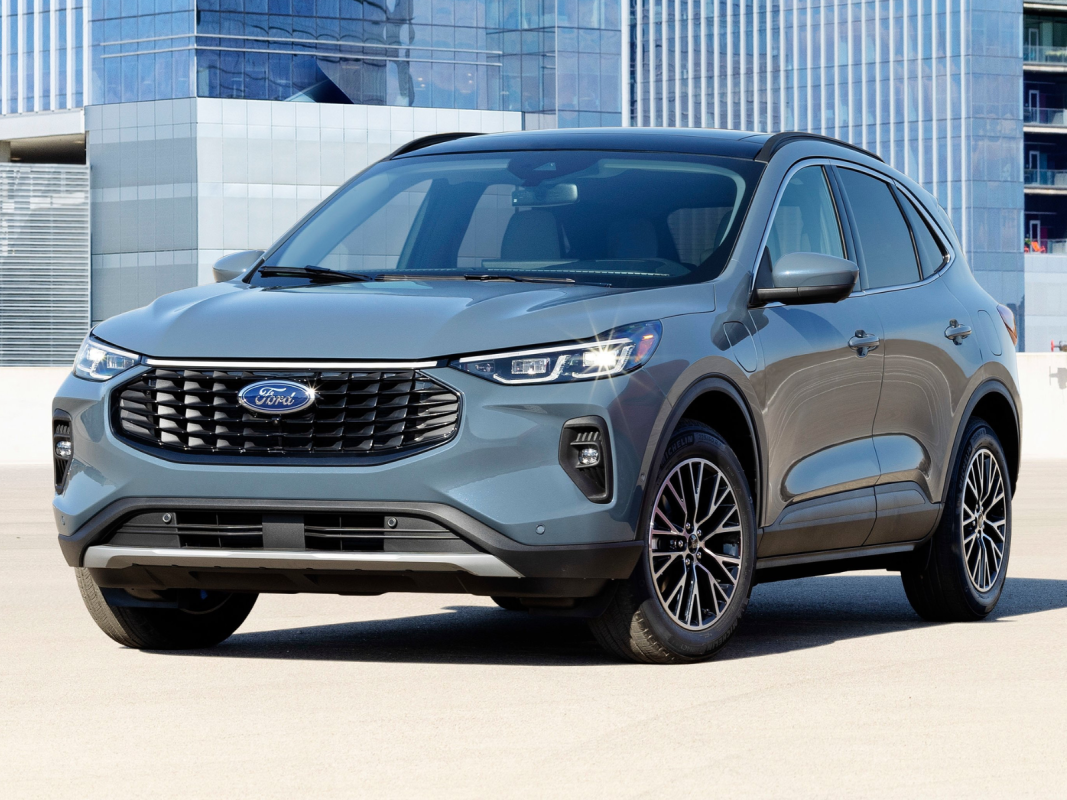
The Ford Escape PHEV ranks as the least reliable among compact SUVs, a segment that also includes the Toyota RAV4 Prime and the Mitsubishi Outlander PHEV. Owners participating in the survey cited a wide range of issues specific to the Escape PHEV, including EV battery replacement, battery cooling, EV charging, and electric accessories. In addition to PHEV-related concerns, respondents also reported non-electrification-related problems involving the steering and suspension, as well as the climate control system.

Stellantis appears multiple times on the list, starting with the Jeep Wrangler and Grand Cherokee using the 4xe, the automaker’s plug-in hybrid technology paired with a 4×4 drivetrain. According to CR, all reported issues were tied directly to the 4xe system, including problems with the hybrid system itself, EV battery stalling, and the electric motor. One owner claimed their vehicle was “bricked for nearly six months,” while another reported making eight dealer visits to address recurring hybrid-related failures.

Regulators have also taken notice. NHTSA has been involved in multiple 4xe actions, including a recall tied to loss of drive power issued earlier this year. Separately, the non-4xe Grand Cherokee was also cited in Consumer Reports’ latest survey of the most unreliable SUVs.

At the larger end of the spectrum, the Mazda CX-90 PHEV reportedly ranks as the least reliable among full-size SUVs. This finding mirrors CR’s 2026 Reliability Brand Rankings, in which Mazda dropped from the top 10 to 14th overall. The CX-90 PHEV was flagged for a long list of problems, including issues with the EV battery, electric motor, and engine electrical system. Owners also reported faults involving the transmission (both major and minor), drivetrain and fuel system, climate controls, steering and suspension, brakes, electric accessories, body hardware, in-car electronics, noises/leaks, and paint and trim quality.

One owner summarized their experience by saying their CX-90 PHEV suffered a “hybrid malfunction that causes the car to seize. It will not start, go into gear, or charge.”

Stellantis

The Cost of Complexity

In the luxury segment, the Volvo XC60 PHEV earns similarly unwanted recognition. The report cites issues affecting electrical accessories, the climate system, the drivetrain, the electric motor, and the EV battery. One owner noted that after just a month of ownership, their XC60 PHEV “would not go over 26 mph and went into snail mode,” a term commonly used to describe limp mode, where power output is reduced to prevent further damage.

Another Stellantis model is the Chrysler Pacifica PHEV, though, to be fair, it remains the only minivan with a plug-in hybrid powertrain currently sold in the U.S. For context, the Toyota Sienna and Kia Carnival are offered only as conventional hybrids. At the same time, the Honda Odyssey remains purely internal combustion, despite its Japan-market counterpart using a dual-motor hybrid setup similar to that found in the Civic and Accord. According to CR, Pacifica PHEV owners reported issues involving the transmission, engine, in-car electronics, electric accessories, EV charging, and EV battery cooling.

With automakers like Volvo now scaling back earlier all-electric timelines, this report suggests there is still considerable work to be done to ensure that multi-powertrain strategies – particularly those involving PHEVs – can deliver the reliability consumers expect.

Ford


View the 4 images of this gallery on the
original article

via Autoblog https://ift.tt/0onwCAU

December 28, 2025 at 10:07AM