
Corporations don’t have feelings. And yet, they want others to think they do—and that we’re being too rough on them.
Twice this past week, major tech companies appealed to empathy. One bid bubbled up in a Wccftech interview with Micron, when the memory producer was asked if it and other suppliers were abandoning consumers. The response: “Our viewpoint is that we are trying to help consumers around the world. We’re just doing it through different channels. […] What’s going on right now is that the TAM [ed: Total Addressable Market] and data center is growing just absolutely tremendously. And we want to make sure that, as a company, we help fulfill that TAM as well.”
Welcome to The Full Nerd newsletter—your weekly dose of hardware talk from the enthusiasts at PCWorld. Missed the surprising topics on our YouTube show or latest news from across the web? You’re in the right place.
Want this newsletter to come directly to your inbox? Sign up on our website!
The other came from Nvidia, with CEO Jensen Huang calling gloomy views of AI “extremely hurtful” during a discussion on the No Priors podcast. Huang’s take: “I think we’ve done a lot of damage lately with very well-respected people who have painted a doomer narrative, end of the world narrative, science fiction narrative. […] It’s not helpful to people, it’s not helpful to the industry, it’s not helpful to society, it’s not helpful to the governments.”
I was struck by the argument Huang went on to present in that same podcast segment, which suggests AI is going through growing pains while reaching the goal of functionality, and such negativity hinders and slows that progress—as well as that of the podcast hosts, who seeded the idea of self-interest as the motivator for regulatory action. That those seeking regulation may be trying to freeze out new startups, not save humanity.

Foundry
There’s a lesson here for those of us in the stands—everyone is looking out for their own interests, including consumers. And we should be smart about appeals to emotion, because they’re not always in the interest of the listener.
Micron reported a revenue of $37.38 billion for fiscal year 2025. Nvidia reported a revenue of $57 billion for just its latest quarter. AI is hot.
Meanwhile, inflation and interest rates continue to depress consumer spending power here in the U.S., which is reflected abroad as well. AI has also torched jobs—it’s fueled thousands of layoffs already.
Sure, in the grand scheme of things, the fevered pace of tech often has led to good outcomes in the end. But that doesn’t change the individual impact of incomes lost, plans destroyed, security evaporated. So when a company makes a play for my agreement through emotion, I always wonder: Who benefits from this vision?
In this case, consumers not being completely shut out isn’t the win Micron delicately posited. RAM now costs triple what it did just bare months ago—many will still be effectively shut out from upgrades and replacement PCs. For Nvidia’s part, the hints that zero regulation benefits progress ignores the human element: As the saying goes, regulations are often written in blood. How much regulation is warranted is a different conversation, and a reasonable one to have.
But you can’t have a reasonable discussion without some critique or outright criticism. When companies appeal to emotion, I wonder why it doesn’t cut both ways. I wonder who benefits. In the case of technology right now, certainly not individuals. This approach isn’t a fair tactic. None of us should accept it as such.
In this episode of The Full Nerd
In this episode of The Full Nerd, Will Smith, Adam Patrick Murray, Alaina Yee, and Michael Crider give CES 2026 a final send-off with a look at the smaller things we liked at the show. I’m still considering building my own E-Ink picture display now. If technology can save me from my sad bachelor-esque habits, I’m for it.
Also, Will did make me feel better that I’m not as bad as I thought, regarding home decor. I have a couch, sir. And even a coffee table!
I was not in the majority on my opinion of the show floor robots, though.

Willis Lai / Foundry
Missed our live show? Subscribe now to The Full Nerd Network YouTube channel, and activate notifications. We also answer viewer questions in real-time!
Don’t miss out on our NEW shows too—you can catch episodes of Dual Boot Diaries and The Full Nerd: Extra Edition now!
And if you need more hardware talk during the rest of the week, come join our Discord community—it’s full of cool, laid-back nerds.
This week’s quieter nerd news
I can’t say I’m mad about the slow flow of news this week—I guess everyone’s still wrung out from CES 2026…or just tired from counting all the mentions of AI from the keynotes. (I would like to note that Will and I got our count through pure, old-fashioned grit.)
Still, there’s plenty to eye with speculation. Or outright suspicion. (I’m giving that supposed Steam Machine pricing some side-eye.)

kingston.com
- Digging deep into the archives: Apparently, Chinese DIY builders are now recommissioning DDR3 motherboards for use. I never thought I could justify my continued use of my Sandy Bridge system, but here we are.
- Necessity is the mother of invention: Or at least, the precipitator of modding laptop RAM to work as desktop RAM, because it works out to be cheaper.
- I am not all-in: Google Gemini can now connect with Gmail, Photos, Search, and YouTube to provide more personalized answers to an individual’s questions. It’s currently set as opt-out, and Google pinky-swears it’s not training the model on any accessible data…but the company also is reminding everyone that, you know, your data is living already on its servers. Yeah.
- On the inside: I like me a good factory tour. I was very pleased when I saw a notification for this Gamers Nexus video, which gives a cool peek into production of Intel Arc cards at Sparkle.
- Uh, congrats, Linux? Security researchers have uncovered a new, previously unknown—and more advanced—malware targeting Linux cloud servers. An unwanted (but I guess predictable) reminder that bad actors go after people, not platforms.
- ICYMI: Nvidia DLSS 4.5 (at least, the super resolution part) is live—if you have a compatible card, you can try it out right now.
Valve
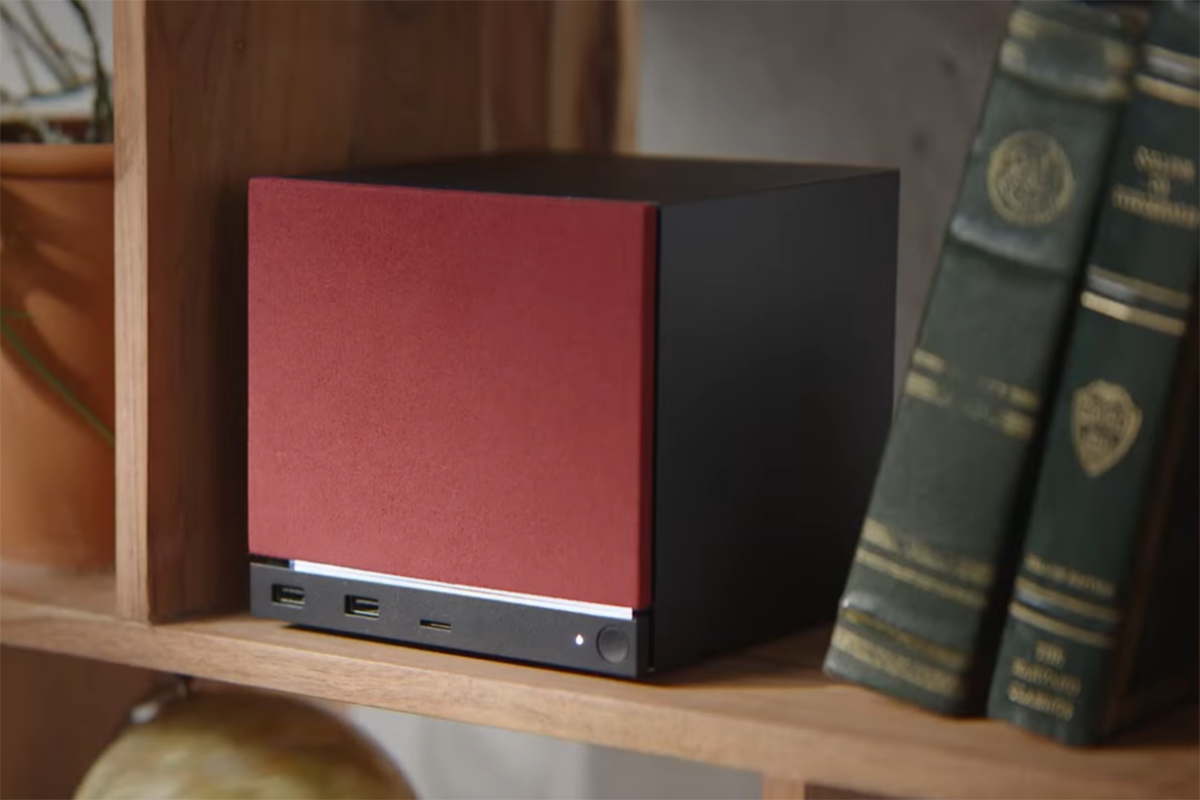
- I’m dubious: Buried deep in a Czech retailer’s website were two possible indicators of the upcoming Steam Machine’s price, with both the entry-level and upgrade versions circling the $1,000 mark. Placeholder, or a sign of the times? My vote’s for the former.
- More chip tariffs inbound: These will focus on “advanced” processors, according to reports.
- Oooooh: Is AMD taking a page out of Nvidia’s playbook? Rumor has it that Team Red will drop its new Gorgon Point CPUs just days ahead of Panther Lake’s imminent launch. (Shhh, don’t tell Brad I’m spreading scuttlebutt.)
- Cool…but I don’t have a problem, Brad: Brad raved about this particular software demo among those he saw at CES 2026. I admit it’s interesting, but I want to stress I have no issues with how many tabs I keep open. I live a comfortable life.
- I winced: Those deep in the memory trenches predict years of RAM shortages, given the current climate—the best estimate came from Micron, with things beginning to ease in mid-2027. Yeah.
- Thanks, I hate it: Verizon made a deal to allow its users to unlock phones after 60 days. A new FCC ruling says it no longer has to. I guess it’s back to unlocked phones only for me…
Gosh, what a banger of a start to the new year. I thought I’d spend most of this week sneaking in complaints about crowded gyms. Yes, it’s absolutely other people’s fault I ate too much and drank a ton of Will’s excellent eggnog. (Thanks again for sharing that with us!)
Catch you all next week!
Alaina
This newsletter is dedicated to the memory of Gordon Mah Ung, founder and host of The Full Nerd, and executive editor of hardware at PCWorld.
via PCWorld https://www.pcworld.com
January 16, 2026 at 07:09AM