
Hyundai Thinks Car Doors Are Due for a Rethink
Automakers have spent decades refining engines, suspensions, and software, but Hyundai is aiming at something far more basic: how people actually get in and out of cars. A newly published patent application shows the company experimenting with a double-sliding-door setup that feels less inspired by minivans and more by subways and commuter trains.
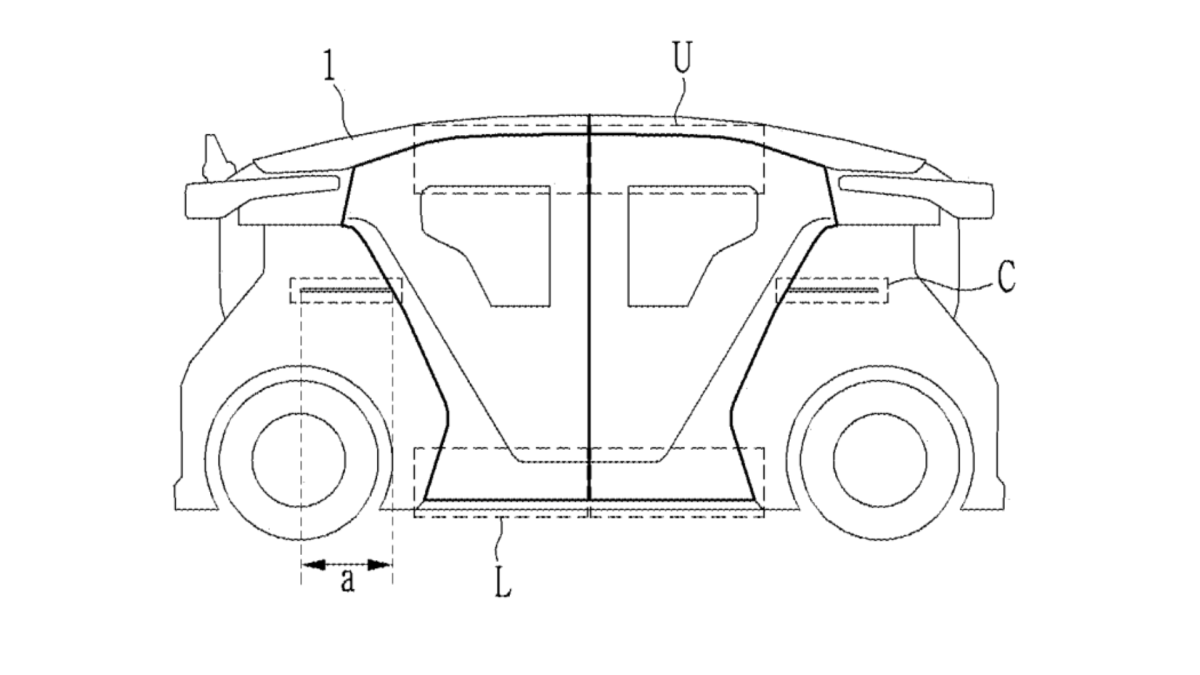
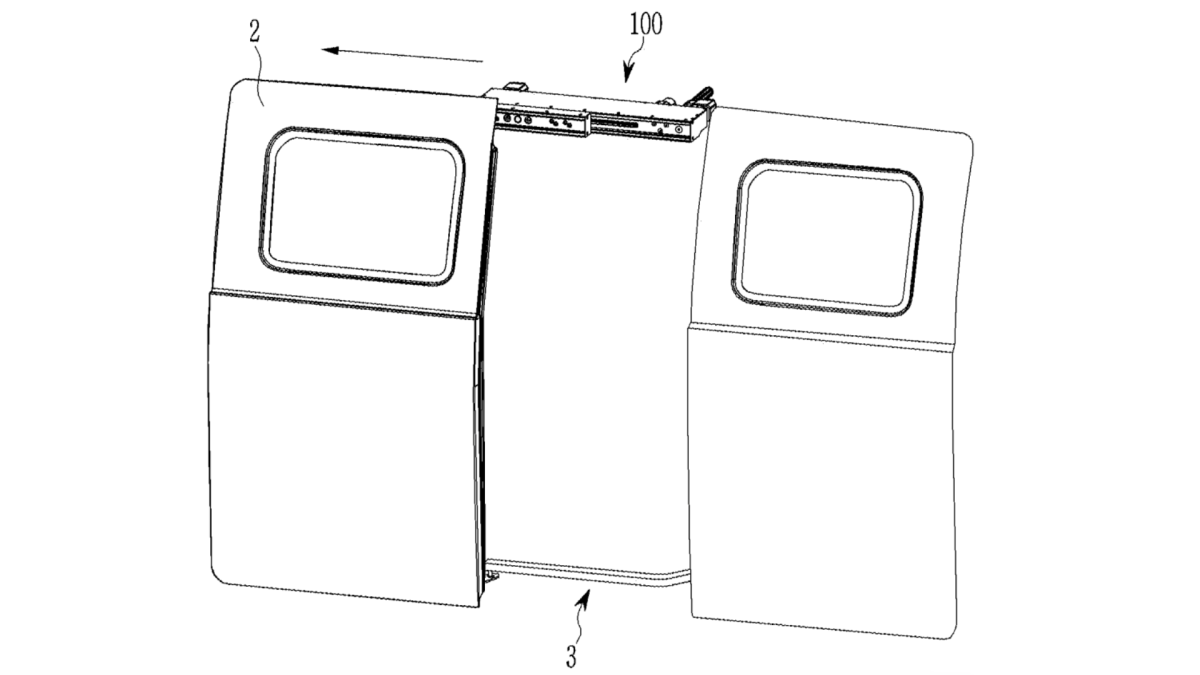
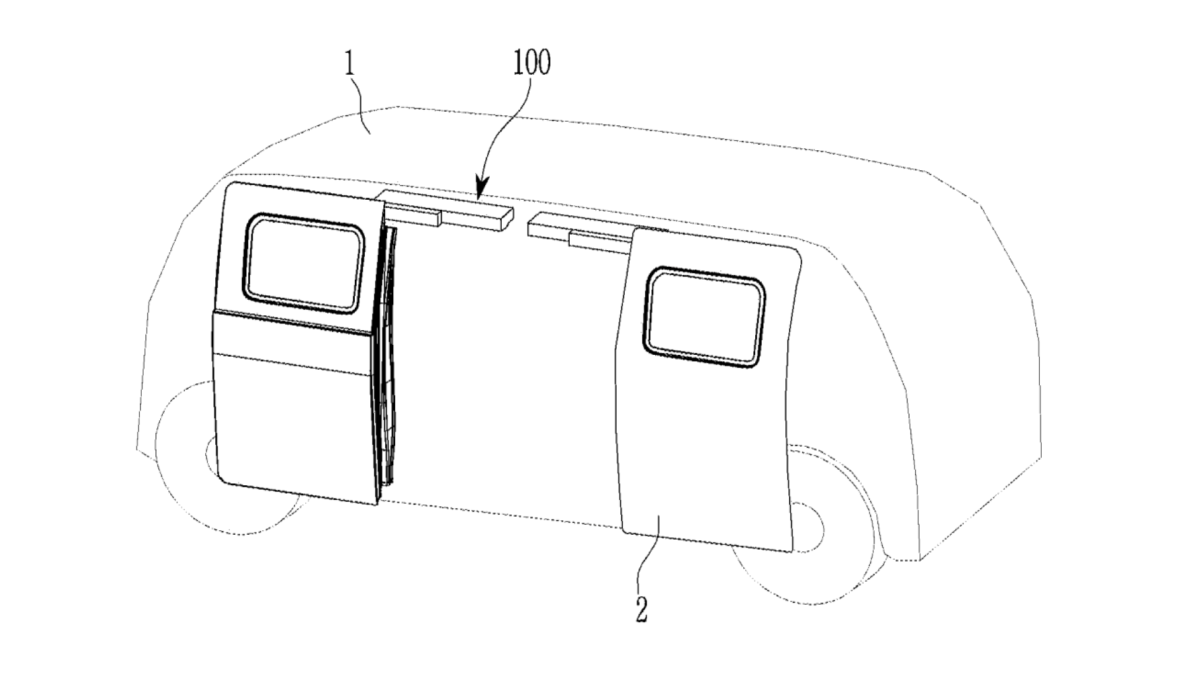
Published by the United States Patent and Trademark Office (USPTO) in January 2026 (you can look it up yourself using patent no. 12523084), the filing outlines a door system where two panels meet in the middle and slide away from each other along a shared rail system. The goal appears simple but ambitious: create a wider, cleaner opening without the packaging compromises of a single large sliding door or the clearance issues of hinged doors.
USPTO
Subway Logic Applied to Passenger Cars
The most striking thing about Hyundai’s idea is how familiar it feels if you’ve ever boarded a train. Instead of one door moving rearward, the opening splits at the center, with each door sliding outward in opposite directions. That symmetry could make entering and exiting faster and more intuitive, especially in crowded urban environments or curbside pickup scenarios.
From the patent illustrations, the mechanism lives largely in the roof structure, using synchronized motors and rails to keep movement smooth and controlled. This approach could reduce door weight per panel while still delivering a wide opening, which is ideal for families, rideshare passengers, or anyone dealing with child seats or bulky cargo. It’s easy to imagine this layout shining in autonomous shuttles or robotaxis, where passenger flow matters more than driver-focused design.
USPTO
Big Ideas, With the Usual Patent Caveats
Of course, patents are not promises. Automakers routinely file applications to protect ideas long before, or even if, they reach production. Hyundai, like every major manufacturer, uses patents to stake out future possibilities rather than confirm upcoming models. Any trademarks or technologies referenced in the filing are not guaranteed to appear on a showroom vehicle.
Still, this application reveals something important about Hyundai’s mindset. As cars evolve into shared, semi-autonomous spaces, the act of getting in and out becomes part of the user experience. Whether or not these double sliding doors ever make it to production, the concept suggests there may be a smarter, more transit-inspired way to think about vehicle access, and Hyundai clearly wants to catch that train of thought.
USPTO
via Autoblog https://ift.tt/NDQiw3G
January 15, 2026 at 06:22AM